To find long-term accommodation as a digital nomad, start with what your work needs, then pick two or three neighborhoods within a short walk of a grocery store and a coworking space. Test the internet and the desk before you pay, read the contract, and book a flexible first week as a backup.
Decide What Your Work Needs
Write down your non-negotiables before you open a single listing:
- Calls per week. Daily video calls need a quiet room. Occasional ones can use a café or coworking space.
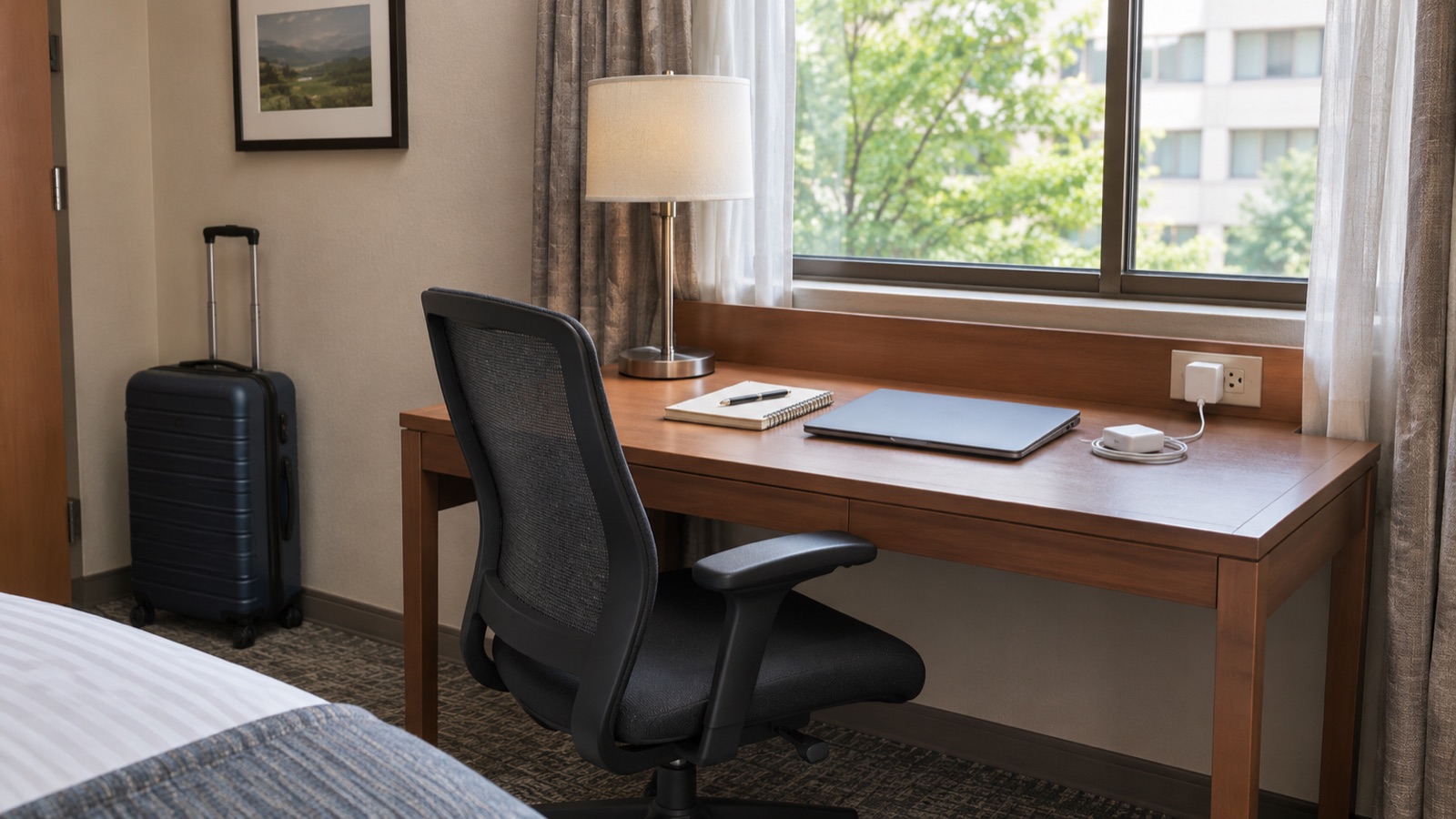
- Desk setup. A table and a proper chair, or at least a table at the right height.
- Hours. If you work across time zones, check whether late-night calls will disturb neighbors or you.
- Budget ceiling and stay length. Know your monthly maximum and your minimum and maximum number of weeks.
Shortlist Neighborhoods, Then Listings
Choose the area before the apartment. For a stay of several weeks, daily life matters more than the flat: where you buy food, where you walk, how you get to a coworking space or a café with outlets. Choose for week three, not day one: a quiet street, a routine, and a place that works for your job.
Look for:
- A grocery store and a pharmacy within a short walk
- A coworking space or a few laptop-friendly cafés nearby, as your fallback when home internet drops
- Transit you can use without a car
- Street noise at the hours you work and sleep (check the map, then visit if you can)
If you need destination ideas first, the remote work travel destinations guide lists places to consider.
Compare Where to Look
| Option | Good for | Watch for |
|---|---|---|
| Monthly or mid-term listing platforms (Airbnb monthly stays, Flatio, Spotahome) | Furnished places, filters for stay length, platform messaging and payment records | Cleaning and service fees added at checkout on Airbnb and Vrbo, host-set cleaning charges, cancellation terms that differ per listing |
| Direct or local routes (local agents, community groups, property managers, a hotel or aparthotel that offers monthly rates) | Negotiable rates, longer leases, fewer fees | Less buyer protection, contracts in another language, scams that imitate real listings |
| Remote-work-friendly hotels | A desk and Wi-Fi built in, flexible first week | Smaller rooms, rates that need asking for directly |
Use more than one source for the same area. Comparing two or three listings of the same type shows you what is normal there. For hotels with real work setups, see coworking-friendly hotels. If you want to see which companies serve remote workers on longer trips, the remote work travel companies page lists options to compare.
Verify Internet and Workspace Before You Pay
Listings say “fast Wi-Fi” about everything. Ask for proof:
- Ask the host for a screenshot of a recent speed test taken in the room where you will work, plus the plan’s stated speed and provider. Compare the result with the connection your own calls and uploads require.
- Ask whether the connection is shared with other units or the owner’s business.
- Ask for a photo of the desk and chair, and of the power outlets near them.
- Ask what happens if the internet is down for a day: a backup router, a nearby coworking space, a refund?
- Request a short video call from the apartment. You will hear the echo, the street, and the connection quality.
Bring a mobile hotspot plan or a local SIM as your own backup.
Viewing Checklist
Use this list at every viewing, in person or on video:
- [ ] Run a speed test on your own device at the desk, and upload a large file
- [ ] Sit at the desk for five minutes. Check chair height, table depth, lighting
- [ ] Count outlets within reach of the desk and bed
- [ ] Stand silent for one minute with the windows closed, then open. Note traffic, neighbors, construction
- [ ] Check where the sun hits the screen in the afternoon
- [ ] Test hot water, heating or cooling, and the washing machine
- [ ] Look at door locks, window latches, and the building entrance
- [ ] Ask who to call at 9 pm if something breaks
- [ ] Take dated photos of any existing damage
Check Deposits, Cancellation and Contract Terms
Read every line before paying. Confirm these in writing:
- Deposit. The amount, who holds it, when it returns, and what deductions are allowed.
- Cancellation. What you get back if you leave in week one, mid-stay, or if the place does not match the listing.
- Monthly rent and extras. Utilities, internet, cleaning, and any registration or tax fees.
- Notice period. How much warning you or the landlord must give to end the stay.
- Language. If the contract is not in a language you read well, get it translated before signing.
- Extension. Whether you can extend, and at what rate.
Check your permitted stay against your plan before you book. Use the destination’s current immigration guidance for your passport and dates; a rental contract does not extend your permission to stay.
Handle Viewings and Payments Safely
- Pay through the platform or by a traceable method that offers dispute options. Avoid cash transfers and wire payments to a stranger before you have seen the place.
- Be suspicious of a price far below similar listings, an owner who is “abroad” and wants a deposit first, or pressure to pay today.
- Match the listing photos and address to the building. A reverse image search on the photos takes a minute.
- Meet the host or agent at the property. Tell someone where you are going, and go in daylight for a first visit.
- Get a signed receipt for any deposit, with names and dates.
Keep a Backup for the First Week
Book the first five to seven nights somewhere with free or flexible cancellation, such as a hotel or a short-stay listing. Arrive, test the internet, walk the neighborhood, and view long-term places in person. Sign the monthly deal once you have seen it. If the place disappoints, you have lost nothing and you still have a bed.
FAQ
How far ahead should I book long-term accommodation?
Book only the first week in advance and view long-term places in person once you arrive. If you have your eye on a specific place, message the host early and ask about availability for your dates.
Should I book a long stay without seeing it first?
Book a flexible first week and view long-term places once you arrive. If you must book unseen, ask for a live video tour, check the cancellation terms, and pay only through a method with dispute protection.
How do I check internet quality before arriving?
Ask for a speed test screenshot taken in the work room, the provider name, and whether the line is shared. Compare the result with the connection your own calls and uploads require. Ask for a video call from the apartment, and carry a local SIM or hotspot as a backup.
Is a monthly rental cheaper than a hotel?
Add up the full cost of each, including cleaning fees, utilities, and deposits. Ask hosts whether they offer a discount for longer bookings.
What should I do if the place does not match the listing?
Document the differences with photos on the day you arrive and message the host or platform right away, in writing. Check the cancellation terms you agreed to, and move to your backup booking if the problem is not fixed quickly.