
Last reviewed: 25 November 2026 by the Think Travel Lift Grow editorial team. Entry rules, transport and seasonal conditions can change, so check the linked official sources before booking.
Add the cheap places to travel guide when you want to compare specific cities and regions.
Ecuador is the cheapest pick for a first trip. It uses the US dollar, the mainland is compact, and short bus rides link Quito, the Andes and the coast. Bolivia can cost less still, but its long overland routes suit a second trip. Colombia, Peru, Guatemala, Mexico and Argentina follow below.
What decides how cheap a trip is
Route, season, currency and pace move your total more than the country name does.
- Route: Long overland legs cost less than internal flights but take days. Stick to one tight region.
- Season: Peak holidays and festival weeks lift accommodation and tour prices in every country below. Shoulder months are the best value: April–May and September–October in Peru, March–April and October–November in Argentina.
- Currency: Ecuador uses the US dollar, so dollar-paying travellers face no exchange-rate swings there. Elsewhere, use a card with no foreign transaction fee, withdraw larger amounts less often to limit ATM fees, and decline “pay in your home currency” at card terminals.
- Pace: Staying longer in fewer places cuts transport spend and can give you access to weekly or monthly accommodation rates.
The seven compared
| Country | Best for | Main way to save | Main cost pressure | Currency |
|---|---|---|---|---|
| Colombia | First-time visitors, cities plus coffee region | Buses and short domestic hops, longer stays in one city | Peak holiday weeks, flights between far regions | Colombian peso |
| Peru | Inca sites and food | Travel in shoulder months, book trains and entry tickets early | Machu Picchu logistics, high-season Cusco | Peruvian sol |
| Bolivia | Slow travel, high-altitude landscapes | Shared tours, overland buses | Remote tours, limited route options | Boliviano |
| Ecuador | Compact trips, Andes plus coast | Mainland towns, short bus legs | Galápagos travel, tour add-ons | US dollar |
| Guatemala | Spanish schools and volcano hikes | Stay in one base, local transport | Tourist shuttles on popular routes | Quetzal |
| Mexico | Varied trips, long stays | Inland cities, regional buses | Beach resort areas in peak season | Mexican peso |
| Argentina | Cities, wine, Patagonia | Off-peak dates, overnight buses, self-catering | Patagonia in summer, internal flights | Argentine peso |
Entry rules and safety
Entry rules depend on your passport, so confirm them on each official site linked below, and read your government’s current travel advice for every region on your route.
Colombia
A first Latin American trip with cities, mountain towns and the coffee region in one loop.
Where to save: Intercity buses, mid-week travel, and several nights in Bogotá, Medellín or a coffee-region town to use apartment or guesthouse rates.
Route and season: Bogotá is cool and wet for much of the year, so pack a rain jacket. The coffee region is warmer. Late December, early January and Easter are busy domestic holiday periods, so book transport early or travel around them. Bogotá sits high, so allow a day to adjust.
More: colombia.travel. Remote workers can read the Colombia digital nomad visa guide.
Peru
A trip built around the Andes, Inca sites and food.
Where to save: Visit Cusco and the Sacred Valley in April–May or September–October, use local colectivos and buses, and eat set-menu lunches.
Route and season: June to August is dry and the most expensive. The wet season runs roughly November to March and affects trail conditions. Book Machu Picchu entry and train tickets first. Cusco and the Sacred Valley are high, so plan an easy first day.
More: Buy tickets from official channels. peru.travel
Bolivia
Slow, flexible travel through high-altitude scenery, with La Paz and the Salar de Uyuni as common anchors.
Where to save: Join shared group tours and take overland buses where schedules allow.
Route and season: The Salar de Uyuni looks different in the wet and dry seasons, and road conditions change with them. Leave buffer days, since overland plans can shift. Many stops sit at altitude.
More: bolivia.travel
Ecuador
A compact trip combining Quito, Andean towns, the Amazon region and the coast.
Where to save: Stay on the mainland, use short bus legs, and pay in US dollars without conversion fees. Price the Galápagos Islands separately, since they carry their own travel costs.
Route and season: Highland and coastal weather differ, so match your region to your dates. Quito is high, so pace the first days.
More: ecuador.travel
Guatemala
Spanish study and volcano hikes in Antigua or around Lake Atitlán.
Where to save: Base yourself in one town for a week or more, use local transport where practical, and eat where locals eat.
Route and season: The dry season runs roughly from November to April, and the rainy season brings afternoon showers. Plan volcano hikes for early mornings in either season, and travel in daylight where you can.
More: INGUAT
Mexico
Anything from a long city stay to a beach week, with a large domestic bus network.
Where to save: Choose inland cities and smaller towns over resort zones, travel by regional bus, and look for monthly rates on longer stays.
Route and season: Hurricane season on the Caribbean coast overlaps with the cheaper low season, so check forecasts and cancellation terms. Winter and holiday weeks lift beach prices.
More: visitmexico.com. For longer stays, see the Mexico digital nomad visa guide.
Argentina
Buenos Aires, wine regions and Patagonia in a trip that rewards flexibility.
Where to save: Travel outside the December to February peak, use overnight buses on long legs, and cook some meals in apartments.
Route and season: Seasons are reversed from the northern hemisphere, so Patagonia is busiest in the southern summer. Distances are large. Buenos Aires plus either Mendoza or Patagonia fills a trip.
Payments: Argentina has run an official and a parallel exchange rate in recent years, and the gap has moved. Compare what your card gets with what cash gets, and carry some crisp US dollar notes as a backup.
More: argentina.travel
Route-planning checklist
- [ ] Choose one region or a two-country loop.
- [ ] Choose dates outside national holidays and peak school breaks.
- [ ] Compare a one-way open-jaw flight with a return to the same airport.
- [ ] Price buses against flights for each leg, including the value of your time.
- [ ] Note which stops are at altitude and build in an easy first day.
- [ ] Decide how you will pay: card fees, cash withdrawals and the currency you hold.
- [ ] Book the fixed-capacity items first, such as Machu Picchu tickets or Salar de Uyuni tours.
- [ ] Leave one buffer day per week for delays.
7-day Colombia example
This sample route uses one flight and one bus and keeps you in three bases. Fly Bogotá to Medellín, because the bus takes most of a day.
| Day | Plan |
|---|---|
| 1 | Arrive in Bogotá. Walk La Candelaria and keep the evening light to adjust to the altitude. |
| 2 | Bogotá museums and a market lunch. Book your Medellín flight. |
| 3 | Fly to Medellín. |
| 4 | Medellín neighbourhood walks, the metro and the cable car. |
| 5 | Day trip to Guatapé by public bus. |
| 6 | Bus to the coffee region and settle in Salento. |
| 7 | Morning walk in the Cocora Valley, then head to Pereira airport for your onward flight. |
Cook or buy market lunches, and use public transport inside cities. Check current sights and transport on colombia.travel.
Where to go next
Weighing Latin America against other regions? See the cheapest countries in Europe and cheap Asian countries. To cut the cost of travel itself, read how to travel the world for free.
FAQ
What is the cheapest Latin American country to visit?
For a first trip, Ecuador: it uses the US dollar, the mainland is compact, and short bus legs keep transport costs low. Bolivia can cost less, but its long overland routes and limited options suit a second trip.
Is Ecuador cheaper because it uses the US dollar?
It removes exchange-rate swings and conversion fees for travellers paying in dollars. Prices still vary by region and season, and the Galápagos cost far more than the mainland.
When is the best time to find lower prices in Latin America?
Avoid late December to early January and Easter week across the region. Shoulder months give the best value: April–May and September–October in Peru, March–April and October–November in Argentina.
Can I combine two countries on one budget trip?
Yes, and a two-country loop works best when the countries are neighbours. Compare one-way flights and overland crossings.
Do I need a visa for these countries?
It depends on your passport and length of stay. Check the official sites linked above and your government’s travel advice. Remote workers can read the Colombia and Mexico digital nomad visa guides.
Seasonal planning: October options beyond Europe.
Seasonal planning: November Latin America options.
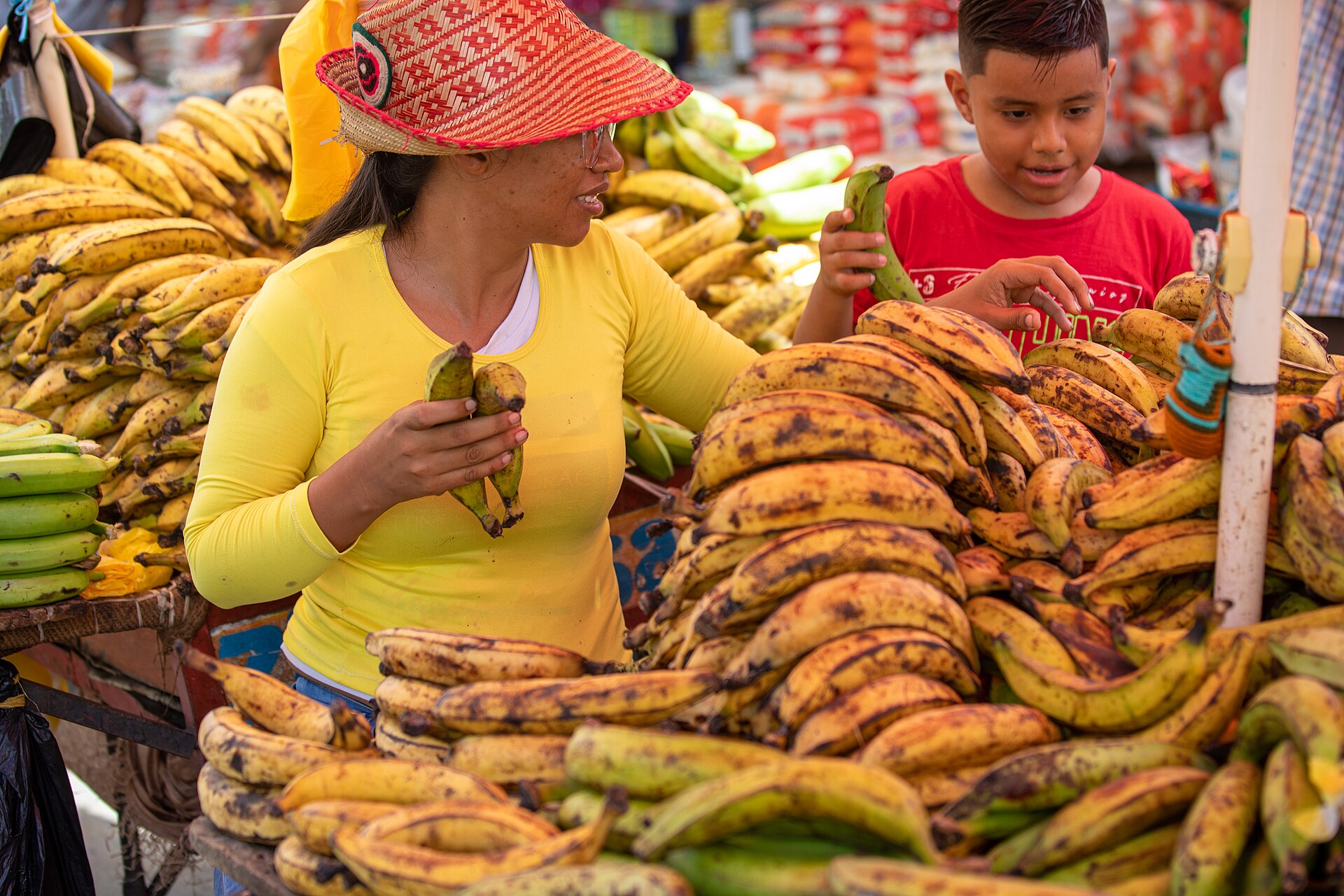
Featured photo: Colombian market by Mussi Katz, CC0, via Wikimedia Commons.