
A 4 to 6 L travel sling suits most men, sitting flat against your chest or back and opening wide for fast airport checks. Look for a wide adjustable strap, a body-side passport pocket, water-resistant fabric, and compact dimensions that tuck easily under an airplane seat.
Why a Sling Bag Works for Travel
Train stations, boarding gates, and crowded streets fill trouser pockets fast. A crossbody sling gathers your passport, phone, wallet, sunglasses, and charging gear into one structured pouch strapped close to your torso.
Hands-free access is the main advantage. Swing the bag from your back to your chest in one motion to scan a boarding pass, grab earbuds, or pay at a ticket machine while keeping both hands open for luggage or handrails. At tight cafe tables or in cramped seats, a compact sling rests on your lap or by your feet.
Compare Capacity Before You Buy
Volume determines how a sling wears through the day. Most travel slings fit three size brackets:
| Capacity | Typical Daily Load | Best Travel Use | Carry Feel |
|---|---|---|---|
| 1 to 3 L | Phone, wallet, passport, keys, earbuds | Flights, errands, evening walks | Lies nearly flat under a jacket |
| 4 to 6 L | Daily basics, sunglasses, power bank, e-reader, packable tote | Full-day city sightseeing and transit | Balanced across chest or upper back |
| 7 to 10 L | Daily basics, 11-inch tablet, wind shell, 500 ml bottle | Camera days, tablet carry, commutes | Deeper profile; rides high on the back |
The 4 to 6 L bracket suits most trips. It holds airport documents, daily electronics, and small extras while staying slim on packed trains. Choose 1 to 3 L when you only want to empty your pockets. Step up to 7 to 10 L when a tablet, compact camera, or water bottle leaves the hotel with you every morning, since empty interior space lets gear slide to one corner and bounce.
Features to Compare on a Travel Sling
Strap Position and Comfort
Strap width and anchor placement decide how a sling feels after six hours on foot. Look for webbing around 35 to 40 mm wide so weight spreads evenly across your collarbone, plus ambidextrous anchor loops or swiveling clips to switch shoulders during the day.
A contoured back panel with breathable mesh channels air in warm weather and cushions charger edges. On 7 to 10 L slings, a removable stabilizer strap clips under your opposite arm to hold the bag steady when bending over or cycling. Check buckle placement over a jacket so you can release it cleanly in a tight seat.
Access and Pocket Layout
Organized pockets let you grab a transit card or cable by touch. Choose a wide main zipper with side fabric gussets that hold the bag open while keeping loose items from spilling out on a train.
Three compartments cover most travel setups:
- Front quick-stash pocket: Holds transit cards, boarding passes, and a key clip away from phone screens.
- Main compartment: Uses stretch mesh dividers for a power bank, earbuds, and sunglasses.
- Body-side rear pocket: Keeps your passport, backup cards, and cash zipped flat against your torso, protected from quick grabs in busy stations.
Pick a light-colored lining such as gray, tan, or orange so black cables stand out in dim cabin light.
Security in Crowded Transit
Wearing a sling across your chest keeps every zipper in sight on busy subways and street markets. Two hardware details add protection when you rotate the bag to your back:
- Interlocking zipper pulls: Loops that clip together or tuck under fabric tabs slow down quick grabs.
- Close-set buckle: A clasp placed near the bag body or under your arm stays out of reach behind you.
Weather Resistance
Choose tightly woven nylon or polyester with a water-repellent finish, paired with polyurethane-coated zippers or overhanging storm flaps across top seams. Rain enters exposed zipper teeth first, so covered openings matter as much as the shell fabric.
Water-resistant slings shed light to moderate rain while you walk to shelter. In heavy downpours, slip your passport and phone into a thin zip-top pouch inside the main compartment.
Device Fit
Measure your largest rigid item before comparing liter ratings. A tall vertical shape suits an e-reader, while a wide horizontal layout fits sunglasses and a compact camera.
Smartphones and slim power banks fit inside 1 to 3 L bags. E-readers and 8-inch tablets fit most 4 to 6 L designs with a padded slip pocket. An 11-inch tablet or compact mirrorless camera fits best in a structured 7 to 10 L body with a padded divider wall. Check internal dimensions alongside exterior measurements because foam padding trims usable room.
Airline Personal-Item Rules and Airport Screening
Aviation and screening rules below were checked on 2026-11-27.
Under IATA passenger baggage rules, carry-on allowances vary by airline, cabin class, and aircraft, and individual airline conditions always apply. A common carry-on reference is 56 × 45 × 25 cm including wheels and handles, though limits differ across carriers and many airlines set cabin weight caps. Small personal items that fit under the seat can be protected under the basic fare on some tickets. Confirm your carrier’s exact bag count and under-seat dimensions before departure, and see our carry-on size limits guide for airline-by-airline measurements.
For U.S. checkpoints, the TSA travel checklist confirms that carry-on liquids follow the 3-1-1 rule: containers of 3.4 oz (100 ml) or less in one clear, quart-sized zip-top bag per passenger. Accessible packing helps screening move faster, so place your liquids pouch and electronics at the top of your sling.
When a Backpack Is the Better Choice
A single strap places every gram on one shoulder. Once your daily carry reaches 2 to 3 kg, two padded straps distribute weight across your back and hips more comfortably. Switch to a backpack when you pack a 13-inch or larger laptop, a full 1 L water bottle, a warm fleece, or extra footwear.
For full-day walks, trail outings, and heavier gear, read our travel daypack guide. For multi-day packing and main cabin luggage, compare larger packs in our travel backpack guide.
Sling Bag Buying Checklist
Load a sling with your travel items and run through these checks:
- Loaded walk test: Pack your phone, passport, wallet, power bank, sunglasses, and keys, then walk ten minutes to check bounce and collarbone pressure.
- One-handed zipper pull: Open and close the main compartment smoothly while wearing the bag on your chest.
- Shoulder switch: Try both shoulders to verify the strap lies flat.
- Jacket clearance: Extend the strap over a fleece or rain shell so the bag swings cleanly from back to front.
- Corner fit: Zip the bag closed with your passport or tablet inside so corners clear the zipper teeth.
- Stress-point seams: Check for reinforced stitching where the strap joins the bag.
Packing Example: 5 L Travel Sling
Group items in a structured 5 L sling by how often you reach for them:
- Body-side rear pocket: Passport, folded boarding pass, and one backup card.
- Front quick-stash pocket: Transit card, hotel keycard, compact pen, and clipped keys.
- Main compartment dividers: 10,000 mAh power bank with short cable, earbuds, soft sunglasses pouch, and packable tote.
- Top of main compartment (flight days): Clear quart-sized 3-1-1 liquids bag for fast screening.
- Bottom cinch loops (optional): Compact umbrella or rolled wind shell.
Place the heaviest item, usually the power bank, closest to your body for balance.
Care Tips to Make a Sling Last
- Empty every pocket after a trip and shake grit out of corner seams.
- Spot-clean fabric with lukewarm water, mild soap, and a soft cloth, then air-dry in shade with zippers open.
- Brush dust from zipper teeth so sliders glide smoothly.
- Store the sling flat or lightly stuffed so back-panel foam keeps its shape.
Frequently Asked Questions
What size sling bag is best for travel?
A 4 to 6 L sling suits most travel days. It carries a passport, phone, wallet, sunglasses, and power bank while staying slim on transit.
Should men wear a sling bag on the chest or back?
Wear it across your chest in crowded stations and markets so zippers stay visible. Swing it to your back on open sidewalks or stairs for freer arm movement.
Can a travel sling fit a water bottle?
Yes. A 7 to 10 L sling with an exterior stretch sleeve, bottom cinch loops, or a wide main compartment fits a slim 500 ml bottle. Keep electronics in a separate padded divider.
Do airlines count a sling bag as a personal item?
Sometimes: a slim sling that fits under the seat may qualify, though only your airline’s rules decide. Under IATA passenger baggage rules, small under-seat items can be protected under the basic fare on some tickets, so check your carrier’s allowance before flying.
Can you wear a sling bag with a travel backpack?
Yes. Wear the sling high across your chest while carrying a backpack on your shoulders on transit days so boarding passes, phone, and passport stay within reach.
Next Step
Review airline-by-airline personal-item dimensions in our carry-on size limits guide before finalizing the size of your travel sling.
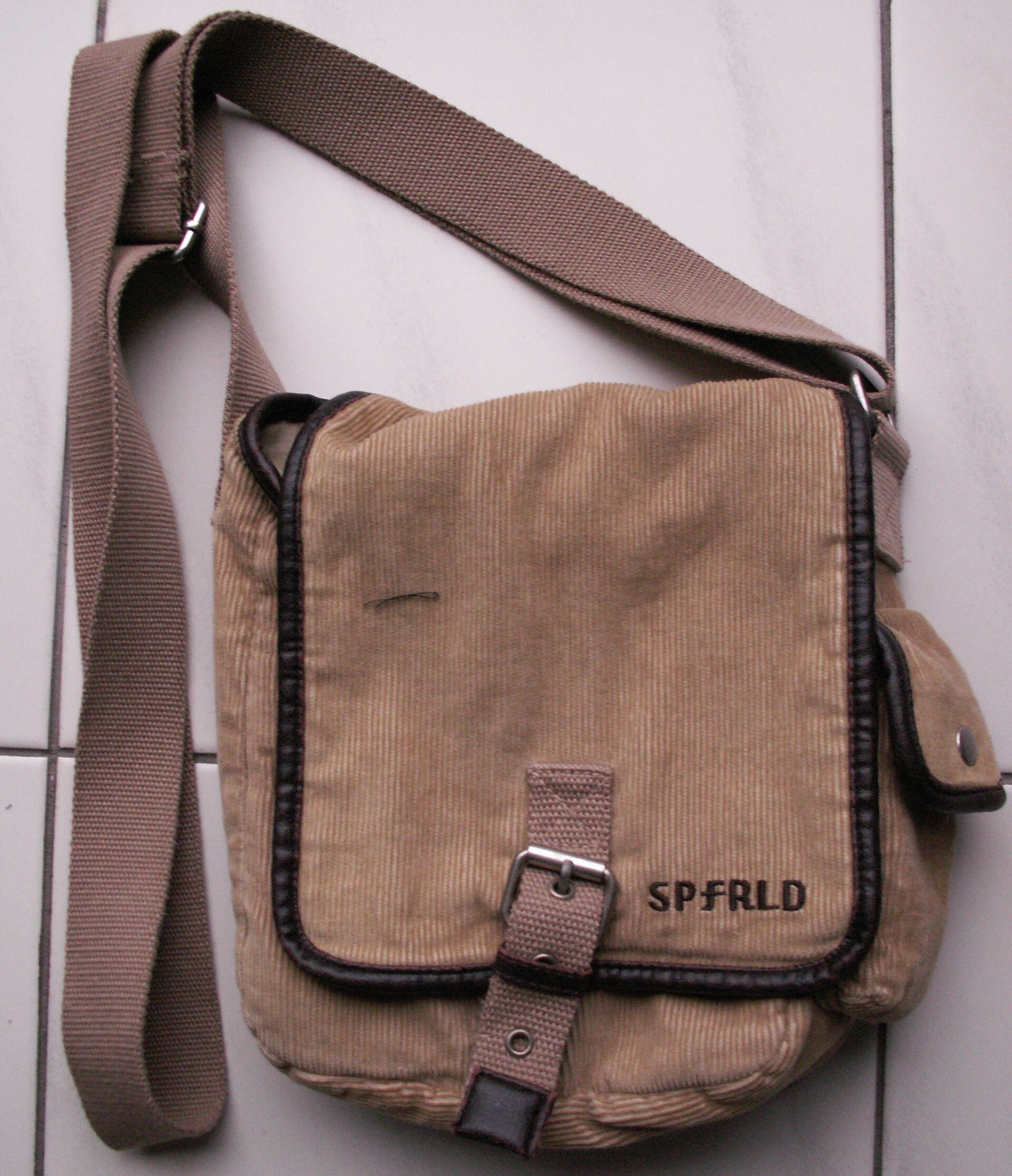
Featured photo: “Sling bag” by KVDP via Wikimedia Commons, public domain.
Featured photo: “Sling bag” by KVDP via Wikimedia Commons, public domain.