
The best travel daypack is the one that fits the day you are planning: comfortable on your back, easy to open, protective enough for the equipment you carry, and sized for the places you will take it. A daypack suits city exploring, short hikes and light one-bag travel; a larger travel backpack suits multi-day clothing and gear.
Last reviewed: 26 November 2026. Check the carrier, park authority and operator pages linked below before a trip because rules and access details can change.
Daypack or travel backpack?
A daypack is a small, flexible bag for the hours when you are away from your base. It carries water, a layer, snacks, documents, a camera or a laptop, then stays manageable on public transport and busy streets. A multi-day travel backpack is built around a larger load, clothing organisation and longer stretches between laundry or accommodation.
Choose a daypack when the day has a clear return point: a city route, a museum day, a short trail, or a work session away from your room. Choose the larger bag when it is carrying the whole trip. The two can work together: the travel bag stays at the accommodation while the daypack handles the day’s essentials.
What to look for in a travel daypack
| Decision | A useful daypack choice | Check before buying |
|---|---|---|
| Capacity and use | Enough room for the day’s layer, water, food, documents and small equipment | Lay out the exact items and allow room to close the bag without compressing them |
| Carry comfort | Padded shoulder straps, a back panel that suits your shape and a stable load | Try it with the weight you expect to carry; strap adjustment matters as much as padding |
| Access | A main opening that lets you reach the bottom, plus small pockets for items used often | Check whether the zippers open smoothly and whether a crowded train makes access awkward |
| Weather protection | A fabric and construction that suit the forecast, with a separate cover when needed | Look for the maker’s care and water-resistance guidance; a shower and prolonged rain are different tests |
| Laptop or camera carry | A protected sleeve or divider only when your equipment needs one | Measure the device and check padding, closure and where the weight sits against your back |
| Airline and personal-item use | A shape that can fit the carrier’s published limits when that is the job | Airlines set their own dimensions and enforcement; compare the exact carrier rules with the packed bag |
The useful test is simple: pack the things you will actually carry, put the bag on, and walk for a few minutes. A light empty bag can feel very different after water, a camera, a layer and a charger are inside.
The best daypack shape for city days
City travel rewards a bag that stays close to the body and opens in a predictable way. A panel-loading design gives a broad view of the contents, while a top-loader can feel lighter and simpler for a jacket and water bottle. External pockets are useful for items used while moving; secure internal pockets help with documents and cards.
Look at the details that affect a full day on foot:
- shoulder straps that can be adjusted without removing the bag;
- a back panel that keeps the load stable when you turn or use public transport;
- a bottle pocket that does not force the bag away from your back;
- zippers that can be operated with one hand;
- a colour and surface that fit the work, museum or dinner settings on your route.
A daypack is easier to live with when every pocket has a job. Keep documents and a small power bank in one secure place, daily items in the main compartment, and wet or dirty layers away from electronics.
The best daypack for short hikes
Short hikes need a few more checks than a city day. The bag should stay comfortable when the path changes, leave room for water and a layer, and make it easy to carry out everything you bring in. The National Park Service’s Leave No Trace guidance is a useful reference for planning a low-impact outing: prepare for the route, travel on durable surfaces, and carry waste back out.
Before a hike, check:
- the route length, elevation and expected weather from the relevant park or trail authority;
- water capacity and a way to keep it accessible;
- a warm or rain layer that fits inside rather than hanging from the outside;
- a small first-aid and personal-medication kit;
- offline directions, identification and a charged phone;
- a simple waste bag and any food-storage rule for the route.
The REI day-hiking checklist is a useful second reference for matching equipment to conditions. A daypack helps with organisation, while route knowledge and conservative decisions do the safety work.
One-bag trips and daypack pairings
Some travellers use a daypack as the only bag for a short trip. That can work when the itinerary, climate and laundry plan are simple. Pack a repeatable clothing system, keep heavy objects close to the back, and leave enough space to add a layer during the day.
For a longer trip, pairing a daypack with a larger travel bag creates a clear division:
- the larger bag carries clothing, wash kit and equipment that stays at the accommodation;
- the daypack carries the day’s documents, water, camera, layer and work essentials;
- packing cubes keep the larger bag organised; see the guide to best packing cubes;
- an airline-sized larger bag belongs to a separate cabin-bag decision; compare carry-on backpacks and personal-item backpack size rules before booking.
The broad best travel backpacks comparison is the better starting point when the bag must carry several days of clothing. A laptop-heavy setup needs different organisation; use the work backpacks for travel guide for that decision.
How to fit and load a daypack
Start with the items you will use least and place them toward the bottom or centre. Keep dense objects close to the back so the bag does not pull away from your shoulders. Put a layer where it can be reached before the day’s weather changes. Keep documents, medication and electronics protected from water and easy to find.
Adjust both shoulder straps evenly, then check that the bag stays close without restricting breathing or movement. Walk, sit, reach overhead and turn. Those small movements expose pressure points that are easy to miss while standing still in a shop.
The final load should leave the zipper and seams relaxed. A bag that is difficult to close will become harder to use in a queue, on a train or at a trailhead.
Buying checklist
- Write down the items the bag must carry on a normal day.
- Separate city, short-hike and work requirements instead of asking one bag to do every job.
- Check the manufacturer’s measurements and care guidance.
- Compare the packed size with the exact airline or carrier limits when the bag will be used as a personal item.
- Test the straps and back panel with a realistic load.
- Confirm how the main opening, bottle pocket and laptop sleeve work in motion.
- Choose a repair, warranty or return route you can use from where you live.
- Add a weather layer or cover when the route and forecast require it.
Sources for the checks
- IATA passenger baggage guidance explains why cabin and checked-bag rules must be confirmed with the carrier.
- TSA item screening reference is a U.S.-specific guide for items in a daypack.
- National Park Service Leave No Trace principles gives the low-impact planning framework for short hikes.
- REI’s day-hiking checklist is a practical equipment reference; match it to the route and conditions.
What size daypack is best for travel?
The right size depends on the day’s load, climate and access to water or laundry. Start with the items you will carry, then choose the smallest bag that closes comfortably and leaves room for a layer. A larger travel backpack is more suitable when the bag must carry several days of clothing.
Can a travel daypack count as a personal item on a flight?
It can when its packed dimensions fit the specific carrier’s personal-item rule. Airlines publish their own limits and may apply them differently by fare or aircraft. Measure the packed bag and check the carrier’s current baggage page before travelling. The personal-item backpack guide explains the comparison process.
Are daypacks waterproof?
Water resistance depends on the fabric, seams, zippers and construction. Read the maker’s care instructions and plan for the actual weather. A rain cover adds another layer of protection, while electronics still need a protected inner pouch.
Is a daypack useful for a short hike?
Yes, when it holds water, a layer, navigation, personal medication, food and waste without shifting as you walk. Check the route authority’s conditions and match the load to the trail, weather and time available.
Should a daypack have a laptop sleeve?
Only when you regularly carry a laptop or tablet. A sleeve adds structure and can use space that would be more useful for a jacket or camera on a walking day. Measure the device and check the sleeve’s padding and closure before relying on it.
What should go in a travel daypack?
Carry the items the day requires: water, a layer, documents, phone and charger, medication, food, navigation and any camera or laptop you need. Keep the load compact, protected from weather and easy to reach.
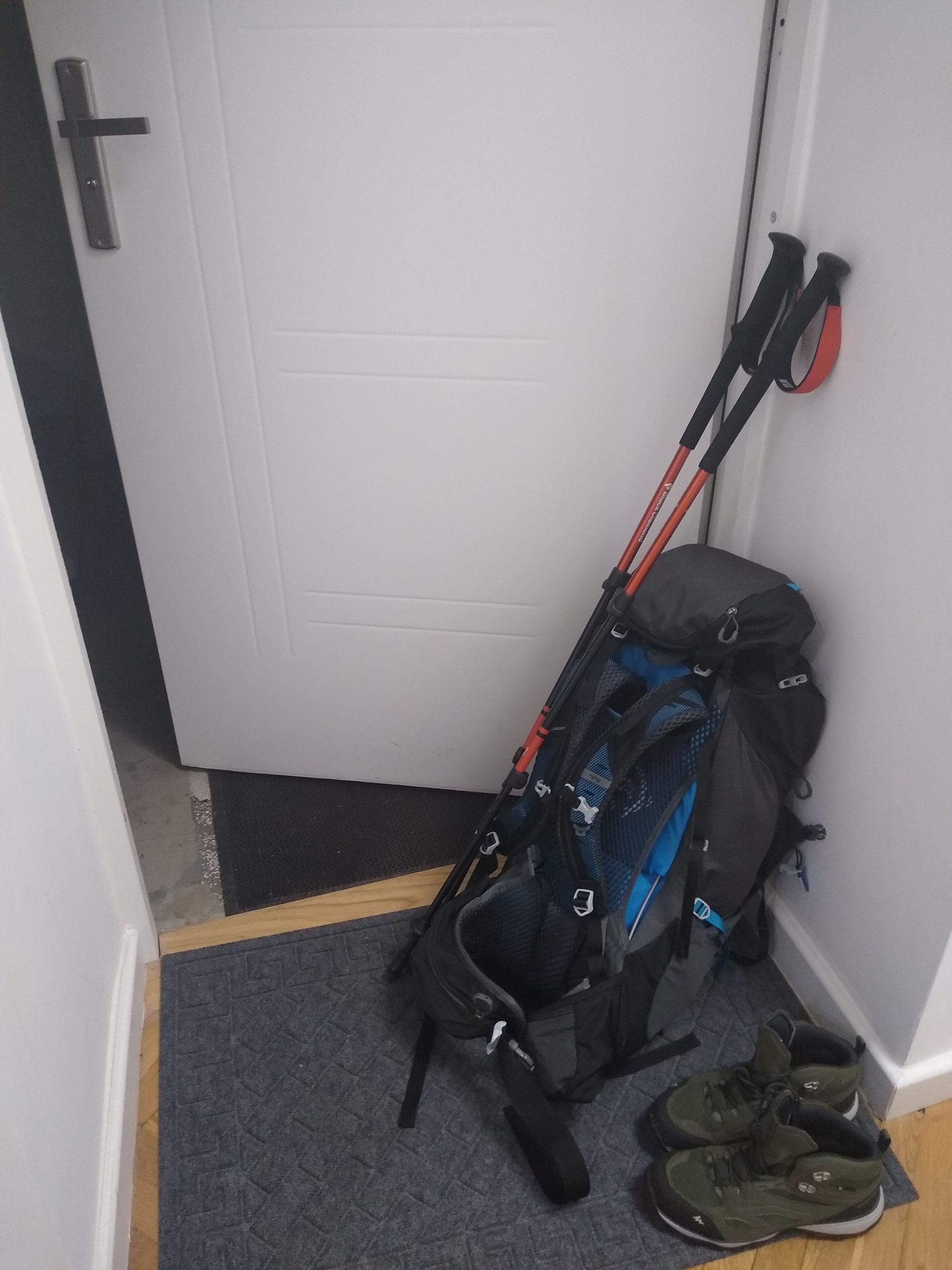
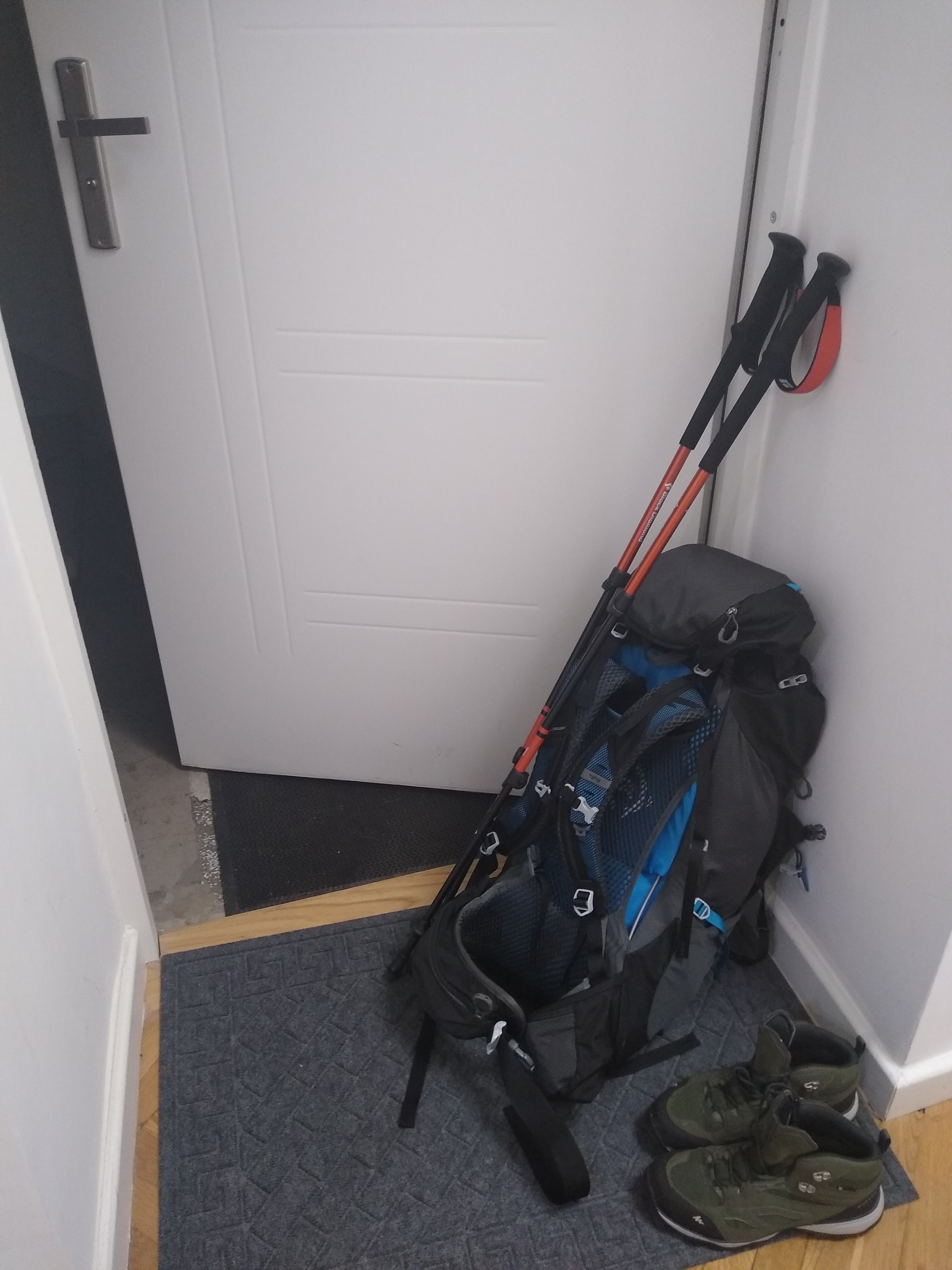
Featured photo: A backpack with trekking poles and shoes by SGrabarczuk (WMF), CC BY-SA 4.0, via Wikimedia Commons.