
For a first trip, fly into Siem Reap for Angkor, continue to Phnom Penh, and finish with Kampot’s river and pepper-country calm. Allow 7 to 10 days, travel the route in one line, and apply for your visa on the official e-Visa site before booking.
The short version of the route
Most first-time visitors fly or cross a land border into one end of Cambodia, travel the middle by road or air, and leave from the other end. Siem Reap to Phnom Penh to Kampot makes a clean line.
| Stop | Best for | Suggested time | Fits when |
|---|---|---|---|
| Siem Reap / Angkor | Temples, sunrise and sunset, day trips | 3 to 4 nights | You want the headline sight while your energy is high |
| Phnom Penh | History, markets, river life, food | 2 to 3 nights | You want context for what you saw at the temples |
| Kampot | River evenings, pepper farms, slow days | 2 to 3 nights | You want a quiet finish |
| Battambang | Countryside, colonial streets, arts scene | 1 to 2 nights | You prefer inland over coast |
| The coast | Beach time | 2 to 3 nights | You want to end with rest |
Our pick is Kampot. It is the easiest add-on to Phnom Penh and gives the trip a calm ending. Swap in Battambang if you would rather stay inland, or the coast if you want beach days. Choose only one: adding a second slower stop to a 10-day trip turns it into a string of transfers.
A realistic 7 to 10 day route
Days 1 to 4: Siem Reap and Angkor (3 nights). Arrive, settle in and spend the first evening in town. Start temples the next morning. Three days of temple visits cover the main sites. Our Siem Reap guide covers where to stay and how to organise your days, and the Angkor Wat visiting guide covers the temple itself.
Days 4 to 7: Phnom Penh (3 nights). Fly or take a morning bus from Siem Reap. Give the first day to the riverfront, the Royal Palace and Silver Pagoda, and a long lunch. Spend the second on the National Museum, Tuol Sleng Genocide Museum and Central Market, and keep the Russian Market for the third. Our Phnom Penh guide covers neighbourhoods, what to see and how to get around.
Days 7 to 10: Kampot (2 nights), then back to Phnom Penh (1 night). Take a morning bus south. Spend the evenings on the riverfront, where guesthouse terraces face the Praek Tuek Chhu river and sunset boat trips leave from town. Spend a day cycling or riding out to the pepper farms, where you can walk the vines and taste Kampot pepper, which carries protected geographical indication status. Our Kampot guide has the details. Return to Phnom Penh for a buffer night before your flight.
For 7 days: drop Kampot and spend 3 nights in Siem Reap and 3 in Phnom Penh, flying out of Phnom Penh on day 7.
Order: north to south
Start in Siem Reap. Angkor is the most physically demanding part of the trip, so it goes first while your energy is high. Phnom Penh then gives you the history behind what you saw, and Kampot lets you end slowly. You leave from Phnom Penh, which has the wider choice of onward flights.
Transport planning
- Siem Reap to Phnom Penh: about 6 hours by road and about 50 minutes by air. Buses run through the day. Operators such as Giant Ibis and Mekong Express offer morning departures.
- Phnom Penh to Kampot: 3.5 to 4 hours by road. Book the earlier departure so you arrive in daylight.
- Siem Reap to Battambang: 3 to 4 hours by road, if you choose that stop instead.
- Local transport: tuk-tuks and ride-hailing apps cover most city movement. Agree the fare or use the app before you set off.
Practical habits that help:
- Book key legs a few days ahead in busy months and keep the rest flexible.
- Confirm pick-up points with your operator, since many services leave from the company’s own office.
- Keep a buffer on any day with a flight. Road times vary with traffic and weather.
Entry rules and e-Visa checks
Entry requirements depend on your nationality and change over time, including visa fees, pass prices and opening hours. Rely on the official sources below and recheck them close to departure.
- Start with the Cambodia e-Visa site to see whether your passport needs a visa and how to apply.
- Read the Tourism Cambodia FAQs for general travel questions.
- Check your passport’s validity against the official requirements before booking flights.
- Apply only through the official government portal, and save the confirmation and a printed copy.
Border officials make the final entry decision, so carry your printed confirmation and passport together.
Visiting the temples responsibly
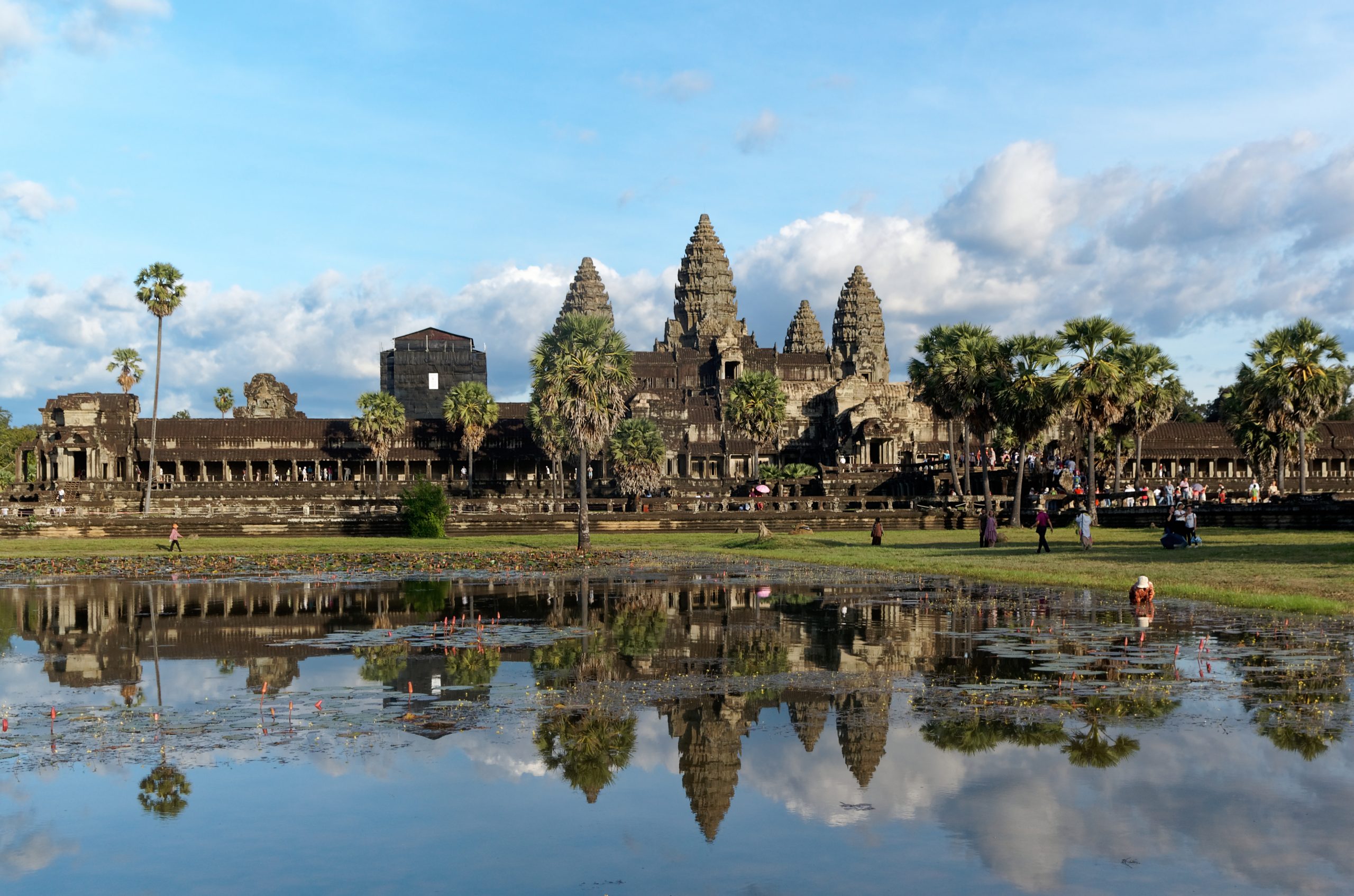
Angkor is a UNESCO World Heritage property, and monks and local worshippers still use parts of it. The UNESCO listing for Angkor explains why it is protected and what it contains.
- Dress for a place of worship. Cover shoulders and knees. A light scarf in your day bag solves most problems.
- Stay on marked paths and stairs. Keep off walls, carvings and restricted structures.
- Keep your hands off carvings. Skin oils and repeated contact wear stone down.
- Treat shrines with respect. Lower your voice and ask before photographing people.
- Use licensed guides when you want them. A guide adds context to carvings and layout that you would otherwise walk past.
- Take your rubbish with you. Carry a refillable bottle.
- Pace the days. Early starts avoid the heat. Midday breaks protect your energy for a late-afternoon visit.
Buy your Angkor Pass through the official ticket service in Siem Reap and check the current pass options and prices before you travel. The 3-day option suits this route for many visitors, and our Angkor Wat guide walks through how to structure those days.
Weather and timing
November to February is the best window. These months are the driest and coolest, which makes long temple days comfortable. March to May is the hottest stretch, with temperatures often above 35°C. June to October is the wet season, with green landscapes, afternoon downpours and quieter sites.
How this shapes the route:
- November to February: plan temple days for early morning and late afternoon, and use midday for rest or museums.
- March to May: keep outdoor time short, carry water and put indoor stops in the middle of the day.
- June to October: pack a light rain jacket, expect some muddy paths and give road journeys extra time.
- Coast: sea conditions and visibility vary by season, so check the forecast for your dates before choosing beach days.
Check a current forecast a week before you leave, then adjust which days are for outdoor sights.
A simple budget framework
Known costs come first, then your own quotes for the rest:
- Visa: the tourist e-Visa has been US$36 for 30 days, payable on the e-Visa site.
- Temple pass: US$62 for the 3-day Angkor Pass, plus a guide if you want one.
- Flights: international arrival, plus the Siem Reap to Phnom Penh flight if you skip the bus.
- Accommodation: nights multiplied by the rate you find for your dates. Check three options per city.
- Daily spending: food, local transport, water, small purchases and a buffer.
Flights and accommodation vary most, so lock those in first and keep the rest flexible.
Route checklist
- [ ] Passport validity and visa checked on the official e-Visa site
- [ ] Arrival and departure airports chosen
- [ ] Nights allocated: Siem Reap, Phnom Penh, Kampot
- [ ] Key transport legs booked, with morning departures on long days
- [ ] Offline maps, ride-hailing app and local SIM or eSIM sorted
- [ ] Buffer night before your flight home
Last reviewed: 25 November 2026. Check the official Cambodian sources below before booking.
Featured photo: Angkor Wat reflected in the water by Jakub Hałun, CC BY-SA 4.0, via Wikimedia Commons.
FAQ
Where should I go on a first trip to Cambodia?
Most first-time visitors link Siem Reap for Angkor and Phnom Penh, then add one slower stop. We recommend Kampot. That combination fits into 7 to 10 days.
How many days do I need for Angkor?
Three days covers the main temples, with early starts and a midday break. Choose the pass length that matches your planned temple days and confirm the current price through the official ticket service.
Do I need a visa for Cambodia?
It depends on your nationality. Check the official Cambodia e-Visa site for current requirements and apply through that portal.
When is the best time to visit Cambodia?
November to February is the driest and coolest period, which suits long temple days. March to May is the hottest. June to October is the wet season, with green landscapes, fewer crowds and rain most often in the afternoon.
Should I choose Kampot, Battambang or the coast?
Choose Kampot. It pairs best with Phnom Penh, with river evenings and pepper farms. Pick Battambang if you prefer countryside and town wandering, or the coast if you want beach time.