
Last reviewed: 2026-11-25 by the Think Travel Lift Grow editorial team. Airline size limits and product specifications change; check your fare and the manufacturer’s current page before you buy.
The best carry-on backpack is the one that fits your airline’s published dimensions when packed, carries the work and clothing you actually need, and stays comfortable through a terminal. Start with the allowance for your fare, then compare packed measurements, empty weight, harness fit, opening style and warranty. This guide uses current published specifications rather than personal testing.
For a laptop-first carry-on decision, see the work backpack for travel guide alongside the airline-size comparison.
Start with the airline allowance
Airlines publish separate limits for an overhead cabin bag and an under-seat personal item. A backpack can qualify as carry-on luggage on one fare and exceed the limit on another. Measure the loaded bag at its widest points, including outside pockets, handles and wheels, then compare the result with your booking.
For a broader airline table, see our carry-on size limits guide. If you need an under-seat bag, use the personal-item backpack size guide instead.
What to compare before choosing
| Feature | What to check | Why it matters |
|---|---|---|
| Packed dimensions | Height, width and depth against the fare | Dimensions decide whether the bag boards; litre ratings are only approximate. |
| Empty weight | The manufacturer’s current listed weight | A heavy frame leaves less of your allowance for clothing and equipment. |
| Opening | Clamshell, top-loading or hybrid | Clamshell access helps when the bag is packed like a suitcase; top-loading designs can be slimmer. |
| Harness | Torso length, sternum strap and load lifters | A close fit spreads weight across your back instead of pulling on your shoulders. |
| Laptop protection | Padded compartment and placement | A separate sleeve makes airport security and daily work easier. |
| Compression | Straps or internal panels | Compression can keep the loaded bag within its depth limit. |
| Warranty and returns | Current coverage and return window | You want a clear path if a zip, buckle or seam fails. |
Research-based carry-on backpack types
Compact clamshell bag
Choose this shape when you pack cubes, carry a laptop and want suitcase-style access. Our packing-cubes guide compares compression and standard options. Look for a structured opening, a protected laptop sleeve and compression that does not force the bag past the depth limit. Compare the manufacturer’s external dimensions with the allowance, including expansion panels if the bag has them.
Hiking-influenced travel pack
A travel pack with a proper hip belt and adjustable harness suits heavier loads or long walks between transport. Check its empty weight and frame length first. A supportive harness helps only when it fits your torso; a large frame can also make a bag harder to stow.
Lightweight daypack
Use a lighter pack for a short trip, a soft-sided overhead bag or a second bag for day walks. A simple layout leaves more capacity for clothing, but a thin laptop sleeve and limited padding may be a poor match for daily work. Match the organisation to the trip rather than paying for compartments you will not use.
How to pack it within the limit
1. Pack the bag with the exact items you will carry and close every zip. 2. Measure height, width and depth on a flat surface, including bulging pockets and handles. 3. Put the heaviest items close to your back and keep one layer accessible. 4. Use a small cube for clothing and leave expansion zips closed until you know the fare allows the extra depth. 5. Weigh the loaded bag and compare it with the airline’s current cabin limit.
Choosing a carry-on backpack or rolling case
Choose a backpack when stairs, cobbled streets and transfers are part of the route, or when you want both hands free. Choose a rolling case when the load is heavy, the route is mostly smooth floors and you prefer not to carry weight on your back. A backpack with wheels adds structure and weight, so compare the packed allowance before paying for both options.
Our best travel backpacks guide compares broader travel-bag categories, while the one-bag packing list for three days helps you test how much capacity you actually need.
FAQ
What size backpack counts as carry-on luggage?
There is no universal size. Check the airline and fare you will use, then measure the loaded bag at its outside dimensions. Overhead cabin limits and under-seat personal-item limits are different.
Is a 40-litre backpack always allowed as carry-on?
No. A 40-litre label describes approximate capacity, while the airline checks height, width, depth and sometimes weight. A soft bag can compress, but it still has to fit the published limit when packed.
Are clamshell backpacks better for flights?
They are useful when you pack like a suitcase and want quick access to clothing or a laptop. The best opening depends on your packing style; compare the bag’s structure, weight and packed dimensions before choosing.
Should a carry-on backpack have a hip belt?
A hip belt helps when the load is heavy or you walk for longer periods. It adds weight and bulk, so a light city-trip pack may be more comfortable with a simple harness and a lower packed load.
How do I test a carry-on backpack before a trip?
Pack the items you will take, measure the outside dimensions, weigh the bag and walk with it for at least 20 minutes. Check the airline’s current allowance on the booking, because a successful test does not change the fare rules.
Next step
Compare the packed dimensions of two or three candidates with your booking, then use the carry-on size limits table before you order.
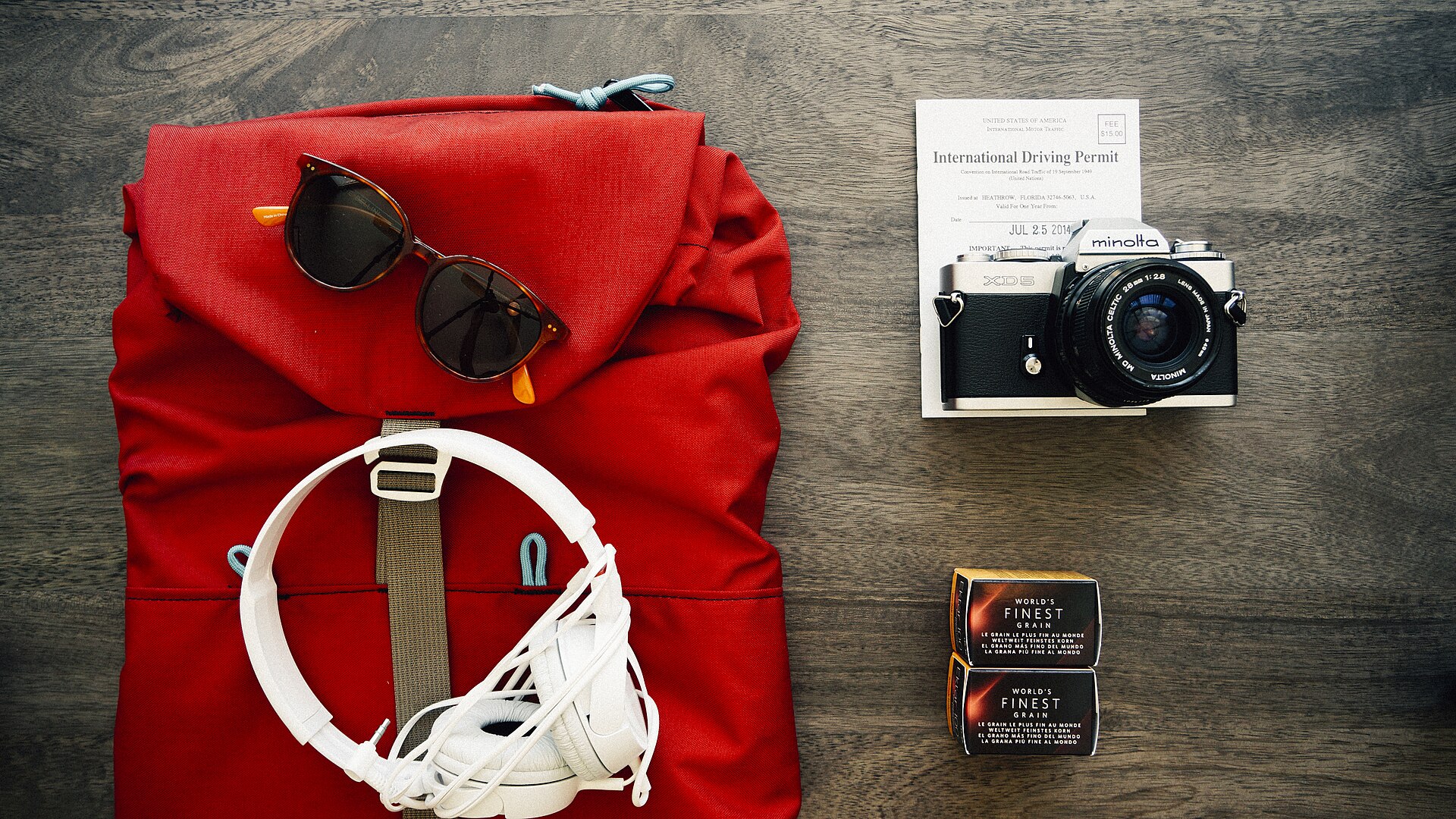
Featured photo: www.Pixel.la Free Stock Photos, CC0, via Wikimedia Commons.