
Essaouira is a fortified Atlantic port city in western Morocco, 175 kilometers west of Marrakech. Plan two to three days to walk its UNESCO-listed 18th-century medina, see the working fishing harbor, browse thuya wood workshops, and visit the sandy bay during trade-wind or surf seasons. Reach town by coach from Marrakech or flights to ESU.
!Atlantic waves breaking against the stone ramparts and coastline of Essaouira, Morocco Photo: Mustang Joe, via Wikimedia Commons (CC0).
Why Essaouira Works as an Atlantic Base
Essaouira fits travelers who want coastal air, walkable streets, and a steady pace on Morocco’s Atlantic coast. The walled center sits on a flat rocky peninsula, keeping the port, ramparts, craft quarters, and main beach within a short walk. It pairs easily with inland routes through Marrakech or Agadir. Essaouira also features among our underrated travel destinations for short coastal stays.
The city suits beach walkers, kitesurfers, windsurfers, and anyone interested in woodworking or live music. Travelers looking for calm, warm summer swimming or direct rail connections will find better fits elsewhere on the coast, since Atlantic water stays brisk and trade winds blow across the bay for much of the year.
Budget control comes down to four practical levers: travel dates, base location, intercity transport, and meal type. Shoulder months in spring and autumn bring lighter demand than June festival weeks or July and August peak summer. Taking intercity coaches over private transfers and keeping daily meal choices simple helps manage overall trip spending. For broader value-focused route ideas, pair this guide with our cheap places to travel roundups.
The UNESCO Medina and Working Port
Historically known as Mogador, the Medina of Essaouira joined the UNESCO World Heritage List in 2001 under criteria (ii) and (iv). Alaouite Sultan Sidi Mohamed Ben Abdallah commissioned the modern town in the 1760s, and French military engineer Théodore Cornut laid out the fortified plan using European Vauban-style defense principles adapted to a North African coastal site.
That planned geometry makes navigation straightforward. Straight main avenues cross inside rosy-ochre sea walls lined with whitewashed buildings and blue wooden shutters. Historic quarters inside the ramparts include the former royal Kasbah and the traditional Jewish quarter known as the Mellah, entered through monumental gates such as Bab Marrakech.
Two historic fortifications anchor the seafront: Skala de la Ville, a sea-facing artillery platform lined with bronze cannons above breaking Atlantic surf, and Skala du Port, the fortified bastion overlooking the harbor. Directly below the walls sits Essaouira’s working fishing port, where wooden blue fishing boats crowd the basin. Wear closed-toe shoes when walking out on the wet stone dock.
Beaches, Trade Winds, and Coastal Timing
Trade winds known as the alizés shape Essaouira’s weather and coastal activities. The main wind season runs from April through October, reaching peak strength across June, July, and August, when sustained gusts make the bay a kitesurfing and windsurfing spot.
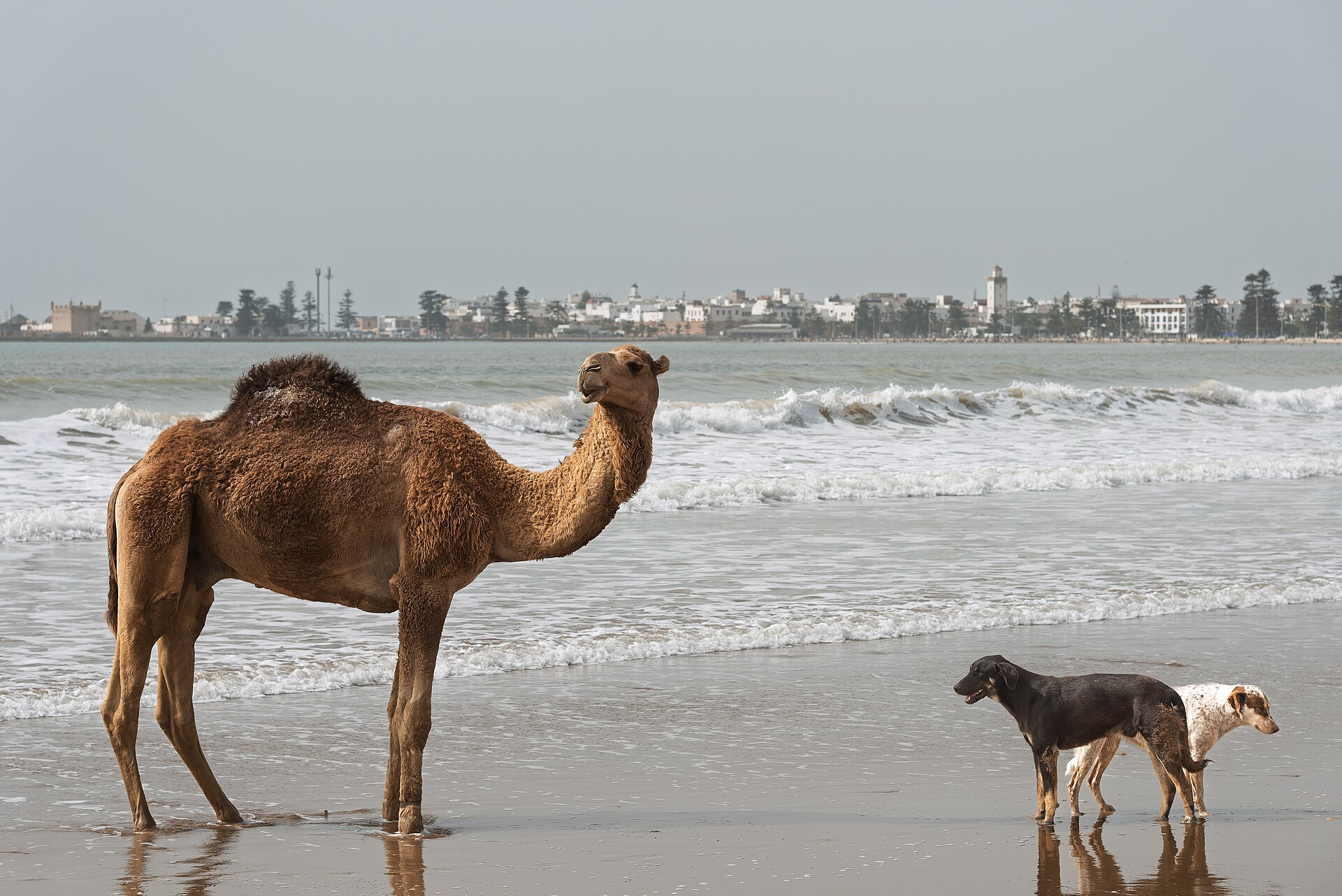
Essaouira’s wide sandy beach stretches south from the medina edge for walking, jogging, and water sports. Blowing sand is common on the open shoreline during peak wind months, so sheltered medina streets work well when gusts pick up.
Winter from November through February brings cooler air, lighter or more variable wind, and larger Atlantic swells. Surfers target the main bay during these months, along with coastal breaks farther south. Sidi Kaouki, a coastal village 25 to 30 kilometers south of Essaouira, draws surfers and beachgoers to open Atlantic shoreline. Pack a light windbreaker and an extra evening layer in every season, since ocean air cools the coast quickly after sunset.
Crafts, Music, and Regional Culture
Craft production remains visible across the medina, as documented on Visit Morocco. Essaouira is Morocco’s center for thuya wood carving, worked from the fragrant, patterned burl of the native Tetraclinis articulata tree. Artisans plane, polish, and inlay jewelry boxes, bowls, chessboards, and furniture with lemon wood, ebony, or mother-of-pearl. Small medina workshops and galleries also feature local silverwork. Check cabin-baggage limits before buying larger carved woodwork.
Outside the walls, the surrounding countryside lies inside Morocco’s endemic argan forest (Argania spinosa). Women’s cooperatives along inland roads press culinary and cosmetic argan oil and blend amlou, a traditional spread made from argan oil, toasted almonds, and honey.
Essaouira is a major home for Gnaoua music, a spiritual rhythm tradition played on the three-stringed guembri lute and metal qraqeb castanets. Every June, the annual Gnaoua World Music Festival brings Moroccan maâlems (master musicians) and international collaborators to outdoor medina stages. Book rooms and coaches well ahead if your trip overlaps with festival dates.
How to Plan Two to Three Days in Essaouira
Two to three days give enough structure to balance medina walks, coastal time, and a short trip outside the walls.
- Day 1: Medina and port. Enter through Bab Marrakech, walk the straight main avenues through the Kasbah and Mellah, and visit the working fishing port. Continue to Skala du Port and finish along Skala de la Ville by the ocean.
- Day 2: Main bay and crafts. Spend time along the sandy bay for a shoreline walk or water-sports session, then return inside the ramparts to browse thuya wood workshops, silverwork stalls, and local galleries.
- Day 3: Sidi Kaouki or argan countryside. Ride 25 to 30 kilometers south to Sidi Kaouki for open Atlantic shoreline, or stop at a rural women’s argan cooperative along the inland highway before returning to town for a final seawall walk.
| Trip Focus | Best Timing | Typical Conditions | Logistics and Base Choice | Main Cost Levers |
|---|---|---|---|---|
| Medina and crafts | March to May, September to November | Mild daytime air, moderate coastal breeze | Stay inside the medina near Bab Marrakech for walkability | Shoulder-season dates, simple meal choices |
| Kitesurfing and windsurfing | April to October (peak June to August) | Strong alizés trade winds, choppy bay water | Base in town within walking distance of the main bay | Advance booking before June to August peak |
| Surfing and quiet coast | November to February | Larger Atlantic swells, cooler evenings, lighter wind | Split time between Essaouira and Sidi Kaouki by taxi | Off-peak stays, local taxis or coaches |
| Marrakech add-on | Year-round (2 to 3 nights) | Cooler coastal air compared with inland plains | Take a Supratours coach from Marrakech | Coach transit and early seat reservations |
Getting to Essaouira and Moving Around
No train line reaches Essaouira, so overland travelers connect by road from Marrakech or Agadir, while flyers use the regional airport southeast of town.
- From Marrakech (about 175 to 180 kilometers): Supratours, the official coach subsidiary of Morocco’s national railway ONCF, runs coaches to Essaouira in about three hours, dropping passengers near Bab Marrakech. Travelers arriving in Marrakech by ONCF rail can book combined train-and-Supratours through-tickets. CTM also operates intercity coaches on this route. Reserve seats ahead during summer weekends and June festival dates.
- From Agadir (about 175 kilometers): Drive north on the N1 coastal highway in roughly 2.5 to 3 hours, or take an intercity coach in around 3.5 hours.
- By air: Essaouira-Mogador Airport (ESU), managed by ONDA, lies roughly 15 kilometers southeast of town. Plan on a 20-to-25-minute taxi ride into the center, since intercity coaches do not depart from the airport terminal.
- In town: Walk inside the car-free medina, and use local taxis for the airport, coach stops, or trips to Sidi Kaouki.
Morocco Entry Checks Before You Go
Morocco entry rules depend on your nationality and passport. Requirements and carrier checks can change, so verify current rules on the official Visit Morocco formalities page before booking (checked November 2026).
All foreign visitors need a valid passport, and airlines widely enforce at least six months of remaining validity. Citizens of many countries, including the US, UK, EU member states, Canada, Australia, and New Zealand, enter visa-free for tourism up to 90 days. Staying beyond 90 days requires an extension request with local Moroccan police authorities before the initial period expires.
Nationalities requiring advance authorization can check eligibility and apply for an e-Visa or Electronic Travel Authorization (AEVM) through the official Accès Maroc portal, or apply via a Moroccan embassy or consulate. Keep proof of onward or return travel, accommodation details, and sufficient funds ready in case border officers request them on arrival.
Frequently Asked Questions
How many days should you spend in Essaouira, Morocco?
Two to three days give enough time to walk the medina and ramparts, visit the working harbor, browse craft workshops, and take a half-day trip south to Sidi Kaouki.
When is the best time to visit Essaouira for beaches or wind sports?
Trade winds blow strongest from April through October, peaking from June to August for kitesurfing and windsurfing. November through February brings lighter wind and larger Atlantic swells for surfing.
Can you take a train directly to Essaouira?
No rail line reaches Essaouira. Take an ONCF train to Marrakech, then transfer to a Supratours coach for the three-hour ride to Bab Marrakech.
Do you need a visa to visit Essaouira, Morocco?
Visa rules depend on your nationality. Many visitors enter visa-free for up to 90 days, while other passport holders apply in advance through Morocco’s Accès Maroc portal or a Moroccan consulate.
Is Essaouira easy to explore on foot?
Yes. The walled medina is compact, flat, and car-free, laid out on an 18th-century grid that keeps the ramparts, port, workshops, and main beach within easy walking distance.
Continue planning your route across Morocco and beyond in our destinations directory.
Essaouira coast, Morocco by Mustang Joe (CC0, Wikimedia Commons)