
Semuc Champey is a protected natural monument in Guatemala’s Alta Verapaz department where turquoise spring-fed pools cascade across a 300-meter limestone bridge above the Cahabón River. Reach the site through Cobán and Lanquín using a 4×4 vehicle, pack grippy water shoes and biodegradable sunscreen, and schedule road travel during daylight hours.
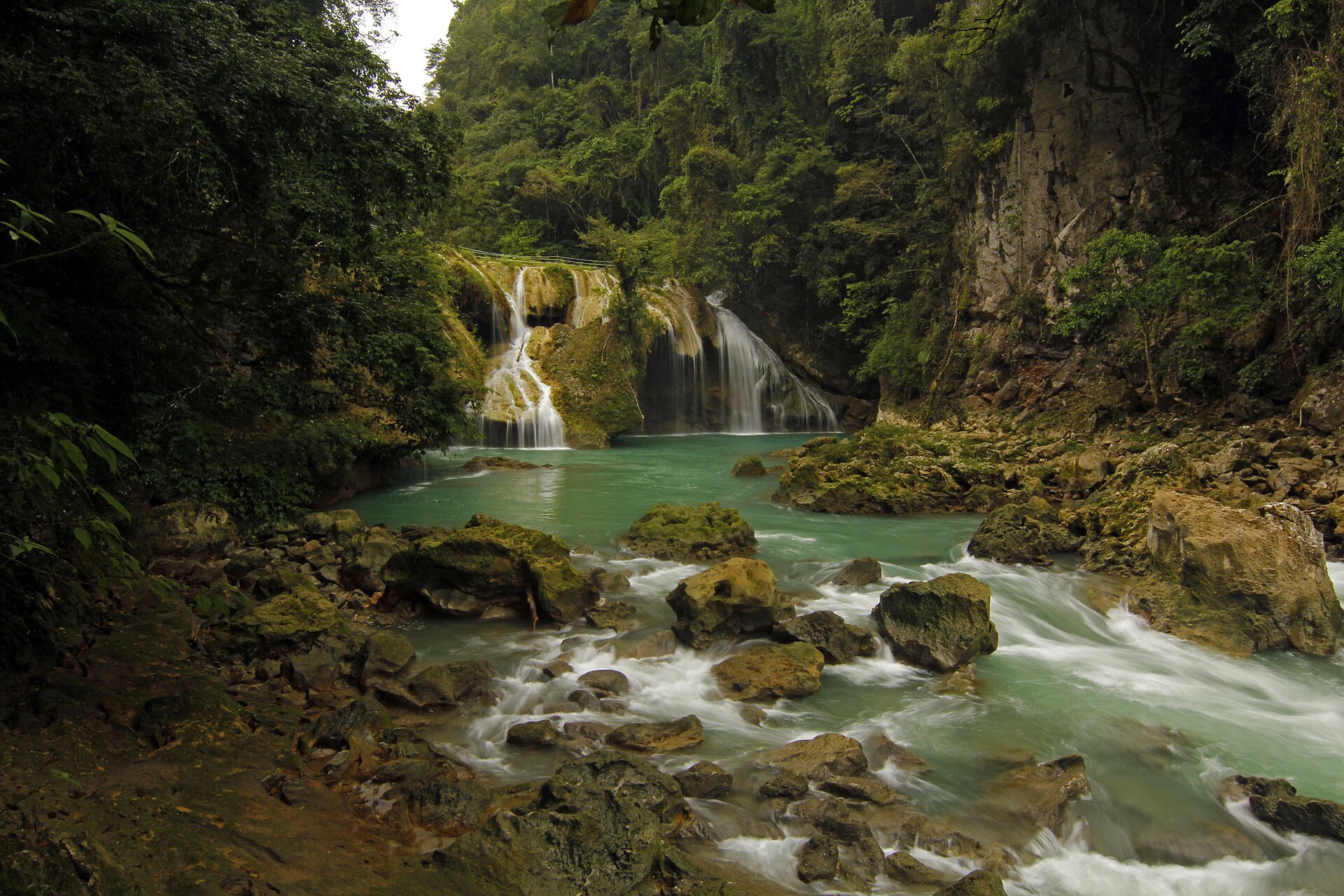
Photo: descubriendoelmundo, CC BY-SA 2.0, via Wikimedia Commons.
What Semuc Champey Is and How the Pools Work
Monumento Natural Semuc Champey sits inside Guatemala’s Sistema Guatemalteco de Áreas Protegidas (SIGAP), managed jointly by the Consejo Nacional de Áreas Protegidas (CONAP) and the Municipality of Lanquín. In the local Q’eqchi’ Maya language, the name means “where the river hides under the stones,” describing the limestone formation at the center of the reserve documented on the CONAP SIGAP Semuc Champey portal.
At the heart of the canyon, the Cahabón River disappears beneath a natural limestone bridge spanning roughly 300 meters. Directly on top of that bridge, cool mountain springs feed a stepped series of calm turquoise and emerald pools separated by natural limestone ledges. Steep forested canyon walls enclose the reserve on both sides. The terraced pools on the bridge surface are designated for swimming, while the fast-flowing Cahabón River carries strong current and remains off-limits to swimmers.
Above the canyon floor, a steep rainforest trail climbs to El Mirador, the main elevated viewing platform highlighted on Visit Guatemala’s Semuc Champey page. From the deck, you can look straight down over the entire limestone bridge, watch the river disappear beneath the rock, and see each pool tier before heading down to swim.
Reaching Semuc Champey Through Cobán and Lanquín
Almost every overland route into Semuc Champey passes through Cobán, the departmental capital of Alta Verapaz, before heading east toward the municipality of Lanquín. From Cobán, a mountain road covers roughly 63 to 65 kilometers to Lanquín, taking around two hours in normal conditions. Lanquín serves as the final staging town for the monument.
The last 10 to 12 kilometers from Lanquín to the Semuc Champey entrance follow a steep, unpaved dirt and stone track that takes 30 to 45 minutes. CONAP recommends a 4×4 vehicle for this stretch, especially during rain. Schedule every overland leg across Alta Verapaz for daylight hours.
Base yourself in Lanquín for two nights so day one absorbs the overland travel and day two gives you a full morning for El Mirador and the pools. If you are pairing Alta Verapaz with Guatemala’s central highlands, see our Antigua Guatemala travel guide to plan that leg of the itinerary.
Two practical levers shape your daily spend on this trip:
- Transport format: Shared local 4×4 pickups split road costs across passengers, while private transfers cost more in exchange for flexible departure times.
- Gear readiness: Bringing your own water shoes, dry bag, and biodegradable sun protection avoids paying local rental or convenience markups.
For broader strategies on keeping overland trips affordable through routing and timing, see our guide to cheap places to travel.
Access and Route Planning Table
Use this breakdown to plan transport and pacing from Cobán to the pools and lookout.
| Route Leg | Distance & Surface | Typical Time | Recommended Transport / Gear |
|---|---|---|---|
| Cobán to Lanquín | 63–65 km mountain road | About 2 hours | Standard vehicle or regional transport |
| Lanquín to Semuc Champey entrance | 10–12 km steep unpaved dirt and stone track | 30–45 minutes | 4×4 vehicle (CONAP recommendation, especially in rain) |
| Monument entrance to El Mirador | Steep rainforest foot trail | 20–30 minutes uphill | Grippy trail shoes or hiking shoes |
Wet-Season Road Planning and Seasonal Timing
Alta Verapaz has a humid tropical rainforest climate where showers can fall in any month. Across the region, the drier window typically runs from February through April, bringing firmer hiking trails and steadier road surfaces. Heavier rains generally run from May through October, with wet spells continuing into January.
Rain affects three parts of your visit:
- Unpaved road traction: Downpours turn clay sections between Lanquín and Semuc Champey into slick ruts and standing puddles. Rely on experienced local 4×4 drivers for this final leg.
- Trail footing: The 20-to-30-minute uphill climb to El Mirador crosses wet tree roots and mud under the forest canopy.
- River and pool conditions: Heavy upland rain swells the Cahabón River, strengthens currents near the cave entrance, and can temporarily turn pool water silty.
Build a flexible buffer day into wet-season itineraries in case heavy rain slows highway traffic between Cobán and Lanquín.
Swimming, Water Shoes, and Packing Checklist
Wet limestone stays slick even in dry weather, and the steep climb to El Mirador calls for real ankle support. Pack for both trail traction and wet rock:
- Closed-toe water shoes: Rubber-soled water shoes grip wet limestone ledges and protect your toes on submerged rock steps between pools.
- Grippy trail shoes: Wear hiking shoes or trail runners with deep lugs for the El Mirador ascent, then switch into water shoes at the pools.
- Dry bag and quick-dry layers: Keep cash, phones, and dry clothes sealed inside a waterproof bag during sudden showers and poolside transitions.
- Biodegradable sun and bug protection: Pack biodegradable sunscreen and biodegradable insect repellent so runoff stays safe for aquatic life.
- Reusable water bottle: High humidity makes the El Mirador climb sweaty; carry plenty of drinking water in a refillable container.
Swim only inside the designated terraced pools on top of the limestone bridge. Stay well back from the upstream sinkhole where the Cahabón River drops beneath the stone, and keep off canyon edges. Skip jumping or diving from limestone ledges because pool depths change abruptly over solid rock.
Responsible Visits Inside the Protected Monument
Semuc Champey protects fragile karst pools and subtropical rainforest habitat inside the SIGAP conservation network. CONAP’s visitor guidelines focus on keeping chemical runoff, waste, and physical erosion out of the water system.
Follow these on-site conservation rules during your visit:
- Use only biodegradable products: Conventional sunscreens, oils, and insect repellents leave chemical residue on the spring-fed pools. Apply biodegradable products well before entering the water, or rinse off and skip lotions while swimming.
- Pack out all waste: Carry every wrapper, bottle, and food scrap back out of the reserve and skip single-use plastics.
- Leave the habitat intact: Keep hands off wild plants, limestone formations, and wildlife, and stay inside marked trails and viewing decks.
- Leave pets outside the reserve: CONAP prohibits pets inside the protected area to protect native fauna.
Entry Rules and Travel Advisories
Entry requirements for Guatemala depend on your passport nationality. Under the Reglamento de Visas Guatemaltecas (Acuerdo AMN 007-2023) issued through the Instituto Guatemalteco de Migración (IGM), nationalities fall into three classifications: Category A (visa-exempt), Category B (consular visa required), and Category C (consulted visa requiring prior IGM authorization). Under the regulation’s visa-equivalence rules, Category B citizens holding a valid U.S., Mexican, Canadian, or Schengen visa receive Category A visa-exempt treatment, while Category C citizens holding one of those visas qualify for Category B consular processing.
For overland safety planning, consult the U.S. Department of State Guatemala Travel Advisory, which rates Guatemala Level 3 (Reconsider Travel) due to crime. The advisory’s Level 4 (Do Not Travel) zones lie outside Alta Verapaz, though travelers across the country are advised to use reputable daytime transport, avoid driving after dark, and watch local updates for occasional highway roadblocks.
Checked November 2026.
Frequently Asked Questions About Semuc Champey
Do you need a four-wheel-drive vehicle to reach Semuc Champey from Lanquín?
CONAP recommends a 4×4 vehicle for the final 10 to 12 kilometers from Lanquín to the monument entrance, especially during rain. That stretch follows a steep, unpaved dirt and stone track with loose rock and deep ruts.
What shoes should you wear at Semuc Champey?
Bring two pairs: closed-toe water shoes with grippy rubber soles for walking across slick limestone ledges between pools, and sturdy trail shoes for the steep, humid rainforest hike up to El Mirador.
When is the best time of year to visit Semuc Champey?
February through April brings the driest weather in Alta Verapaz, with firmer trails and steadier road surfaces. Showers still occur year-round, and heavier rains from May through October make roads muddier and river currents stronger.
Can you visit Semuc Champey as a day trip from Cobán?
You can, though it makes for a long day of mountain driving between Cobán, Lanquín, and the monument entrance. Staying overnight in Lanquín gives you more unhurried time for El Mirador and the pools.
Are sunscreen and insect repellent allowed in the Semuc Champey pools?
CONAP asks visitors to use only biodegradable sunscreen and biodegradable insect repellent inside the protected monument. Apply products well ahead of entering the water, or skip lotions entirely before swimming to protect the spring-fed ecosystem.
Explore more regional guides in our destinations hub.
“`html “`
Semuc Champey, Guatemala by descubriendoelmundo (CC BY-SA 2.0, Wikimedia Commons)