
Vung Tau sits on a southern Vietnamese peninsula roughly two hours from central Ho Chi Minh City by high-speed ferry or highway bus. Visitors come for Back Beach swimming, late-afternoon walks along Front Beach, the 1862 hilltop lighthouse, the Christ the King statue on Small Mountain, and coastal temples spread across two hills.
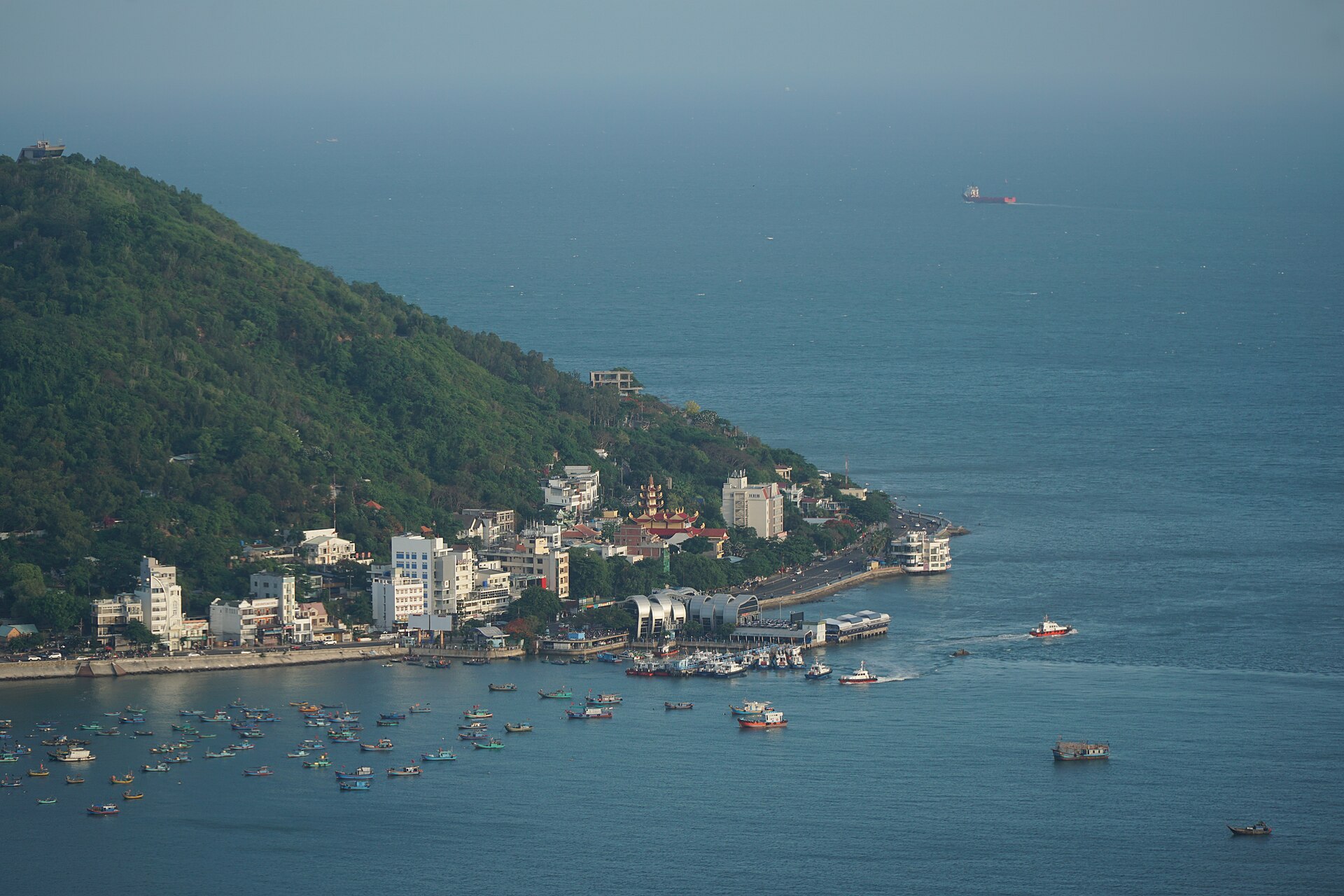
!Front Beach (Bai Truoc) bay, curved seafront promenade, and tree-lined park in Vung Tau, Vietnam
*Photo: Front Beach (Bai Truoc) in Vung Tau by NDTK08, via Wikimedia Commons (CC BY 4.0).*
What Vung Tau Is
Vung Tau sits on a coastal peninsula jutting into the East Sea roughly 95 to 100 km southeast of central Ho Chi Minh City. On July 1, 2025, the peninsula became part of expanded Ho Chi Minh City under Vietnam's national administrative reorganization.
Big Mountain (Nui Lon) and Small Mountain (Nui Nho) rise behind Front Beach on the bay side, while Back Beach runs along Thuy Van Street on the open-sea side. Taxis, ride-hailing cars, and coastal walks connect the main waterfront areas and hill viewpoints within minutes. For broader national planning across the country, see our Vietnam travel guide.
How to Reach Vung Tau from Ho Chi Minh City
Reach Vung Tau from central Ho Chi Minh City by high-speed ferry or road.
High-Speed Ferry
GreenlinesDP runs high-speed passenger ferries between Bach Dang High-Speed Ferry Terminal (Pier No. 4, 10B Ton Duc Thang Street in central Ho Chi Minh City) and Ho May Pier on Tran Phu Street in Vung Tau. The crossing runs down the Saigon River in about 2 hours. Timetables shift with tides, weather, and seasonal demand, so confirm live sailings on the operator's site before departure.
Highway Bus, Shared Van, and Private Car
Road travel follows the Ho Chi Minh City-Long Thanh-Dau Giay Expressway (CT01) and National Highway 51 (QL51), taking 2 to 3 hours depending on traffic. Highway buses, shared vans, and private cars connect central Ho Chi Minh City and Vung Tau. Private cars give small groups carrying luggage direct transfers outside ferry windows.
Timing, Entry Rules, and Cost Levers
Trip costs depend on travel dates, transport mode, accommodation area, and dining choices. Booking transport and rooms ahead keeps options open on busy dates, and comparing local eateries with beachfront venues helps control meal spending. For more budget-friendly destinations, browse our cheap places to travel guide.
*Schedule and entry check (November 2026):* Confirm daily sailings on GreenlinesDP before heading to Bach Dang Pier. According to GOV.UK Vietnam entry requirements, British citizens enter visa-free for up to 45 days with a passport valid for at least 6 months from arrival, at least 2 blank pages, and zero physical damage, using the same passport on entry and exit. Stays over 45 days require an advance e-visa through Vietnam's official e-visa portal, covering up to 90 days for single or multiple entries.
Front Beach and Back Beach
Front Beach and Back Beach sit on opposite sides of the peninsula and suit different parts of the day.
Front Beach (Bai Truoc)
Front Beach curves along the sheltered bay between Big Mountain and Small Mountain. Its calm water holds anchored fishing boats and local vessels, bordered by a waterfront park along Quang Trung and Tran Phu streets. Visit in late afternoon for harbor views and sunset light over the bay.
Back Beach (Bai Sau)
Back Beach runs along Thuy Van Street facing the open East Sea and serves as the main shoreline for swimming and sunrise walks. In 2025, municipal upgrades redeveloped a 3.2-kilometer stretch of the Thuy Van beachfront into a 19-hectare public coastal park with Tam Thang Square, pedestrian paths, and lifeguard posts.
Swimming Conditions and Safety
Back Beach faces open-ocean swell that can produce strong rip currents, especially during the windy northeast monsoon from December to March. Swim inside lifeguard-patrolled zones and check local conditions before entering the water. Vung Tau's dry season runs from November to April, and the rainy season runs from May to October.
Vung Tau Lighthouse and Hill Viewpoints
Small Mountain and Big Mountain rise directly behind the waterfront, putting Vung Tau's main viewpoints minutes from the beaches.
Vung Tau Lighthouse (Hai Dang Vung Tau)
Perched 170 meters above sea level on Small Mountain, Vung Tau Lighthouse was built by the French in 1862 and rebuilt on its current summit in 1913. Its 18-meter white cylindrical tower overlooks Front Beach, Back Beach, and the surrounding sea. Visit in late afternoon for clear coastal light before dusk.
Christ the King Statue (Tuong Chua Kito)
Further along Small Mountain stands the Christ the King statue, featured in Vietnam Tourism's Vung Tau sightseeing guide. Reaching the base requires climbing roughly 800 stone steps up the hillside, followed by a 133-step interior spiral staircase to viewing areas at the shoulders. Because this is an active religious site, wear clothing covering shoulders and knees, wear sturdy walking shoes, and remove shoes before stepping inside.
Villa Blanche (Bach Dinh) and Nghinh Phong Cape
On Big Mountain stands Villa Blanche (White Palace), built between 1898 and 1902 as a summer residence for Governor-General Paul Doumer. The building later housed Vietnamese Emperor Thanh Thai and now operates as a museum exhibiting antiques and ceramics from regional shipwrecks. Between Front Beach and Back Beach, Nghinh Phong Cape marks the headland looking out toward Hon Ba Island.
Coastal Temples and Local Dishes
Several Buddhist temples and maritime shrines sit across Vung Tau's hills and shoreline.
- Thich Ca Phat Dai: A Buddhist temple complex set on Big Mountain.
- Niet Ban Tinh Xa (Nirvana Vihara): Built in 1969 on Small Mountain, this pagoda houses a 12-meter reclining Buddha.
- Whale Temple (Dinh Thang Tam): A historic communal temple honoring whales revered by local fishing communities.
- Hon Ba Island: A small rocky islet offshore from Nghinh Phong Cape holding a coastal shrine. At low tide, a stone path uncovers so visitors can walk across carefully on foot.
Between sightseeing stops, the Vietnam National Authority of Tourism Vung Tau guide highlights two regional specialties: *banh khot* (savory rice-flour mini-pancakes) and *lau ca duoi* (stingray hot pot), alongside fresh coastal seafood.
Vung Tau Planning Table
| Sight or Area | Location | Best For | Practical Timing and Notes |
|---|---|---|---|
| Front Beach (Bai Truoc) | Sheltered bay | Evening walks, waterfront park, sunsets | Anchored fishing boats; pair with late-afternoon strolls |
| Back Beach (Bai Sau) | Open-sea coast (Thuy Van Street) | Swimming, sunrise walks, coastal park | Watch for rip currents Dec-Mar; use patrolled areas |
| Vung Tau Lighthouse | Small Mountain | Hilltop coastal views, historic tower | Late afternoon brings softer light over both beaches |
| Christ the King Statue | Small Mountain | Panoramic views from the shoulders | Steep hillside climb and interior stairs; cover shoulders and knees |
| Villa Blanche and Thich Ca Phat Dai | Big Mountain | Colonial history, museum antiques, hillside temple | Pair in one morning loop before midday heat |
| Hon Ba Island and Nghinh Phong Cape | Coastal headland | Sea views, offshore shrine walk | Check daily tide charts; stone path uncovers at low tide |
One-Day and Two-Day Vung Tau Routes
One-Day Route from Central Ho Chi Minh City
Take a morning high-speed ferry from Bach Dang Terminal or an early highway bus to arrive mid-morning. Start on Small Mountain before midday heat builds: climb to the Christ the King statue, then continue to Vung Tau Lighthouse. Stop for a lunch of *banh khot* or coastal seafood, then spend early afternoon along Back Beach and the Thuy Van beachfront park. Walk over to Front Beach in late afternoon for sunset before taking an evening bus or van back to central Ho Chi Minh City.
Two-Day Overnight Route
Follow Day 1 at a relaxed pace and stay overnight near Back Beach or Front Beach. Start Day 2 with a sunrise walk along Back Beach. After breakfast, visit Big Mountain for Villa Blanche and Thich Ca Phat Dai, then stop at Whale Temple. Check low-tide timing for a walk out to Hon Ba Island near Nghinh Phong Cape before taking an afternoon ferry or bus back. For more coastal cities and regional itineraries, browse our destinations directory.
Frequently Asked Questions
How long does it take to reach Vung Tau from Ho Chi Minh City?
High-speed ferries from Bach Dang High-Speed Ferry Terminal to Ho May Pier take about 2 hours. Highway buses, shared vans, and private cars cover the roughly 95 to 100 km road trip in 2 to 3 hours via the CT01 expressway and National Highway 51, depending on traffic.
Which Vung Tau beach is better for swimming, Front Beach or Back Beach?
Back Beach along Thuy Van Street is the main swimming beach, facing the open East Sea with lifeguard posts along the redeveloped coastal park. Front Beach sits on a sheltered bay used by local fishing boats and works best for seafront walks and sunsets.
Can you climb inside the Christ the King statue in Vung Tau?
Yes. After climbing the hillside steps to the statue base on Small Mountain, visitors can take an interior spiral staircase up to viewing areas at the shoulders. Wear clothing covering shoulders and knees and remove shoes before entering.
When is the best time of year to visit Vung Tau?
The dry season from November to April suits beach days and hill walks. The rainy season runs from May to October. From December to March, northeast monsoon winds can strengthen rip currents along Back Beach.
Is Vung Tau worth a day trip or an overnight stay?
A day trip covers the main sights; stay one night to add Big Mountain and a sunrise walk. One day from central Ho Chi Minh City fits Back Beach, Small Mountain's lighthouse and Christ the King statue, and sunset at Front Beach, while an overnight stay adds Villa Blanche, Thich Ca Phat Dai, and Hon Ba Island.