
The best hostels in Barcelona depend on whether you want historic streets, Gaudí landmarks, beach access, nightlife or a quieter local base. Eixample is a practical first-trip choice, the Gothic Quarter and El Born put old-city sights close, and Poblenou or Gràcia give longer stays more breathing room. Compare the exact street, station, room setup and house rules before booking.
Barcelona hostel areas at a glance
| Area | What it feels like | Best fit | Hostel choice to compare |
|---|---|---|---|
| Eixample | Grid streets, Gaudí buildings and easy metro connections | First trips and mixed sightseeing | Central hostel near a metro station |
| Gothic Quarter and El Born | Medieval lanes, museums, restaurants and night activity | Walkable short stays | Social hostel with lockers and quiet-hour rules |
| Barceloneta | Beach, harbour and summer energy | Beach-led trips | Hostel with secure storage and a clear late route |
| Poblenou | Wider streets, beach access and creative spaces | Longer stays and calmer evenings | Modern hostel near L4 or buses |
| Gràcia | Plazas, local restaurants and neighbourhood life | Repeat visitors and slower trips | Smaller hostel with a kitchen |
| Sants and Poble-sec | Rail access, Montjuïc and food streets | Early trains and culture trips | Hostel near Sants or parallel transit |
Start with official Barcelona visitor information
Barcelona’s official visitor information brings together neighbourhood planning, transport, airport information, tourist-tax context and practical safety reminders. Use it to decide whether your trip is mainly old-city sightseeing, beach time, culture, food or an onward rail journey. A hostel’s district label is not enough; the exact street changes the walking and noise experience.
The TMB public-transport guide covers Metro and bus travel and explains visitor travel products. TMB connects the main tourist areas, but a direct line can still involve a long walk from the station. Check the nearest entrance and the last practical route before choosing a property.
The Catalonia tourism listing for Barcelona accommodation and hostels is useful for cross-checking current property types. Facilities, operating names, availability and house rules change; open the property’s own page before paying.
Choosing a Barcelona neighbourhood
Eixample is a dependable first-trip base. The grid makes addresses easy to understand, and Metro lines connect it with Sagrada Família, Plaça de Catalunya, Gràcia and the waterfront. The area has restaurants at many hours, but some large avenues stay busy late. Ask for a room facing an interior courtyard or a quieter side street if sleep matters.
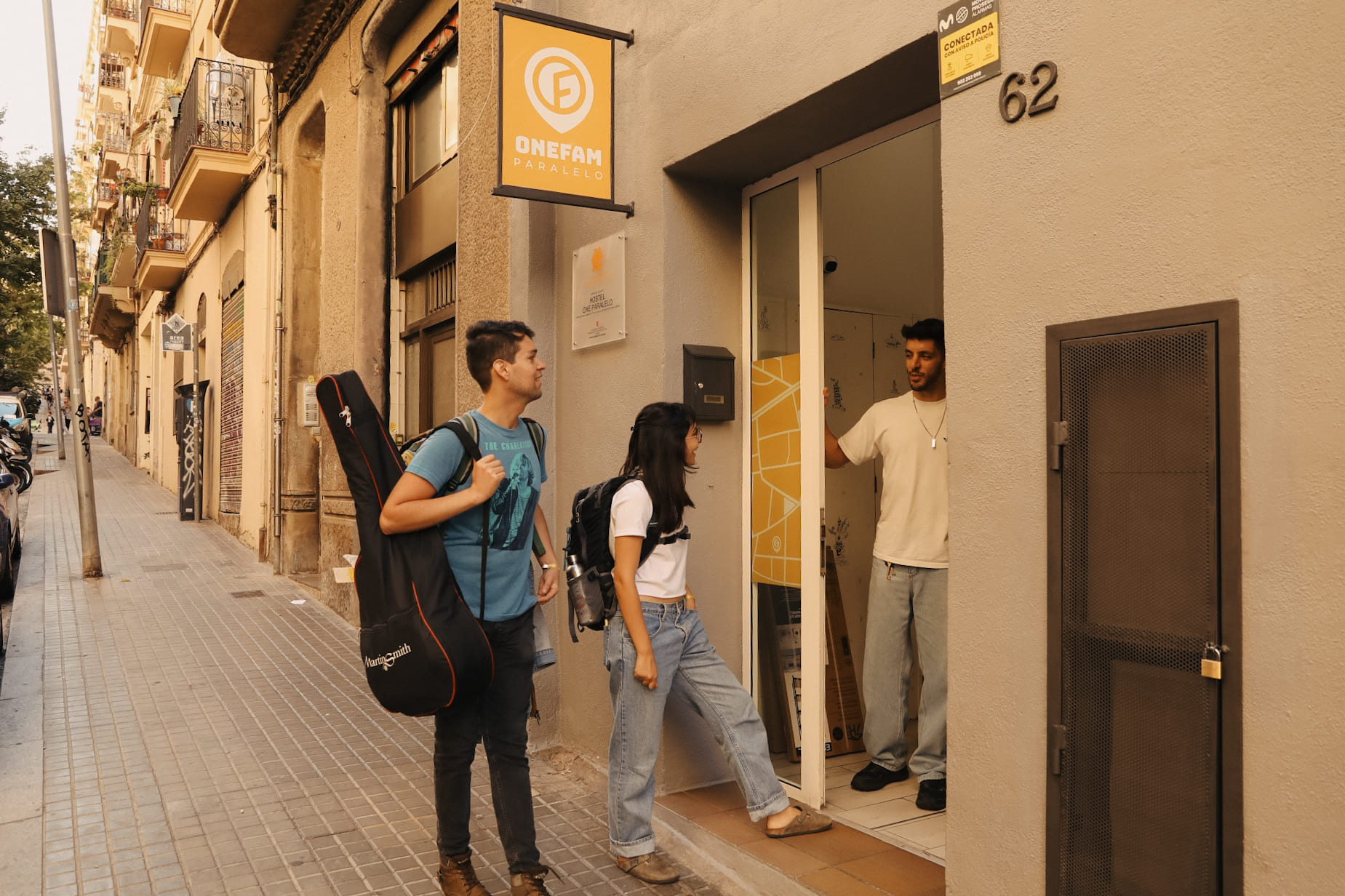
The Gothic Quarter and El Born put the Cathedral, Plaça Reial, Santa Maria del Mar and many museums within walking distance. The lanes are atmospheric but can be crowded, noisy and confusing with luggage. Read the hostel’s arrival instructions carefully and save the address in Catalan or Spanish. Check whether the entrance is on a narrow lane and whether reception operates all night.
Barceloneta works for a beach-first visit. The harbour and waterfront are close, and the area feels different from the inland city. Summer brings crowds and late activity, so inspect noise policies and air conditioning. If you plan to visit Eixample or Park Güell every day, map the Metro route and allow for the journey back after the beach.
Poblenou gives longer stays a more relaxed coastal base. The neighbourhood combines old village streets, creative workspaces and access to beaches, while L4 and bus connections link it to central Barcelona. It suits travellers who want beach mornings and city evenings without sleeping beside the busiest tourist lanes.
Gràcia feels more residential, with small plazas, cafés and a strong local rhythm. It is close to Park Güell and connected to central areas by Metro and bus. Gràcia suits repeat visitors and travellers staying several days, although the walk to the nearest station varies by street. Check the exact route if you carry a large pack.
Sants and Poble-sec are practical for early trains, Montjuïc, food markets and access to the city’s southern side. Sants Station is useful for rail arrivals and departures. Poble-sec’s restaurant streets can be lively at night, while streets closer to Montjuïc are quieter. Compare the final walk from the station, especially after a late arrival.
Use the destinations guide to connect Barcelona with current Spain and Europe route planning. For a wider budget comparison, see the cheap places to travel guide, and use the backpacking Europe routes guide for onward rail and border planning.
Dorm and private-room checks
Before booking a Barcelona hostel, check:
- Bed privacy: Confirm whether the bunk has a curtain, reading light, power socket and enough headroom. A small dorm can be quieter than a large room even in the same property.
- Lockers: Ask whether the locker fits a full backpack and whether you need a padlock. A compact pack from the best travel backpacks guide is easier to store, but measure the locker when the property gives dimensions.
- Bathrooms: Check whether a dorm is en suite or uses shared bathrooms by floor. Ask about step-free showers and transfer space if required.
- Air conditioning and ventilation: Barcelona summers can be warm. Confirm whether air conditioning is available in the sleeping room and whether windows face a busy street.
- Kitchen and laundry: A fridge shelf, microwave and washing machine matter on a longer stay. Check opening hours and whether cooking is allowed late.
- Reception, age and quiet hours: Read the current minimum-age rules, key-card access, late check-in process and quiet-hour policy for the exact room.
- Luggage storage: Confirm whether bags can be left before check-in or after checkout and whether the desk is staffed when you arrive.
A private room may still have a shared bathroom or limited housekeeping. Compare the full room description alongside the “private” label. Solo travellers often value a smaller dorm, while couples and light sleepers may prefer a private room near a quieter street.
Getting around Barcelona from a hostel
Barcelona is compact in the central areas, and many first-trip days work on foot. Use TMB Metro and buses for longer crossings, Park Güell, Sants, Poblenou and the airport connections. The TMB visitor guide has current route and travel-card information; check the operator and ticket product before each journey.
Plan three routes before arrival: airport to hostel, hostel to the day’s first sight, and the evening route home. Save the property’s address and nearest station, then identify the correct station exit. A hostel in the Gothic Quarter can be close to a landmark but difficult to reach with luggage, while a property near Eixample or Sants may be simpler on arrival.
Keep phones and bags secure on busy platforms and tourist streets. Follow the city’s current visitor guidance, keep a small amount of cash separate from your passport, and use the hostel’s locker. If you cycle or use a scooter, follow local traffic and parking rules; check the current official guidance for what can enter public transport.
Booking checks and cost levers
Barcelona hostel rates change with dates, weekends, summer beach demand, festivals, conferences, room type and cancellation terms. A central dorm may cost more while saving transport time; Poblenou or Sants may trade a short Metro ride for a different rate and a quieter room. Compare flexible and non-refundable policies before paying.
Read the final booking screen for tourist-tax information, deposits, linen or towel policies, age limits, lockers, check-in windows and cancellation deadlines. Confirm the property address and the nearest station instead of relying on a district label. Save arrival instructions offline, especially for a narrow old-city street.
Accessibility and quieter stays
Ask the hostel to confirm a step-free route from the street to reception, lift dimensions, room turning space, accessible bathroom features, bed height and emergency procedures. In older buildings, a small entrance step or narrow lift may not appear in a general accessibility label. Request the exact room floor in writing.
For quieter nights, choose Gràcia, Poblenou, a private room or a small dorm, then request a bed away from the bar, lift and street-facing windows. The Gothic Quarter and Barceloneta can still work for light sleepers when the property has strong room separation and clear quiet hours. Check the return route from the Metro after dark.
Frequently Asked Questions
What are the best areas to stay in Barcelona for a first hostel trip?
Eixample is a practical first choice because its grid streets and Metro connections simplify sightseeing. The Gothic Quarter and El Born are more walkable for old-city landmarks, while Sants suits rail arrivals. Choose Barceloneta or Poblenou when beach access matters most.
Are Barcelona hostels suitable for solo travellers?
Yes. Shared kitchens, lounges and activities create easy social opportunities, while smaller dorms and private rooms offer more control over sleep. Read the current age, quiet-hour, security and late-check-in rules and choose a neighbourhood that matches the evenings planned.
Is Eixample or the Gothic Quarter better for a Barcelona hostel?
Eixample offers simpler addresses, wider streets and strong transport. The Gothic Quarter gives a more historic, walkable setting but can be busier and harder to navigate with luggage. Choose Eixample for logistics or the old city for atmosphere, then check the exact street.
How can travellers get around Barcelona from a hostel?
Walk central routes and use TMB Metro or buses for longer journeys. Check the current TMB visitor information, station exit and airport route from the exact property address. Save arrival instructions because old-city streets can be difficult to find with a backpack.
What should travellers check before booking a Barcelona hostel?
Confirm the street and station, bed privacy, locker size, bathrooms, air conditioning, kitchen, laundry, age rules, reception hours, accessibility, tourist-tax information and cancellation terms. Recheck the official property page because facilities, availability and house rules change.
For the next step, shortlist one central neighbourhood and one quieter base, then compare three current properties using the same room, transport, security and cancellation checks.