
The best hostels in Tokyo match your sightseeing priorities, station access and preferred sleep setup. Asakusa and Ueno suit first visits with temple and rail connections, Shinjuku and Shibuya fit travellers who want late-night energy, and quieter areas such as Kuramae or Kiyosumi-Shirakawa can make a longer stay easier. Compare the exact station, room rules and facilities before booking.
Tokyo hostel areas at a glance
| Area | What it offers | Best fit | Hostel choice to compare |
|---|---|---|---|
| Asakusa | Senso-ji, old-town streets and direct Metro lines | First visits and culture-focused days | Social hostel or small dorm near a station |
| Ueno and Okachimachi | Museums, markets and JR connections | Rail-heavy itineraries and day trips | Hostel with lockers and early reception |
| Shinjuku | Nightlife, department stores and major rail links | First-time city breaks and late evenings | Central social hostel or private room |
| Shibuya and Harajuku | Shopping, cafés and youth culture | Short stays built around west Tokyo | Compact dorm with clear quiet hours |
| Kuramae and Asakusa-bashi | Craft studios, riverside walks and calmer streets | Longer stays and light sleepers | Smaller hostel near the Toei or JR network |
| Kiyosumi-Shirakawa and Koto | Coffee shops, gardens and a residential feel | Repeat visitors and slower days | Design-led hostel with a kitchen |
Start with official Tokyo accommodation guidance
The official GO TOKYO accommodation guide explains the range of places to stay, including trendy hostels, hotels, ryokan and other lodging types. Use it to understand the categories, then open each hostel’s current website for room layouts, check-in windows, age rules and accessibility. A listing that looks suitable in a search result may have changed its dorm mix or common-area access.
Tokyo is spread across many rail and Metro lines, so the address matters more than a district label. The official GO TOKYO getting-around guide is a good starting point for choosing between JR, Tokyo Metro, Toei lines, buses and airport connections. Check the walk from the hostel to its nearest station, then check the number of transfers to the places you want to see.
Choosing a Tokyo neighbourhood
Asakusa works for travellers who want a traditional starting point. Senso-ji, Nakamise-dori and the Sumida riverside are close, and Ginza Line and Toei connections make other districts reachable. The area is quieter late at night than Shinjuku, though some streets close early. Check whether your hostel has a kitchen and whether its reception remains open after the last sightseeing train.
Ueno and Okachimachi suit museum visits, market wandering and rail travel. Ueno Station handles JR routes and Shinkansen services for some onward journeys, while the surrounding streets have many casual restaurants. A hostel near the station can be convenient for an early departure, but inspect luggage storage and noise insulation before choosing a room facing the main road.
Shinjuku is a practical base for a first Tokyo trip when you want a large station, department stores and evening options nearby. The station complex is busy and confusing, so save the hostel address in Japanese and note the correct exit before arrival. A private room or a small dorm can make a big difference after a long day in the crowds.
Shibuya and Harajuku focus on shopping, cafés, music and west-Tokyo walks. They fit short stays built around Meiji Jingu, Yoyogi Park and the Shibuya area. Hostels here often attract social travellers, so read quiet-hour policies and common-room schedules if you have early plans or a light sleep.
Kuramae and Asakusa-bashi sit east of the central tourist circuit and offer craft shops, small galleries and riverside walks. The area is useful for travellers who want a calmer base while staying on the Toei Asakusa or JR Chuo-Sobu network. It also connects well with Asakusa and Ueno without putting nightlife at the front door.
Kiyosumi-Shirakawa and nearby Koto suit repeat visitors who prefer gardens, coffee roasters and residential streets. The journey into Shibuya or Shinjuku takes longer, but the slower rhythm can be useful for a week-long trip. Compare the final train home, especially when a hostel is several minutes from the station.
For a first route through Japan, connect Tokyo to the wider backpacking Europe routes guide only if your trip continues to Europe; for a Japan-focused itinerary, use the destinations guide to pair Tokyo with current country and city guides.
Dorm and private-room checks
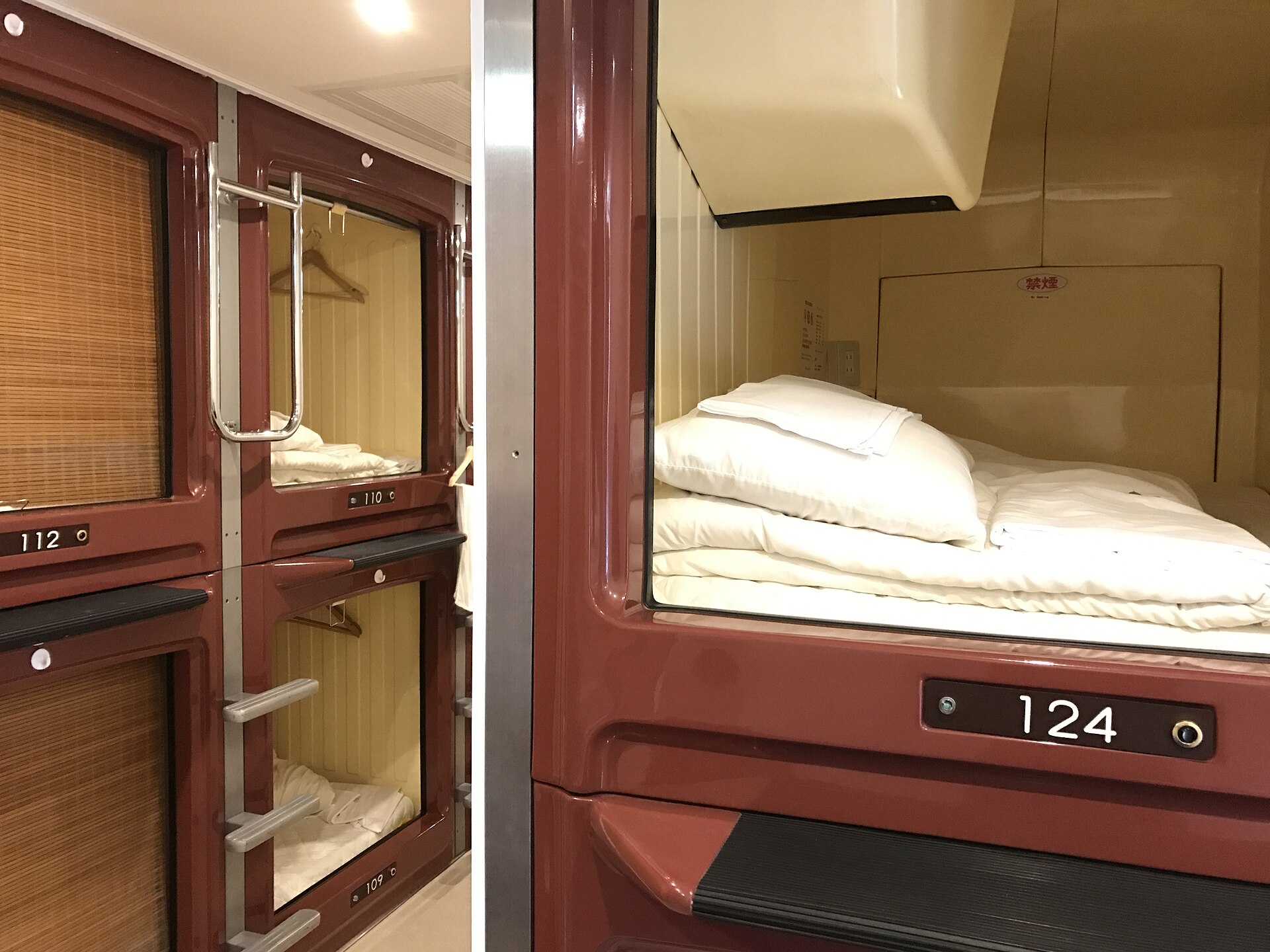
Tokyo hostels often combine dorms, capsule-style beds and compact private rooms. Before booking, check:
- Bed dimensions and privacy: Read the stated mattress size, curtain design and headroom. A capsule-style bed may give more privacy than an open bunk but less space for a large backpack.
- Locker and luggage storage: Confirm the locker width, height and whether a full-size pack fits. Check whether luggage can be stored before check-in and after checkout.
- Bathroom and shower arrangement: Some properties use shared facilities by floor; others put showers in a separate room or en suite. Ask about accessible bathrooms if needed.
- Reception and check-in: Confirm the last check-in time, self-check-in instructions and whether staff can help in English or another language you use.
- Noise and quiet hours: A hostel beside a station or bar district can be convenient but lively. Read the room location and request a bed away from the common room when possible.
- Kitchen, laundry and work space: A refrigerator shelf, microwave, washing machine and table can matter more than a lounge on a longer stay. Check opening hours and any booking rules.
If you are travelling with a partner or child, read the minimum-age policy for shared rooms. Some hostels accept younger guests only in private rooms, while others apply different rules to each dorm type. Save the property’s current policies with your booking confirmation.
Getting around Tokyo from a hostel
The GO TOKYO transport guide covers the main networks, passes and airport options. Use a stored-value IC card or the current accepted contactless option where available, then verify the rules for the specific railway and Metro operator. Tokyo’s network has several companies, so a route that looks direct on a map can involve a different fare gate or transfer.
Plan three journeys from your hostel before arrival: the airport or Shinkansen connection, the route to the first major sight and the route home after dinner. Note the station exit, platform direction and walking time. The official three-day Tokyo guide shows how different neighbourhoods can be combined without crossing the city unnecessarily.
Keep an offline copy of the hostel address in Japanese. Taxi drivers, station staff and hotel desks can use the Japanese address more reliably than an English nickname. If a hostel is in a narrow lane, save a nearby main road or landmark as a second arrival point.
Booking checks and cost levers
Rates change with dates, room type, public holidays, cherry-blossom and autumn foliage seasons, conferences, and the flexibility of the cancellation policy. A large dorm can reduce the nightly rate but may bring more movement and less storage; a private room can make sense when two travellers would otherwise book separate beds. A property outside the busiest districts may trade a longer train ride for more space.
Read the final booking screen for taxes, deposits, linen or towel policies, key-card rules, age limits and cancellation deadlines. Confirm the complete address and nearest station alongside the district. Property facilities and availability change, so use the official property page immediately before paying.
Travellers comparing Tokyo with lower-cost routes can use the cheap places to travel guide for destination-level planning. For pack size, locker fit and train-station walking, compare the best travel backpacks guide before choosing a bag.
Accessibility and quieter stays
Ask the hostel to confirm the step-free route from the street to reception, lift dimensions, bathroom access, bed height, transfer space and emergency procedures. In older buildings, a step at the entrance or a narrow corridor may not appear in a general accessibility label. Request the exact room floor and explain any mobility equipment before arrival.
For a quieter room, choose a residential area, a private room or a small dorm, and request a bed away from the lift, common room and street. Station distance matters at night: the shortest map route may pass a busy road, while a slightly longer route through a side street may be easier after dark. Use official Tokyo visitor information for current transport and accessibility details.
Frequently Asked Questions
What are the best areas to stay in Tokyo for a first hostel trip?
Asakusa and Ueno make cultural sights and rail connections straightforward. Shinjuku is useful for a large transport hub and evening activity, while Shibuya suits west-Tokyo shopping and cafés. Choose the area that keeps most of your planned days on one side of the city, then check the exact station.
Are Tokyo hostels suitable for solo travellers?
Yes. Hostels provide shared kitchens, lounges and social events, while capsule-style dorms can provide more privacy than an open bunk. Read the current room, age and quiet-hour policies and choose a common area that matches the kind of interaction you want.
Is Asakusa or Shinjuku better for a Tokyo hostel?
Asakusa offers temples, older streets and a calmer evening atmosphere. Shinjuku offers a major station, nightlife and easy access to west-Tokyo sights. A first-time visitor with a short itinerary may value Shinjuku’s connections; a traveller who wants a slower base may prefer Asakusa.
How can travellers get around Tokyo from a hostel?
Use JR, Tokyo Metro, Toei lines and buses according to the route. Check the operator, fare gates and station exit for each journey, and keep the hostel address in Japanese. Follow the current GO TOKYO transport guidance and plan airport or Shinkansen transfers before arrival.
What should travellers check before booking a Tokyo hostel?
Confirm the exact station, bed dimensions, locker size, bathroom access, kitchen and laundry, reception hours, age rules, quiet hours, accessibility and cancellation terms. Recheck the official property page because facilities, room layouts and house rules can change.
For the next step, shortlist two neighbourhoods, map the station-to-sight journeys, and compare three current hostels using the same room, access and cancellation checks.