
Give Cusco, Peru two full days (two to three nights), preceded by one or two acclimatisation nights in the lower Sacred Valley. Because Cusco sits at roughly 3,400 meters, sleeping lower first eases altitude adjustment. Book your timed Machu Picchu circuit ticket online in advance, and buy Cusco’s regional tourist pass in person with your passport.
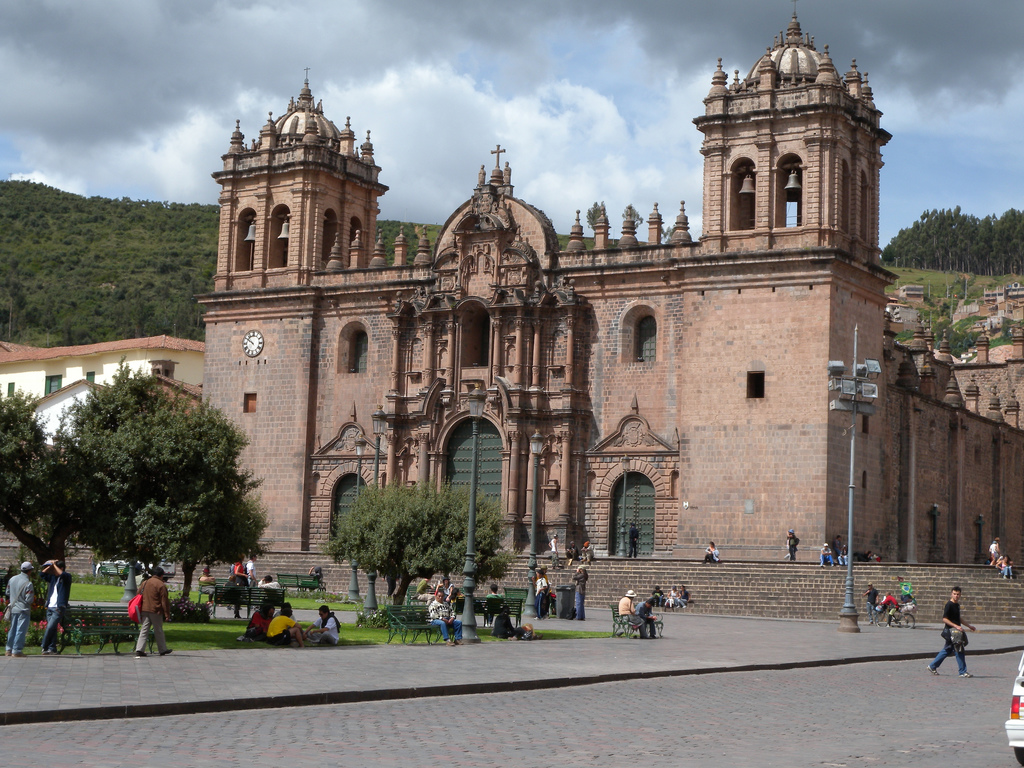
!Historic terracotta rooftops and Andean mountain slopes in Cusco, Peru
Photo: Cusco – Peru by Jorge Gobbi, licensed under CC BY 2.0.
Cusco as a City and High-Altitude Base
Cusco developed under the Inca ruler Pachacutec as the capital of the Inca Empire. Following the 16th-century Spanish conquest, colonial builders constructed churches and stone palaces directly over existing Inca walls. In 1983, UNESCO inscribed the City of Cuzco as a World Heritage Site for this layered architecture.
Today, Peru’s official tourism portal presents Cusco as both a historic Andean city and the main logistical base for the Sacred Valley and Machu Picchu. Use the city to buy regional passes, arrange road transfers, and connect with trains bound for Machu Picchu Pueblo.
Your travel dates shape both weather and trip costs:
- Dry season (May to October): Clear skies and sunny days suit walking and mountain excursions, while nighttime temperatures drop sharply.
- Wet season (November to April): Morning sunshine often gives way to afternoon rain showers, with the heaviest rainfall in January and February. Crowds thin out across the region, and the classic Inca Trail closes each February for annual maintenance.
Control daily spending through four levers: travel during shoulder months (April, May, September, or October), stay a few blocks away from Plaza de Armas or in Sacred Valley towns, balance casual daytime meals with sit-down evening meals, and buy only the archaeological pass circuits that match your route. For budget ideas in other regions, see cheap places to travel.
Acclimatising Safely at 3,400 Meters
Flying directly from coastal Lima to Cusco carries your body from near sea level to roughly 3,350 to 3,400 meters (11,000 to 11,155 feet). According to the CDC Yellow Book, altitude illness risk starts above 2,500 meters (8,200 feet), and direct flights into Cusco trigger acute mountain sickness symptoms in nearly half of travellers. Common early symptoms include headache, fatigue, nausea, dizziness, and broken sleep.
1. Sleep lower first. Transfer straight from Cusco’s airport down into the Sacred Valley for your first one or two nights. Urubamba (about 2,870 meters) and Ollantaytambo (about 2,850 meters) sit roughly 500 to 550 meters lower than Cusco, easing the initial jump before you sleep in the city. 2. Pace the first 48 hours. Walk slowly on steep cobblestone lanes, drink water regularly, eat light meals, and skip alcohol during your first two days at elevation. 3. Talk to a clinician before flying. Ask a doctor or travel medicine clinic four to six weeks before departure whether preventive medication such as acetazolamide fits your itinerary.
If headache or nausea escalates into confusion, loss of balance, or breathlessness at rest, stop ascending and descend immediately for medical care.
For high-altitude hiking routes beyond the Andes, see best treks in Nepal.
Planning Your Base: Cusco, Sacred Valley, and Machu Picchu
Use the table below to structure how long to stay in each zone.
| Base | Approximate Elevation | Best Role in Your Plan | Typical Stay | Tickets and Transport Notes |
|---|---|---|---|---|
| Cusco Historic Centre | 3,400 m (11,155 ft) | Colonial plazas, Inca stonework, museums, markets, Sacsayhuamán | 2 to 3 nights (2 full days) | Walkable core; COSITUC tourist pass bought in person; taxis for airport and hilltop ruins |
| Sacred Valley (Pisac, Urubamba, Ollantaytambo) | 2,700 to 2,950 m (8,850 to 9,680 ft) | First-night acclimatisation, Inca terraces, direct rail boarding | 1 to 2 nights | Ollantaytambo station runs year-round trains toward Machu Picchu |
| Machu Picchu Sanctuary (via Machu Picchu Pueblo) | 2,430 m (7,972 ft) at the citadel | Timed circuit entry to the archaeological sanctuary | 1 night in town or full-day rail trip | Advance timed circuit ticket required via official platform; shuttle bus or hike from town to gate |
Entry rules, sanctuary circuits, and regional ticket rules change periodically; all operational details in this guide were verified in November 2026 against official Peruvian tourism and heritage sources.
Entry Rules and Paperwork
Entry conditions for Peru depend on your nationality and purpose of travel. According to Peru.travel’s visa and entry requirements, visitors must hold a passport valid for at least six months from their planned date of entry. Citizens of many countries enter visa-free for short tourism stays, often up to 90 days, while other nationalities require a tourist visa in advance. Anyone entering for formal business activities must obtain a business visa beforehand, regardless of tourist visa exemptions.
International airport arrivals are logged digitally through the virtual Tarjeta Andina de Migración (TAM), whereas travellers crossing land borders must request a physical entry stamp at immigration control. Confirm the rules for your passport with Peru’s Ministry of Foreign Affairs or your nearest Peruvian consulate before booking flights.
Navigating Cusco’s Historic Centre and Passes
Cusco’s central neighbourhoods pack major Inca and colonial monuments into a compact walking radius, though steep staircases feel demanding at 3,400 meters. Focus your city walks on five areas: Plaza de Armas and Cusco Cathedral, where colonial churches stand atop Inca palace foundations; Qorikancha and Santo Domingo Convent, where finely fitted Inca masonry sits beneath colonial convent walls; San Blas, an uphill artisan quarter northeast of Plaza de Armas with steep cobblestone alleys and valley viewpoints; Mercado Central de San Pedro, the central market south of the main square; and Sacsayhuamán, the hillside ceremonial fortress north of the centre with megalithic limestone walls weighing over 100 tons per block.
Entry to Sacsayhuamán and most surrounding archaeological parks runs through the Boleto Turístico del Cusco (BTC), administered by COSITUC. Choose either the 10-day Integral pass covering 16 sites or a single-circuit partial pass:
- Circuit 1 (valid 1 day): Sacsayhuamán, Q’enqo, Puka Pukara, and Tambomachay.
- Circuit 2 (valid 2 days): Six city museums and cultural venues plus the South Valley sites of Tipón and Pikillaqta.
- Circuit 3 (valid 2 days): Four Sacred Valley archaeological parks: Pisac, Ollantaytambo, Chinchero, and Moray.
Buy the pass in person with your passport. Machu Picchu, Cusco Cathedral, and Qorikancha require separate tickets.
Coordinating the Sacred Valley and Machu Picchu From Cusco
Use the Sacred Valley as a stepping stone between Cusco and Machu Picchu. Travelling by road through Pisac, Chinchero, Moray, and Ollantaytambo connects agricultural terraces, hillside fortresses, and Andean towns while dropping in elevation before you board the train.
Machu Picchu operates under a regulated visitor framework detailed in Peru.travel’s overview of the new Machu Picchu circuits. Entry is divided into three main circuits and ten routes:
- Circuit 1 (Panoramic, 4 routes): Covers the upper terraces and high-elevation viewpoints.
- Circuit 2 (Classic, 2 routes): Combines upper viewpoints with a walk through the main urban and ceremonial sectors.
- Circuit 3 (Royalty / Lower, 4 routes): Follows the lower temples and agricultural enclosures.
Reserve your circuit, date, and entry hour on the Peruvian Ministry of Culture’s Tu Boleto platform. Tickets bind to your exact passport details, enforce one-way movement along your chosen route, and permit a single entry with no re-admission.
Getting to Cusco and Moving Around
By air: Alejandro Velasco Astete International Airport (CUZ) sits in Cusco’s Wanchaq district, roughly 10 to 15 minutes by taxi from the historic centre.
By train to Machu Picchu: PeruRail and Inca Rail link the Cusco region with Machu Picchu Pueblo (Aguas Calientes). Ollantaytambo station in the Sacred Valley runs year-round departures, taking roughly 1.5 to 2 hours along the Urubamba River. Closer stations at Poroy and San Pedro operate on seasonal train or bimodal bus-and-train schedules. From Machu Picchu Pueblo, reach the sanctuary entrance via Consettur shuttle bus or by walking up the access trail.
Inside Cusco: Walk the historic core in supportive shoes with strong grip for smooth, angled cobblestones. Use registered airport taxis or pre-arranged transfers for CUZ pickups, hilltop ruins above town, and point-to-point Sacred Valley drives.
A Flexible Two-Day Cusco City Plan
Once adjusted to the elevation, two structured days cover Cusco’s main neighbourhoods and nearby ruins.
Day 1: Flat Streets and Historic Core
- Morning: Start at Plaza de Armas and visit Cusco Cathedral at a steady pace, resting in the square whenever the altitude slows your stride.
- Midday: Walk south to explore Mercado Central de San Pedro.
- Afternoon: Visit Qorikancha and Santo Domingo Convent to see curved Inca stonework anchoring the colonial cloister, then keep the late afternoon light to hydrate and rest.
Day 2: Megalithic Ruins and San Blas
- Morning: Take a taxi uphill to Sacsayhuamán while energy is fresh. With a Circuit 1 or Integral tourist pass, continue along the road to Q’enqo, Puka Pukara, and Tambomachay before returning toward town.
- Afternoon: Walk downhill through San Blas for valley viewpoints and local craft studios, then add one or two museums covered by a Circuit 2 or Integral pass.
- Evening: Pack a light daypack if you are boarding a Sacred Valley transfer or early train the next morning.
Visiting Cusco Responsibly
Stay on marked paths at archaeological sites; leaning on or climbing dry-stone Inca walls wears down historic masonry. Ask permission before photographing local residents, artisans, or children in traditional dress, and move on politely if they decline. Buy textiles and crafts directly from artisan workshops in San Blas or community weaving cooperatives in the Sacred Valley so income stays local. Carry a reusable bottle with filtered or purified water, and pack out all litter from viewpoints and archaeological parks.
Frequently Asked Questions
How many days should you spend in Cusco, Peru?
Spend two full days (two to three nights) exploring Cusco’s historic centre and nearby ruins, plus one to two days in the Sacred Valley and at least one day for Machu Picchu. Giving the region four to five days total allows safe acclimatisation and steady travel between sites.
Should you visit the Sacred Valley or Cusco first?
Head to the Sacred Valley first if you fly directly into Cusco from low elevation. Towns like Urubamba and Ollantaytambo sit around 2,850 meters, roughly 550 meters lower than Cusco, making your first one to two nights gentler on your body before sleeping at 3,400 meters.
Does the Boleto Turístico del Cusco include Machu Picchu?
No. The Boleto Turístico del Cusco covers 16 regional archaeological parks and museums across three circuits, including Sacsayhuamán, Pisac, Ollantaytambo, and Moray. Machu Picchu requires a separate timed circuit ticket booked through the Ministry of Culture, and Cusco Cathedral and Qorikancha also require separate entry tickets.
When is the best time of year to visit Cusco?
The dry season from May to October brings clear skies and cold nights suited to sightseeing and mountain travel. The wet season from November to April brings green hills, afternoon rain showers, and fewer visitors, with the heaviest rainfall in January and February when the classic Inca Trail closes for annual maintenance.
How do you book Machu Picchu tickets from Cusco?
Reserve your Machu Picchu circuit, date, and entry hour in advance on the Peruvian Ministry of Culture’s Tu Boleto platform. Tickets are bound to your exact passport details, follow one of three circuits across ten routes, enforce one-way movement, and permit a single entry with no re-admission.
Bookmark this Cusco travel guide for your trip, and browse more route guides in destinations.
Cusco, Peru by Jorge Gobbi (CC BY 2.0, Wikimedia Commons)