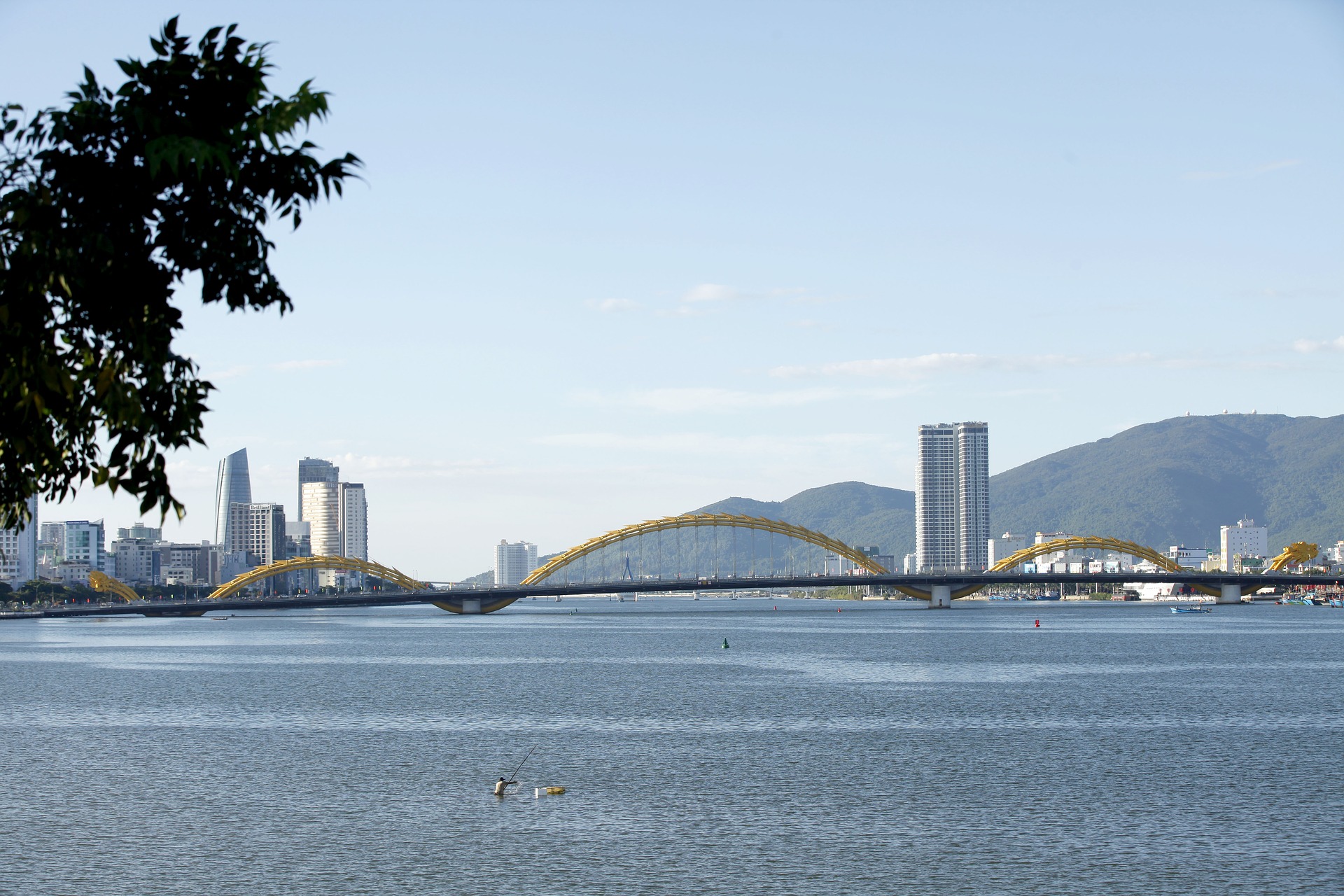

Base yourself near Da Nang’s main beach for two or three days and build your outings around the Son Tra Peninsula, the Marble Mountains, Ba Na Hills and the Dragon Bridge. Choose the riverfront if city sights matter more than sand. Give Hoi An its own day.
How to choose your base
Da Nang sits on Vietnam’s south-central coast, with the sea on one side and mountains close behind the city.
| Base | Best for | Trade-off |
|---|---|---|
| Near the main beach | Morning swims, beachfront walks, the coast road toward Son Tra | A ride to the river and the Dragon Bridge |
| Riverfront, near the Han River | Dragon Bridge, city restaurants, the Cham Museum | A ride to the beach |
Two days: choose the beach side and fit in Son Tra plus one mountain stop. Three days: add Ba Na Hills or the Marble Mountains as a full outing and a slower city day. Hoi An then becomes a fourth day if you have it.
Cost levers: rooms a few streets back from the sand tend to cost less than beachfront ones, weekday stays tend to cost less than weekends, and a base within walking distance of food saves repeated rides.
When to go and what to pack
Plan around the kind of day you want rather than a single “best” month. A beach-and-city trip needs light clothes, sun protection and footwear that handles wet pavements. A Son Tra or Marble Mountains outing needs secure shoes and water. Ba Na Hills is higher than the coast, so a light layer is useful when cloud or wind arrives. Check the current weather and any attraction notices before leaving the city.
Keep one flexible day in the plan if possible. Central Vietnam weather can change the balance between a beach morning, a museum visit and a mountain excursion. If the coast is grey, shift to the Cham Museum and riverfront; if the mountains are clear, take the longer outing while visibility is good.
Beaches and the riverfront
Da Nang’s main beach is the city’s best-known stretch of sand, and Vietnam Tourism lists it among the main reasons to visit. Go early for swimming and a long walk on the sand. Keep the afternoon for shade, a café or a nap.
On the river side, walk along the Han River and look for the Dragon Bridge, one of the city’s signature landmarks.
Son Tra Peninsula and Linh Ung
Son Tra is the forested peninsula on Da Nang’s coast, and Vietnam Tourism lists it among the city’s highlights. Choose it as a half day if you want hills and sea without a full excursion.
Linh Ung Pagoda sits on Son Tra and is known for its white Lady Buddha statue overlooking the bay. A hired car with driver keeps the day simple; ask your hotel to arrange it and agree the route and waiting time before you set off.
Marble Mountains
Vietnam Tourism describes the Marble Mountains, on the route between Da Nang and Hoi An, as five limestone and marble hills with pagodas, caves and viewpoints. Give them a half day and bring water for the steps.
Ba Na Hills
Ba Na Hills is one of the headline outings listed by Vietnam Tourism. Treat it as a full day. Decide before you go whether you want the whole site or just the views, because that choice drives your cost. Pick a clear day if you can, since mountain views depend on visibility.
Cham Museum
The Cham Museum sits beside the Han River and displays stone sculpture from former Champa sites, according to Vietnam Tourism. It is a useful indoor option for a hot midday or a wet afternoon; keep the visit short and unhurried.
Food and café neighbourhoods
Eat where your base is, then move once a day. Vietnam Tourism highlights café-hopping, mì Quảng, bánh bèo, bánh nậm and bún chả cá as part of Da Nang’s food culture.
Cheaper meals usually sit a street or two off the main beachfront road, and local-style eateries cost less than places aimed at tour groups. Order the regional dishes the menu pushes hardest and ask the staff what is freshest.
A two- and three-day plan
| Day | Plan |
|---|---|
| 1 | Morning at the main beach, afternoon Cham Museum, then the riverfront and Dragon Bridge |
| 2 | Son Tra Peninsula and Linh Ung, then a slow café afternoon |
| 3 | Ba Na Hills as a full day, or the Marble Mountains plus a slow beach afternoon |
| Extra | Hoi An as its own day |
Short on time? Do day 1 and day 2 and skip the mountain outing. With a third day, choose either Ba Na Hills or the Marble Mountains rather than trying to squeeze both into one timetable.
Getting there and around
Da Nang has an international airport and sits a short drive from Hoi An. For wider Vietnam routes, check current rail, coach and flight operators before booking; within the city, taxis, ride-hailing apps and hotel-arranged cars cover most trips.
Inside the city, taxis, ride-hailing apps and hotel-arranged cars cover most trips. Group day trips cost less per person than a private car, and a private car saves time when you want to link several stops. Walking works well around the riverfront and beach promenade; use a ride for the peninsula and the out-of-centre mountain sites.
Hoi An as a separate day
Give Hoi An its own day. Read our Hoi An guide for the old town, lanterns and what to book.
FAQ
How many days do you need in Da Nang?
Two days cover the beach, riverfront and Son Tra. Three days add Ba Na Hills or the Marble Mountains without rushing.
Where should you stay in Da Nang?
Stay near the main beach for beach time, or by the Han River for the Dragon Bridge and city dining.
Is Da Nang worth visiting if you are going to Hoi An?
Yes. Da Nang gives you beaches, mountains and a bigger city, and Hoi An works best as a separate day.
Can you visit Ba Na Hills and the Marble Mountains in one day?
Ba Na Hills fills a day by itself. Pair the Marble Mountains with a beach afternoon instead.
Is Da Nang a budget-friendly stop?
Yes, when you stay a few streets back from the beach, travel on weekdays, eat at local-style places and choose shared tours over private cars. See more ideas in our guide to cheap places to travel.
Next step
Planning a wider trip? Our Vietnam travel guide shows how Da Nang fits into the country, and the destinations hub lists more places to compare.
n