
The best camping hammock is the one whose fabric, suspension, insulation and site setup match the trip. Check the hammock’s stated load rating, use tree-safe straps, and plan insulation underneath as well as above. Choose a simple, repairable system for short camps and add weather protection only when the route and forecast justify it.
Compare the main hammock setups
| Setup | Fits | Check before buying or packing |
|---|---|---|
| Gathered-end hammock | Light camps and simple overnight sleep | Fabric strength, total load rating, suspension length and occupant height |
| Double hammock | Two-person use or extra room for one person | Use the manufacturer’s stated limit; a two-person label does not establish a doubled rating |
| Hammock with integrated bug net | Warm, insect-heavy camps | Zip access, net repair and whether the net can be removed |
| Hammock with tarp | Rain, dew and changeable weather | Ridgeline length, storm coverage, tie-outs and wind exposure |
| Insulated hammock system | Cold or shoulder-season nights | Underquilt fit, sleeping-pad compatibility and the forecasted low temperature |
No hammock is a complete shelter on its own. The trees, straps, weather layer and insulation determine whether the system works on a real night outside. Pack every part that keeps the sleeper dry, warm and supported, including the fabric bed.
What to check in the hammock itself
Load rating and fit
Read the stated maximum load and include the sleeper, clothing, sleeping bag, pad and any equipment kept in the hammock. A two-person label does not establish a safe limit for every pair. Height also matters: a short hammock can force an uncomfortable diagonal position, while excess fabric can make entry and exit awkward.
Look for clear information about the fabric, stitching and suspension points. A product page that leaves the load rating or suspension instructions unclear is a reason to choose another model. Keep the manufacturer’s instructions with the kit so the same limits are available at camp.
Suspension and tree protection
Wide webbing straps spread pressure over bark better than thin cord. Use the attachment method specified for the hammock and avoid improvised knots that can slip or damage the tree. The U.S. Forest Service and Leave No Trace guidance both emphasise protecting living trees and choosing a low-impact campsite.
Inspect straps before each trip. Fraying, cuts, melted sections or stretched stitching can turn a small setup problem into a fall. Pack a spare connection option only when it is compatible with the system; mixing unknown hardware can make the rating impossible to judge.
Fabric, angle and comfort
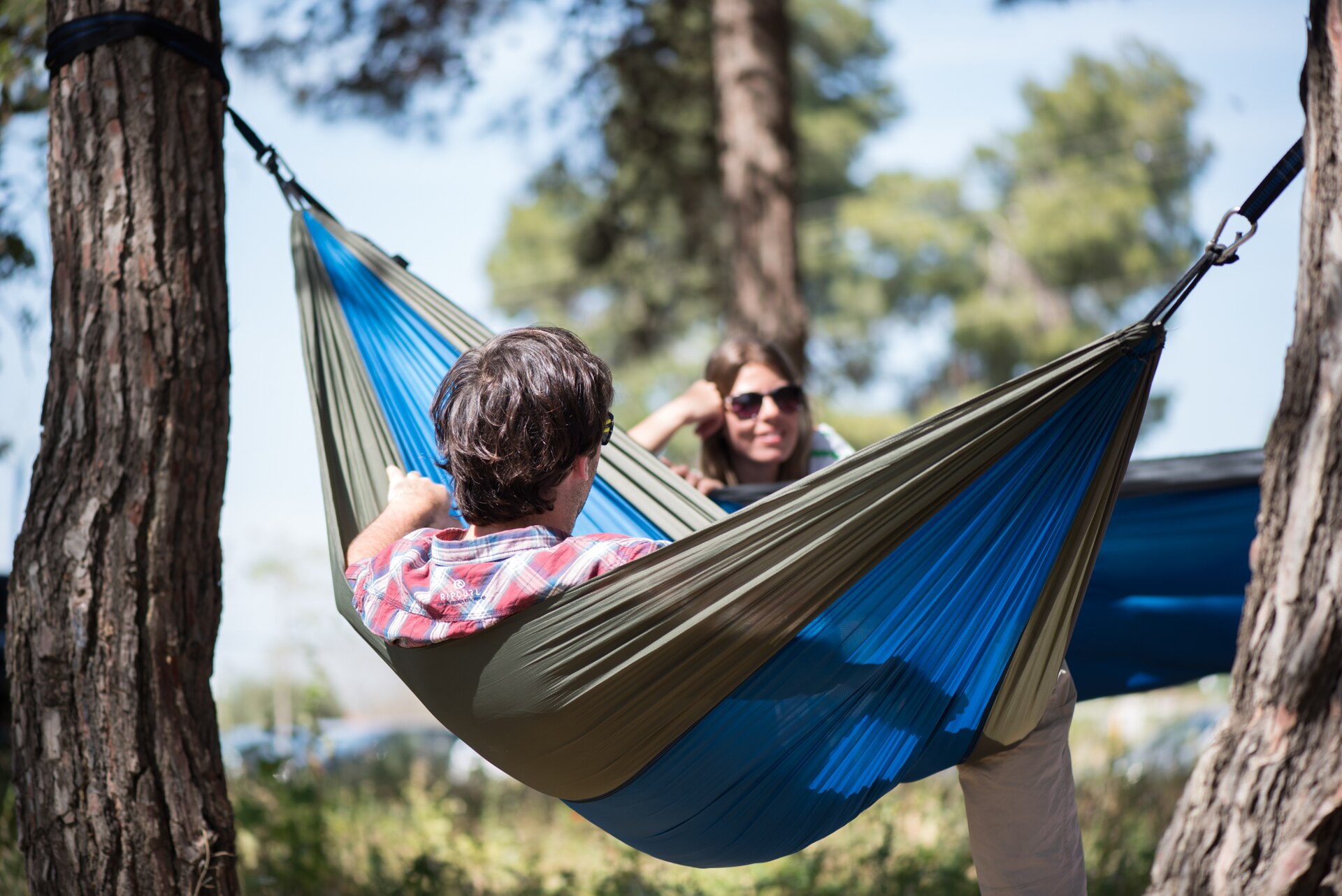
Most gathered-end hammocks are designed for a gentle diagonal lay rather than a straight line. Start low enough that a fall would be small, then adjust the suspension until the body is supported without the fabric squeezing the shoulders. The ideal angle depends on the hammock length, the distance between trees and the sleeper’s body.
Test the entry and exit at home. A stable setup should let the sleeper sit, lie down and get out without pulling one anchor sideways. Keep shoes, water and a headlamp in a small reachable pocket or bag rather than under the body.
Insulation is part of the system
Air moving beneath a hammock can feel colder than the same temperature in a tent. A sleeping bag alone may compress beneath the body and lose much of its insulation. A hammock-compatible underquilt, a correctly sized sleeping pad or another tested lower insulation layer addresses that gap.
Match the insulation to the forecast, wind and the sleeper’s clothing. Do not treat a temperature rating as a guarantee for every person or sleeping position. Carry a warmer layer when conditions may change, and keep insulation dry during transport and setup.
Rain, wind and insects
A tarp should cover the hammock with enough overhang to protect the head and feet. Its ridgeline, doors and tie-outs matter more than a label that simply says “rain tarp.” Set the tarp before the weather arrives and check that the water-shedding edge does not collect runoff beside the sleeping area.
Insect netting is useful where mosquitoes or other biting insects are active. Inspect the zip and seams, and check whether the net stays clear of the face. A separate net may offer flexibility, while an integrated net can make setup quicker. Choose the arrangement that the trip’s expected insects and temperature justify.
Choose a campsite carefully
The safest hammock setup starts with two healthy, suitably sized trees. Avoid dead branches, leaning trunks, loose bark, steep drops, flood channels, exposed ridges and places where falling limbs could reach the sleeper. Look up before attaching anything. Leave room for the hammock to sag without hitting rocks, roots or water.
Protected areas may have local rules about trees, camping zones, fires, waste and access. Check the land manager’s current guidance, and follow the seven Leave No Trace principles. A hammock is not permission to camp wherever two trees happen to stand.
A pre-trip hammock checklist
- Read the limits. Record the stated load rating, minimum and maximum suspension distance, and any warnings.
- Inspect every connection. Check fabric, stitching, straps, carabiners, ridgeline and tarp tie-outs.
- Plan the temperature. Pack lower insulation, sleep layers and a weather layer for the forecasted low, wind and rain.
- Practise the setup. Adjust the angle, test entry and exit, and learn how to tension the tarp before the trip.
- Protect the site. Use tree-safe straps, stay in the permitted camping area and pack out every piece of waste.
Use our camping packing list to organise shelter, sleep, water, food, navigation and first aid. For a trip that combines flights with nights outdoors, the best travel backpacks guide explains airline dimensions and carry comfort. If the hammock is part of a wider low-cost itinerary, begin with our cheap places to travel guide.
Frequently asked questions
Are hammocks safe for camping?
Hammocks can be safe when the hammock, suspension, trees, weather layer and insulation are used within their stated limits. Inspect every part, use tree-safe straps, choose a stable site and follow the land manager’s camping rules.
What weight can a camping hammock hold?
The safe load is the manufacturer’s stated limit for that hammock and suspension system. Include the sleeper, clothing and equipment, and do not assume that a two-person label doubles the permitted load.
Do you need an underquilt for hammock camping?
An underquilt is one way to reduce heat loss beneath the body, especially in cool or windy conditions. A compatible sleeping pad or another lower insulation layer can also work; choose based on the forecast and the system’s instructions.
How do you protect trees when using a hammock?
Use wide, tree-safe suspension straps, attach only to healthy trees and avoid thin cord or improvised hardware. Follow the site’s local rules and Leave No Trace guidance, and remove the system without damaging bark or branches.
Does a hammock need a tarp?
A tarp is useful when rain, dew or wind is possible, but its coverage and tie-outs must match the hammock. Set it up before bad weather and check the forecast and local exposure before deciding what shelter to carry.
The best setup is the one that can be inspected, adjusted and repaired before the trip. Keep the manufacturer’s limits and the land manager’s current rules with the packing checklist, then test the complete system close to home.
Featured photo: Camping hammock.jpg, by Gfreimann, Wikimedia Commons, CC BY-SA 4.0.