
Packing for a short break? Use this weekend trip packing list to plan a two- or three-night bag without carrying a full holiday load.
Carrying everything on the trail? Use this backpacking packing list to stage shelter, food, water and route safety systems.
Heading into the snow? Use this ski trip packing list to separate slope layers, travel bags and backcountry safety kit.
Driving to your next destination? Use this road trip packing list to separate car safety gear from passenger essentials.
A reliable camping packing list covers five core categories: shelter and sleep, clothing, food, water, and cooking, safety and navigation, and hygiene and cleanup. Match your exact items and pack weight to your trip length, season, terrain, campsite rules, and car-camping or backcountry setup.
Your packing list for camping changes with every destination. Frontcountry car camping beside a picnic table allows roomier tents, thicker pads, and coolers, while backcountry travel calls for compact gear you can carry for miles. Season, elevation, wind or rain exposure, terrain, and local land-management regulations shape every item you load.
Check before leaving (guidance checked November 28, 2026): Contact the park, forest office, or land manager for your exact destination before you pack. Confirm permits and reservations, active fire restrictions, potable water availability and treatment requirements, wildlife food-storage rules, pet regulations, and the multi-day weather forecast. Leave your route and return time with a trusted contact at home.
Master Checklist for a 1-to-3-Night Trip
Use this master list of things to pack for camping as a baseline for a one-to-three-night trip. Overnight outdoor gear takes more volume than an urban weekend bag; for a compact city break, use our 3-day one-bag packing list.
- Shelter and sleep: Tent with poles, stakes, and rainfly; groundcloth; sleeping bag rated for forecast lows; insulated pad; pillow; stake mallet for car sites.
- Clothing: Moisture-wicking base layers; fleece or insulated jacket; waterproof rain shell; hiking footwear; camp shoes; spare wool or synthetic socks; dry sleepwear; sun hat and warm beanie.
- Food, water, and cooking: Planned meals and extra no-cook rations; water bottles or jugs; filter or treatment method where needed; camp stove and fuel; pot, mug, plate, utensils; knife or multi-tool; lighter or waterproof matches; wildlife-compliant food storage.
- Safety and navigation: Paper map, compass, and offline map; headlamp and spare batteries; first-aid kit and prescriptions; sunscreen, sunglasses, and insect repellent; whistle; repair tape and spare cord.
- Hygiene and cleanup: Toothbrush, toothpaste, and hand sanitizer; toilet paper and trowel where catholes are allowed, or pack-out waste bags; biodegradable soap, sponge, and quick-dry towel; sturdy trash bags.
Shelter and Sleep
Warm, dry sleep makes the biggest difference on any overnight trip. Pitch your tent at home before leaving to confirm every pole, stake, guy line, and zipper works smoothly. Size your groundcloth slightly smaller than the tent floor so rainwater drains into the soil around the edges.
Cold ground draws body heat away overnight, so pair your sleeping bag with an insulated pad matched to the season. Pick a bag rated for the coldest nighttime low in your local forecast, accounting for temperature drops at higher elevation. Pack a compressible pillow or fill a stuff sack with soft clothes, and add earplugs for busy campgrounds. Keep a lightweight emergency tarp or reflective space blanket in your daypack as backup cover during sudden weather shifts.
Clothing and Weather
Outdoor temperatures swing sharply between midday sun and midnight frost, so build your camping pack list around removable layers. Choose moisture-wicking wool or synthetic base layers that dry quickly and keep insulating when damp. Add a warm mid-layer for cold mornings and evenings, plus a windproof, waterproof outer shell.
Set aside dedicated dry sleepwear and clean socks so you climb into your sleeping bag dry every night. Bring supportive closed-toe footwear for trails and easy slip-on shoes for camp. Open ridgelines, deserts, and alpine lakes bring strong UV exposure, so pack sunglasses and a wide-brimmed hat. Group garments by layer or day inside soft pouches from our packing cubes guide so dry clothes stay easy to grab in a dim tent or packed trunk.
Food, Water, and Cooking
Plan meals day by day using simple, low-odor ingredients that cook cleanly with minimal washing up. Dry staples such as oats, rice, pasta, tortillas, nuts, and shelf-stable proteins pack neatly and cut camp waste when repackaged into reusable containers before departure. Carry extra no-cook rations in case weather or route delays keep you out longer than scheduled.
Water planning depends on heat, elevation, exertion, and on-site access. Frontcountry campgrounds often supply potable spigots where refillable bottles and a large jug cover drinking and cooking. In backcountry terrain, pack a reliable method to boil, filter, or chemically treat natural water, since clear streams and lakes can harbor microscopic parasites such as Giardia.
Pack stove fuel for every hot meal plus a spare margin, and keep your ignition dry. Store all food, coolers, garbage, and scented items according to local wildlife rules, keeping food storage well separated from sleeping tents.
Safety and Navigation
Both the National Park Service and the U.S. Forest Service organize outdoor safety gear around the Ten Essentials: navigation tools, illumination, sun protection, first-aid supplies, a knife and repair kit, fire starter, emergency shelter, extra food, extra water capacity, and extra clothing.
Cell reception fades quickly in remote forests, canyons, and mountain passes, so pair offline phone maps with a paper topographic map and magnetic compass. A headlamp keeps your hands free while pitching camp or cooking after dark. Tailor your first-aid kit to your group with bandages, blister pads, antiseptic wipes, tweezers, pain relief, and prescriptions, and pack a whistle for signaling.
Before heading out, match the route to your group's physical condition, prepare a backup plan for storms or site closures, and check in with park rangers or camp hosts for local weather or wildlife alerts.
Hygiene and Camp Cleanup
A tidy camp keeps everyone healthy and protects nearby waterways. Pack toiletries, lip balm, insect repellent, and other scented items in one sealed bag so they store cleanly alongside your food overnight.
When your campground lacks dishwashing sinks, add a collapsible wash basin to your cleanup kit. Carry wash water at least 200 feet away from lakes and streams before washing dishes or rinsing hands, strain food particles into your trash bag, and scatter the gray water over soil. Pack sturdy garbage bags so every wrapper, food scrap, and used tissue leaves the campsite with you.
Car Camping vs. Backpacking
A car camping packing list prioritizes comfort and shared camp meals, while a backcountry kit trims weight and bulk so every item fits on your back. Hike-in trips work best with a fitted pack that carries weight on your hips; compare carry systems and sizing in our travel backpacks guide.
| Gear Category | Car Camping (Frontcountry) | Backpacking (Backcountry) |
|---|---|---|
| Shelter | Roomy multi-person tent, stake mallet | Lightweight compact tent or bivy |
| Sleep system | Thick foam or air mattress, full pillow | Insulated lightweight pad, compressible bag |
| Kitchen | Two-burner stove, cooler, cutting board | Compact single-burner stove, single pot |
| Water | Refillable bottles and large water jug | Bottles or reservoir plus filter or treatment |
| Comfort | Camp chairs, lantern, extra blankets | Foam sit pad, headlamp, minimal spare layers |
| Food storage | Cooler in a locked vehicle or metal locker where the campground provides or requires it | Bear-resistant canister or hang bag where the land manager requires or allows it |
Low-Impact Camping
Apply the Leave No Trace Seven Principles from home prep through breakdown:
- Plan ahead and prepare: Learn local regulations, permits, and seasonal hazards, and repackage food to reduce waste.
- Travel and camp on durable surfaces: Camp on durable surfaces and established sites, and stay at least 200 feet from lakes and streams where dispersed camping is permitted.
- Dispose of waste properly: Pack out all trash, food scraps, and used toilet paper. Where catholes are allowed, dig 6 to 8 inches deep at least 200 feet from water, camps, and trails; in restricted areas, use pack-out bags.
- Leave what you find: Keep rocks, plants, and cultural artifacts untouched.
- Minimize campfire impacts: Cook on a portable stove. Where campfires are allowed, keep flames small in established rings or fire pans and extinguish completely until cold to the touch.
- Respect wildlife: Watch animals from a distance, secure all food and scented gear, and keep pets controlled where permitted.
- Be considerate of other visitors: Yield on trails, keep camp noise and lights low after dark, and observe posted quiet hours.
Compact Printable Camping Packing List
Copy or print this camping packing list printable checklist and mark off each line as you pack.
Shelter and Sleep
- Tent, poles, stakes, rainfly, footprint
- Sleeping bag and insulated sleeping pad
- Pillow and earplugs
Clothing
- Moisture-wicking base layers and trail clothes
- Warm mid-layer and waterproof rain shell
- Hiking footwear, camp shoes, extra socks
- Dry sleepwear, sun hat, warm beanie
Food, Water, and Kitchen
- Planned meals, snacks, extra no-cook rations
- Water bottles or jugs and water treatment method
- Portable stove, fuel, lighter or waterproof matches
- Pot, mug, plate, utensils, sharp knife
- Wildlife-compliant food storage container
Safety, Hygiene, and Documents
- Paper map, compass, offline map download
- Headlamp and spare batteries
- First-aid kit and personal medications
- Sunscreen, sunglasses, insect repellent, whistle
- Toiletries, toilet paper, trowel or waste bags
- Biodegradable soap, quick-dry towel, trash bags
- Permits, reservations, identification
Frequently Asked Questions
What belongs on a basic camping packing list?
Start with shelter, an insulated pad and sleeping bag, clothing layers, water containers or treatment tools, food and a stove, navigation gear, a headlamp, a first-aid kit, and trash bags. Adjust quantities and weight to your trip length, season, and site rules.
How does a car camping packing list differ from a backpacking list?
Car camping allows heavier comfort items beside your vehicle, such as larger tents, thick mattresses, coolers, two-burner stoves, and chairs. Backpacking requires lightweight, compressible gear, water treatment, and compact wildlife-compliant food storage you can carry on the trail.
How much water should you bring camping?
Water needs depend on temperature, elevation, exertion, and whether potable spigots operate at your campground. Ask the park or land manager whether treated water is available at your site, and carry extra capacity beyond what you expect to use. Pack a filter, chemical treatment, or boiling pot for untreated natural sources.
Do you need a campfire to cook while camping?
No. A portable camp stove handles cooking cleanly without an open fire. Many campsites treat stoves differently from open fires, so confirm the stove rules for your site.
How should you store food and toiletries at a campsite?
Store all food, trash, coolers, toothpaste, and scented toiletries away from your tent according to local rules. Depending on wildlife activity and site setup, land managers require locked vehicles, metal food lockers, bear-resistant canisters, or designated hanging systems.
Next Step
Print the checklist above, then contact the park or land manager for your site before you pack. If your route involves flights or border crossings with outdoor gear, review our international travel packing list for travel documents and flight preparation, or combine camp stays with overland rail and trail itineraries in our backpacking Europe routes guide.
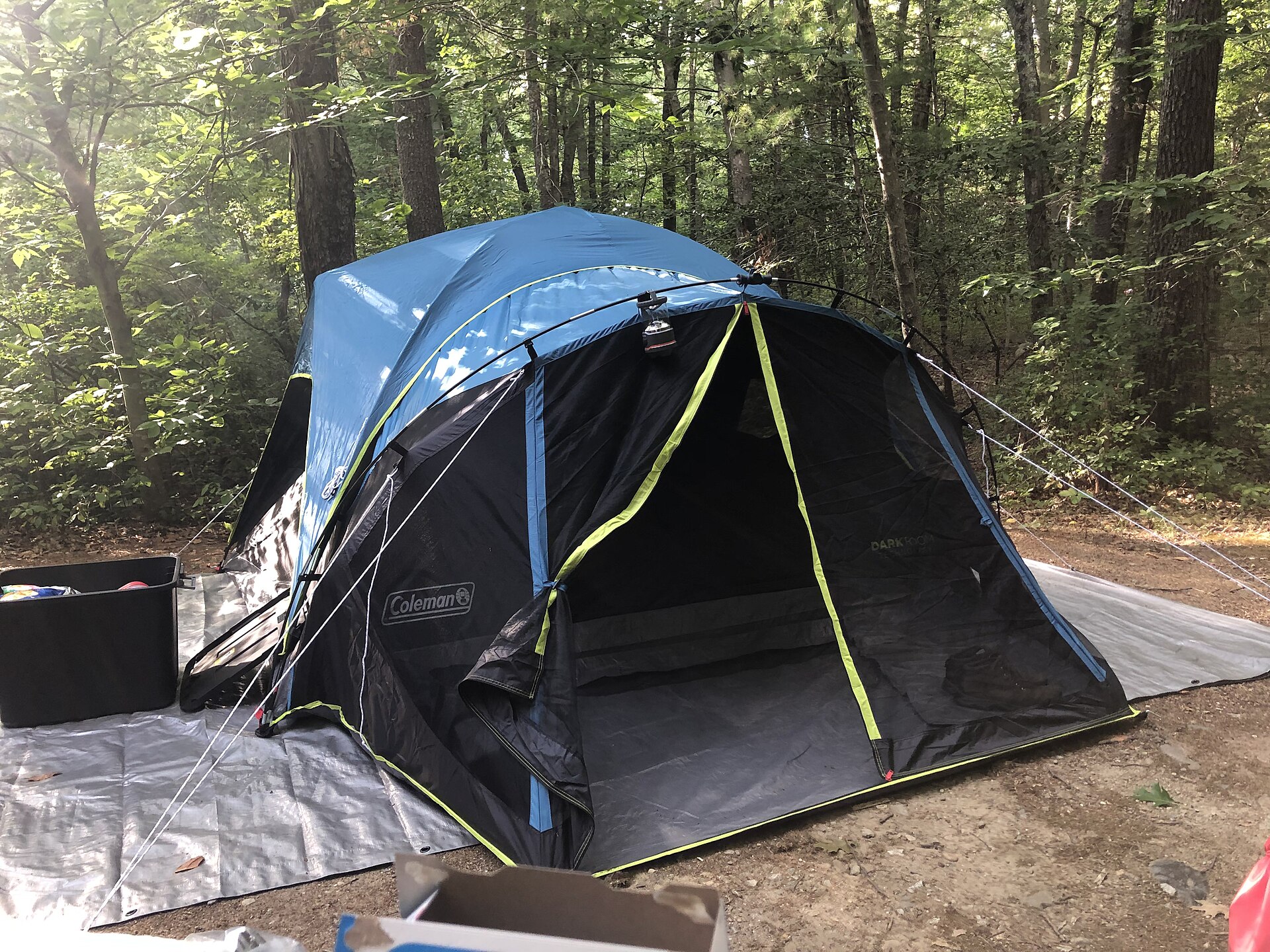
Featured photo: Camping tent on tarp, by Eden Aviv, via Wikimedia Commons (CC0).