
Preparing for an island trip? Use this Hawaii packing list to split beach, trail, rain and elevation needs before you pack.
Pack broad-spectrum sunscreen, two swimsuits, a cover-up, grippy sandals, a water bottle, a waterproof phone pouch and a first-aid kit, then add towels, shade or snorkel gear to suit your stay. Match the extra items to a hotel beach day, rental house, road trip or water-sports break, and check local conditions when you arrive.
Master Beach Packing List
Use this beach packing list for coastal items only. Pair it with our vacation packing list for everyday clothing, sleepwear and general toiletries.
- Swim and sun: Two swimsuits, UPF-rated rash guard, broad-spectrum SPF 30+ sunscreen, SPF lip balm, wide-brimmed hat, UV-blocking sunglasses.
- Clothing and footwear: Breathable cover-up, light evening layer, rinseable sandals, closed-toe water shoes, dry town walking shoes.
- Beach bag and safety: Insulated reusable water bottle, electrolyte packets, compact first-aid kit, towel clips, washable wet bag, trash pouch.
- Tech and documents: Waterproof phone pouch, power bank in a zippered sleeve, small waterproof card case, offline tide and emergency notes.
Swim and Sun Protection
Sand and water reflect UV, which raises your exposure even in partial shade. Plan your heaviest shade breaks between 10 a.m. and 4 p.m., when UV rays peak.
- Broad-spectrum sunscreen (SPF 30 or higher): Choose a water-resistant formula labeled broad-spectrum to filter both UVA and UVB rays. General CDC guidance sets SPF 15 as a baseline, while travel-health guidance recommends SPF 30 or higher for strong outdoor exposure. Apply generously (about 1 ounce for an adult) roughly 15 minutes before stepping outside, then reapply at least every 2 hours and immediately after swimming, heavy sweating or toweling off.
- Flight-ready formats: Under US TSA rules, liquid, gel and spray sunscreens in carry-on bags must stay in containers of 3.4 ounces (100 ml) or smaller inside one quart-sized clear bag. Solid stick sunscreens bypass liquid limits, or you can pack full bottles in checked luggage. Check local sunscreen rules on arrival.
- Two swimsuits per traveler: Rotating two suits gives each pair a full dry cycle, cutting chafing and damp smells.
- UPF-rated rash guard or tightly woven swim shirt: Physical fabric shields shoulders and backs during long swims without wearing off in surf.
- Wide-brimmed hat and wrap-around sunglasses: Pick a hat that shades your face, ears and neck, plus sunglasses rated to block 100% of UVA and UVB rays. Wrap-around frames cut side glare off the water.
- SPF lip balm: Lips burn quickly in coastal wind; carry a broad-spectrum stick in your day tote.
Clothing and Footwear
Salt air, blowing sand and warm humidity favor loose, light-colored garments that rinse easily in a sink and dry overnight on a balcony rail.
- Breathable cover-ups: Linen shirts, cotton gauze tunics or lightweight sarongs slip over damp swimwear quickly. Keep a collared shirt or knee-length dress handy when walking from the shore into towns, shops or cafés, respecting local dress customs away from the sand.
- Light coastal evening layer: Pack one breathable windbreaker or thin cardigan for breezy boardwalk dinners after sunset.
- Rinseable beach sandals: Choose flat, waterproof sandals with textured soles that handle hot sand, wet concrete and beach showers.
- Closed-toe water shoes: Pack grippy water shoes for pebble beaches, rocky coves, boat launches and shell-covered shallows.
- One dry walking pair: Reserve lightweight sneakers or canvas slip-ons for transit days and town walks so your feet stay dry after the beach.
Health, Water Safety and Local Beach Rules
Check the local surf zone forecast, tide chart, posted warning flags, lifeguard instructions, sunscreen ingredient rules and shoreline access customs when you arrive; coastal hazards and local regulations change daily and differ by beach (CDC and National Weather Service guidance verified November 28, 2026).
- Hydration and heat gear: Carry an insulated reusable water bottle plus oral rehydration or electrolyte packets for humid afternoons. Take frequent shade breaks and watch for dizziness, cramps or nausea.
- Compact beach first-aid pouch: Pack waterproof bandages, antiseptic wipes, fine-tip tweezers for splinters, hydrocortisone or plain aloe lotion, and daily medications in original labeled containers.
- Separate insect repellent: Coastal marshes and dusk breezes often bring mosquitoes or biting midges. Because some insect repellents can lower sunscreen UV protection, apply sunscreen first, allow it to settle, and reapply sun protection more often.
- Lifeguards, flags and surf forecasts: Swim with a buddy, and choose a section near an active lifeguard station if the beach has lifeguards. In the United States, National Weather Service Surf Zone Forecasts rate daily rip-current risk as Low, Moderate or High. Many beaches fly standardized warning flags: green for low hazard, yellow for medium hazard, red for high hazard, double red for closed water, and purple for hazardous marine life. Check the local flag board at the beach entrance if the beach posts one before entering the water, and follow the beach patrol's instructions where one operates.
- Rip-current response: Rip currents are narrow, fast-moving channels pulling water away from shore at speeds up to 8 feet per second. Stay calm, float or tread water to save energy, swim parallel to the shoreline until you exit the current, and angle back toward land. If you tire, face the shore, wave your arms and shout for help.
- Lightning protocol: Follow the National Weather Service rule: when thunder roars, go indoors. Leave the sand immediately for a fully enclosed building or a hard-topped metal vehicle.
Family and Water Activities
- Infants and young children: CDC guidance directs keeping babies under 6 months out of direct sunlight inside deep shade (such as a stroller canopy or UV shelter) wearing lightweight full-coverage clothing. Apply broad-spectrum sunscreen to children 6 months and older, and pack certified life jackets or properly fitted buoyancy vests for boats and deep water. Add swim goggles, a shaded play mat and collapsible silicone sand buckets that pack flat.
- Snorkeling, surfing and paddling: Bring your own fitted mask and snorkel for a reliable seal, anti-fog drops, neoprene booties for rocky entries, a roll-top dry bag for car keys and a hooded microfiber changing poncho for windy parking lots.
Documents and Electronics
Fine sand scratches lenses and clogs charging ports fast, while direct midday sun overheats lithium batteries.
- Waterproof phone pouch with lanyard: Test the seal at home with a dry paper tissue submerged in a sink before trusting it near surf.
- Power bank and short cable: Store both inside a sealed zippered pouch buried under towels in your tote, shaded from direct heat.
- Waterproof card sleeve: Carry one ID, one payment card and small local cash for beach lockers, showers, parking meters or transit.
- Offline coastal notes: Save screenshots of your accommodation address, local emergency numbers, beach-patrol contact and daily tide chart.
For passports, visas, travel insurance and voltage adapters on overseas trips, follow our international travel packing list.
Hotel, Rental-House and Trip-Type Extras
Your lodging base and trip style shape what bulky gear you need to pack. Check your property listing or call the front desk 48 hours before departure so you skip duplicates and bring what is missing. If you are still picking a coastal base around travel dates, transport and meal setup, explore our guide to cheap places to travel before finalizing your bag.
| Stay Type | Check Before Packing | Pack Yourself | Bag Setup |
|---|---|---|---|
| Hotel beach day | Check your listing for beach towels, loungers, fixed shade and rinse showers | Swimwear, sun protection, cover-up, four towel clips, room-key lanyard, wet pouch | Fold-flat mesh tote inside your main bag |
| Rental-house stay | Check your listing for beach towels, chairs, shade gear and laundry access | Quick-dry beach towels, wind-rated shade anchor, soft cooler, clothespins, sand brush | Structured washable tote plus a dedicated wet bag |
| Road-trip beach break | Check local parking rules and shoreline access points | Compact beach chairs, soft beach cooler, extra quick-dry towels, rinseable sandals | Washable beach tote with sealed wet bags |
| Water-sports stay | Check your listing or local outfitters for board, kayak or gear rentals | Fitted mask and snorkel, neoprene booties, dry bag, changing poncho | Roll-top waterproof dry pack rated for spray |
Driving to the coast adds trunk organization, roadside tools and cabin snacks; cover those vehicle items using our road trip packing list.
Low-Waste Beach Setup
Small swaps keep plastic wrappers and leaky bottles off the shoreline and simplify daily cleanup.
- Insulated reusable bottle and tumbler: Cuts single-use plastic bottles on the shoreline.
- Silicone snack bags or stainless box: Holds cut fruit, nuts and sandwiches cleanly without blowing away in sea gusts.
- Washable wet bag and cloth tote: Replaces disposable grocery sacks for wet swimsuits, towels and market runs.
- Solid toiletries: Bar soap, shampoo bars and solid sunscreen sticks skip spills and excess packaging.
- Dedicated trash pouch: Clip a washable zippered pouch inside your beach bag so food wrappers, broken gear and stray shoreline litter leave the beach with you.
Compact Printable Beach Vacation Checklist
Copy or print this compact beach trip packing list for a final two-minute scan before leaving home:
- Two swimsuits and one UPF-rated rash guard
- Broad-spectrum SPF 30+ sunscreen and SPF lip balm
- Wide-brimmed hat and 100% UVA/UVB sunglasses
- Breathable cover-up, town outfit and light evening layer
- Rinseable beach sandals, water shoes and dry walking shoes
- Washable beach tote, wet bag and zippered trash pouch
- Insulated reusable water bottle and electrolyte packets
- Compact first-aid kit, medications and dusk insect repellent
- Waterproof phone pouch, shaded power bank and card sleeve
- Stay extras: towels, clips, shade anchor, cooler or snorkel gear
Next Step
Once your coastal items are ready, divide your swimwear, dry clothes and sandy footwear using our guide to the best packing cubes so your suitcase stays tidy from arrival to checkout.
Frequently Asked Questions
How many swimsuits should you pack for a week-long beach vacation?
Pack at least two swimsuits per person, or three if you swim both morning and afternoon. Rotating suits lets each one rinse and dry thoroughly between wears, preventing chafing and lingering damp odors in humid coastal air.
What SPF sunscreen should you pack for a beach trip?
Pack a water-resistant, broad-spectrum sunscreen rated SPF 30 or higher for strong coastal UV exposure, with SPF 15 as the minimum CDC baseline. Reapply at least every 2 hours and immediately after swimming, heavy sweating or toweling off.
What should you pack for a rental house compared to a beach hotel?
Check your hotel listing for towels, loungers and shade first; if those are included, pack swimwear, sun protection, towel clips and a fold-flat tote. For a rental house, check the property inventory and bring quick-dry beach towels, a soft cooler, wind-rated shade and clothespins where those items are missing.
How do you keep sand and water out of electronics at the beach?
Place your phone in a waterproof pouch tested at home with a paper tissue in a sink. Keep power banks, earbuds and cables inside a closed zippered sleeve tucked beneath towels inside your tote, shaded from direct sun and hot sand.
What should you check before swimming at an unfamiliar beach?
Check the daily surf zone forecast, tide chart and any posted warning flags, then confirm current water conditions with on-duty lifeguards where a patrol operates. Swim with a buddy near lifeguards if available, and verify local sunscreen and shoreline access rules on arrival.
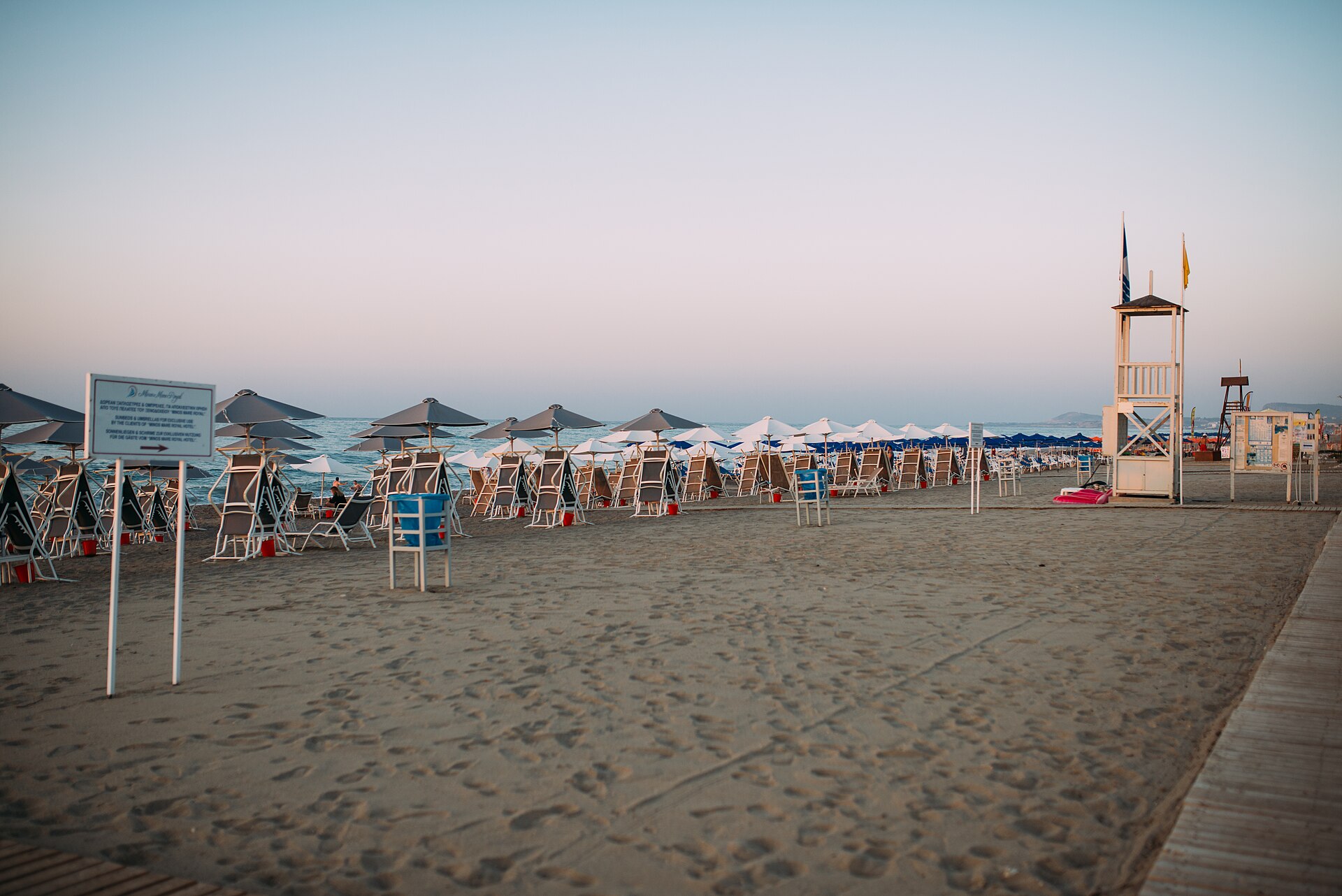
Featured photo: Beach scene with sun loungers and umbrellas during twilight hours by the ocean, by Shixart1985, via Wikimedia Commons (CC BY 2.0).