
Guatemala carries a U.S. Department of State Level 3 (Reconsider Travel) advisory with four named do-not-travel areas, alongside UK FCDO warnings for parts of the Mexican border and three Huehuetenango towns. Guatemala can be visited, and your route, transport, timing and area choices determine your level of risk.
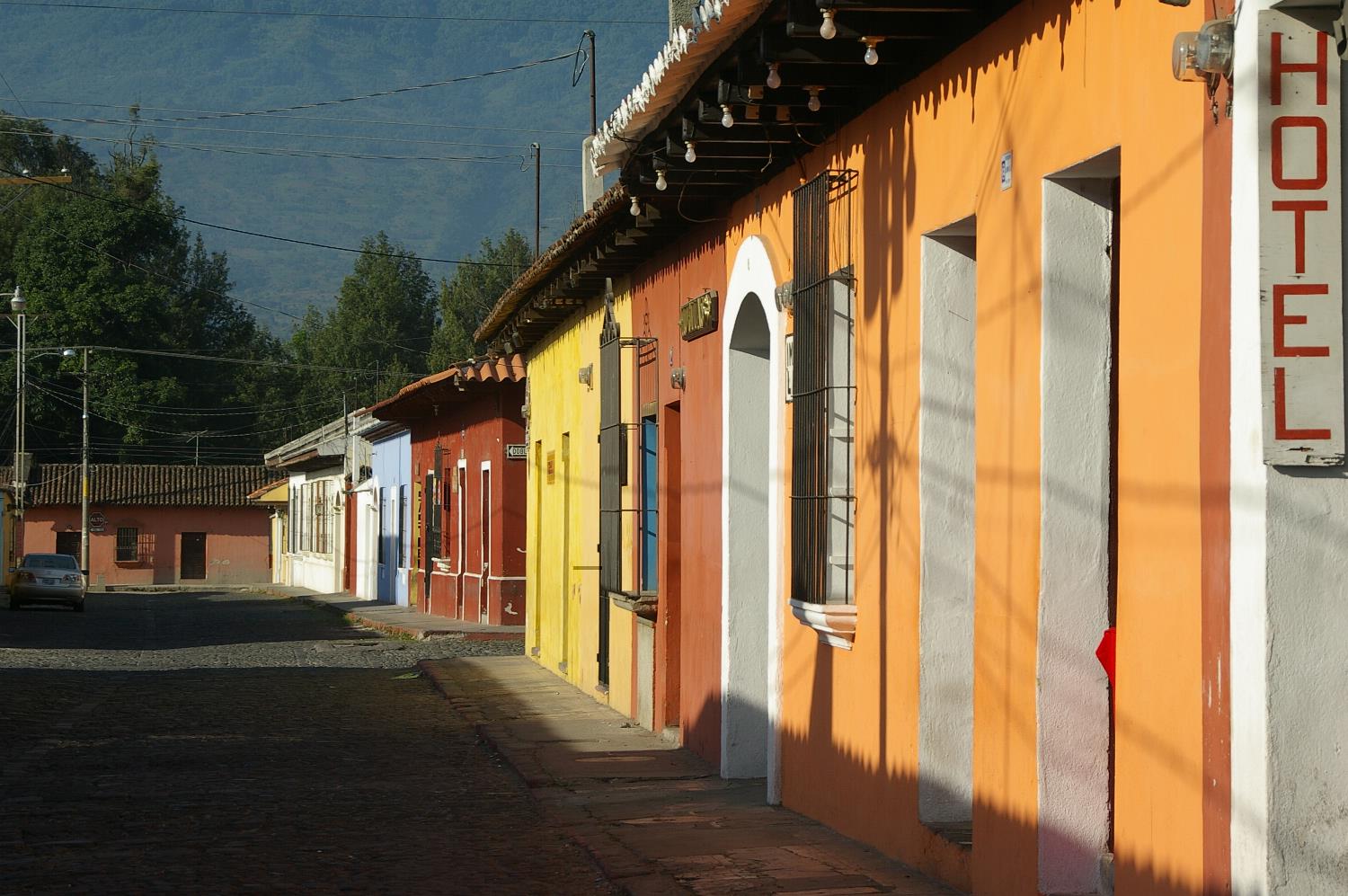
Image credit: "Antigua Guatemala Street.jpg", CIA World Factbook via Wikimedia Commons (Public Domain).
What official travel advisories say
U.S. Department of State advisory
The U.S. Department of State places Guatemala at Level 3: Reconsider Travel due to crime, with terrorism risk indicators linked to cartels, gangs and criminal organisations in specific areas.
Within the national advisory, the U.S. State Department designates four Level 4: Do Not Travel areas:
- San Marcos Department
- Huehuetenango Department
- Zone 18 in Guatemala City
- The city of Villa Nueva
U.S. government employees and their families are prohibited from personal travel to these Level 4 areas.
UK FCDO warnings and security guidance
The UK Foreign, Commonwealth & Development Office (FCDO) advises against "all but essential travel" to two border-region corridors:
- Within 5 km of the Mexican border from the Pacific Coast up to and including the Gracias a Dios crossing.
- The towns of Santa Ana Huista, San Antonio Huista and La Democracia in Huehuetenango Department.
Travelling to areas covered by an FCDO warning can invalidate UK travel insurance policies. On its safety and security page, the FCDO highlights four operational risks for visitors across the rest of the country:
- Violent crime: Guatemala records one of the highest violent crime rates in Latin America, with low arrest and conviction rates. Robberies occur across the country, and attackers have killed or injured people who resisted.
- Express kidnappings and street taxis: Short-term abductions aimed at forcing ATM withdrawals are often linked to taxis hailed off the street.
- Public buses: The FCDO advises against riding public repainted U.S. school buses because of gang extortion, robberies, weak maintenance and reckless driving.
- Protests and roadblocks: Strikes and demonstrations start with little notice and can block major highways and La Aurora International Airport.
How to assess major destinations and routes
Official advisories treat Guatemala by corridor and behaviour because security varies sharply between neighbourhoods, highways and times of day. No region or tourist town in Guatemala can be guaranteed free from crime.
| Destination or corridor | What advisories note | Practical planning approach |
|---|---|---|
| Guatemala City | The FCDO states that no part of the capital is free from crime. Zone 10 sees many visitors and business hotels and still requires street caution. Zone 1 (the historic centre) sees opportunistic theft targeting visitors. Zones 6, 7, 8 and outer zones including 18 to 25 carry heightened risk, and Zone 18 and Villa Nueva are U.S. Level 4 zones. | Book accommodation in well-reviewed central areas with 24-hour reception, arrange airport transfers in advance and avoid walking after dark. |
| Antigua Guatemala | The FCDO notes that armed attacks and robberies have occurred on tourist routes connecting Antigua with Guatemala City, Lake Atitlán, Tikal and Petén. | Use pre-booked transfers from the airport, keep valuables out of sight and plan local logistics using our Antigua Guatemala travel guide. |
| Lake Atitlán | The FCDO notes armed attacks and robberies have occurred on tourist routes linking Guatemala City, Antigua, Lake Atitlán, Tikal and Petén. | Travel between lakeside towns and overland hubs during daylight hours using vetted shuttles, and check current road conditions locally before departing. |
| Tikal and Petén | The FCDO flags higher crime rates across Petén Department and advises visitors to stay within established tourist areas and travel during daylight. | Compare domestic flights into Flores with long overland journeys, and use reputable tour operators for park visits. |
| Intercity highways | The FCDO notes that armed attacks and robberies have occurred on intercity tourist routes, and protests or strikes can block major highways with little notice. | Stick to main highways during daylight, carry extra water and snacks, and build buffer time ahead of flights. |
Practical planning steps on the ground
- Move during daylight: Schedule intercity transfers, volcano starts and arrivals in new towns for daylight hours. Arrive at your accommodation before dusk whenever flight schedules permit.
- Book reputable transfers: At La Aurora International Airport, use INGUAT-approved taxis from the SAFE stand, pre-paid vouchers from the arrivals desk or a pre-arranged hotel driver. Within cities, use radio-dispatched taxis, hotel-booked drivers or a vetted local driver or shuttle.
- Skip public buses: Avoid local repainted school buses on urban and intercity routes. Use established tourist shuttles, reputable tour operators or vetted private intercity coaches, and keep your daypack on your lap with valuables secured.
- Manage valuables and ATMs: Leave expensive jewellery, spare cards and original passports locked in your accommodation safe when walking around town, carrying a photocopy of your passport photo page and modest cash. Withdraw money during daylight from ATMs inside banks, shopping centres or hotels, and put cash away before stepping onto the street.
- Vet accommodation carefully: Choose properties with controlled entry, 24-hour reception and verified recent reviews, and confirm late-arrival transfer instructions before you land.
- Plan solo travel with structure: Solo visitors reduce exposure by booking shared tourist shuttles between hubs, joining licensed group tours for trails and volcanoes, and sharing daily itineraries and check-in times with a trusted contact. The FCDO warns that Guatemala has no mountain rescue service and that local operators can underestimate risks, so carry warm waterproof layers and check official updates before hiking.
Emergency and tourist assistance contacts
Save these verified numbers in your phone before arrival:
| Service | Number inside Guatemala | International / Notes |
|---|---|---|
| National Police (PNC) | 110 | General police emergencies |
| Fire and Ambulance | 122 or 123 | Fire and medical emergencies |
| PROVIAL (Roadside Assistance) | 1520 | +502 2419 2121; highway roadside assistance |
| PROATUR (INGUAT Tourist Assistance) | 1500 | +502 2290 2810; 24-hour English and Spanish official tourist assistance via INGUAT |
Official advice and a publisher's planning checklist
Government advisories directly affect travel insurance validity and consular guidance. A publisher's planning checklist translates those warnings into practical habits for transport, timing, cash handling and accommodation. We review official sources to keep this guide accurate, and no editorial guide can replace your government's live warning.
For El Salvador stops, see our Santa Ana, El Salvador travel guide and El Tunco travel guide. To compare budget-friendly destinations across the region and beyond, see our guides to cheap Latin American countries and cheap places to travel.
Check before departure (reviewed 28 November 2026)
Conditions change, no destination can be guaranteed safe, and every traveller should read the full current advisory for their nationality before departure:
- U.S. Department of State Guatemala Travel Advisory for current advisory tiers and restricted zones.
- UK FCDO Guatemala travel advice and UK FCDO safety and security for border restrictions, road safety and protest updates.
- CDC Guatemala Traveler View for health notices, routine vaccines, Hepatitis A and typhoid guidance, malaria risk in lowland departments such as Petén and Izabal, dengue prevention and yellow fever certificate rules for travellers arriving from risk countries.
- INGUAT for official PROATUR tourist-assistance contacts and local route updates.
Frequently asked questions
Is Guatemala safe for tourists right now?
Guatemala carries a U.S. Level 3 (Reconsider Travel) advisory and UK FCDO warnings for parts of the Mexican border and three Huehuetenango towns. Guatemala can be visited, and your risk depends on avoiding restricted areas, moving in daylight and using vetted transport.
Is Guatemala City safe for visitors?
The UK FCDO states that no part of Guatemala City is free from crime, and the U.S. State Department designates Zone 18 and Villa Nueva as Level 4 do-not-travel areas. Use official airport transfers, book central accommodation with 24-hour reception and avoid walking after dark.
Is Antigua Guatemala safe to visit?
No town in Guatemala can be guaranteed free from crime, and the FCDO notes that robberies and armed attacks have occurred on tourist routes connecting Antigua with Guatemala City and other hubs. Use pre-booked transfers, keep valuables out of sight and avoid quiet streets after dark.
Is Guatemala safe for solo travellers?
Solo travellers reduce exposure by using daylight shared shuttles, properties with 24-hour reception, licensed guides for volcano hikes and regular check-ins with a trusted contact. Avoid night travel, isolated trails and street-hailed taxis.
What should travellers check before going to Guatemala?
Check your government's live travel advisory, confirm your travel insurance covers your exact route and review the CDC health page for vaccinations and mosquito-borne illness precautions. Save police (110) and PROATUR (1500) in your phone and check local news for highway protests before departing.
Sources and update note: Reviewed on 28 November 2026 against the U.S. Department of State Travel Advisory, UK FCDO Guatemala travel advice, CDC Travelers' Health guidance and INGUAT official resources.
Featured photo: Antigua Guatemala Street, public domain, via Wikimedia Commons (CIA Factbook).