
Bacalar is a Pueblo Mágico town in southern Quintana Roo, Mexico, located beside the Lagoon of Seven Colors (Laguna de los Siete Colores) roughly 40 kilometres north of Chetumal. A short stay suits first-time visitors who want swimming, snorkelling, diving, and compact historic stops in southern Quintana Roo.
Deciding How Bacalar Fits Your Quintana Roo Route
Bacalar sits near the southern end of Quintana Roo, close to the state capital Chetumal and well south of the major coastal resort corridor. That location makes the town a practical stop for travellers moving overland through southern Mexico or looping down from northern Quintana Roo. Before booking nights, decide how much time you want on the lagoon and how many days you have for regional transit between stops.
| Trip format | Best fit | Primary focus | Planning trade-off |
|---|---|---|---|
| Day visit | Travellers passing through southern Quintana Roo on a tight schedule | One lagoon water session plus a brief walk past Fuerte de San Felipe and Plaza Principal | Limits time on the water and leaves minimal buffer if local conditions change |
| Two-day stay | Most first-time visitors on a southern Mexico route | Two separate lagoon sessions paired with Cenote Azul and town landmarks | Balances water time and town exploration while keeping a wider route moving |
| Water-focused trip | Swimmers, snorkellers, and divers prioritising unhurried time on the lagoon | Repeated lagoon sessions, a water visit to Canal de los Piratas, and Cenote Azul across multiple days | Adds flexibility across days while allocating fewer nights to other Quintana Roo stops |
| Wider Quintana Roo route | Overland travellers linking northern Quintana Roo with Chetumal or onward regional routes | Using Bacalar as a two-night southern pause between coastal stops and inland travel | Adds road transit between regions, so arrival and departure days stay light |
The Lagoon of Seven Colors and Bacalar Pueblo Mágico
Mexico’s Secretariat of Tourism (SECTUR) designates Bacalar as a Pueblo Mágico, a status the town has held since 2006. Its name comes from the Maya Bakhalal, meaning “near or surrounded by reeds.” SECTUR traces the original Maya settlement to around 415 CE under the name Sian Ka’an Bakhalal.
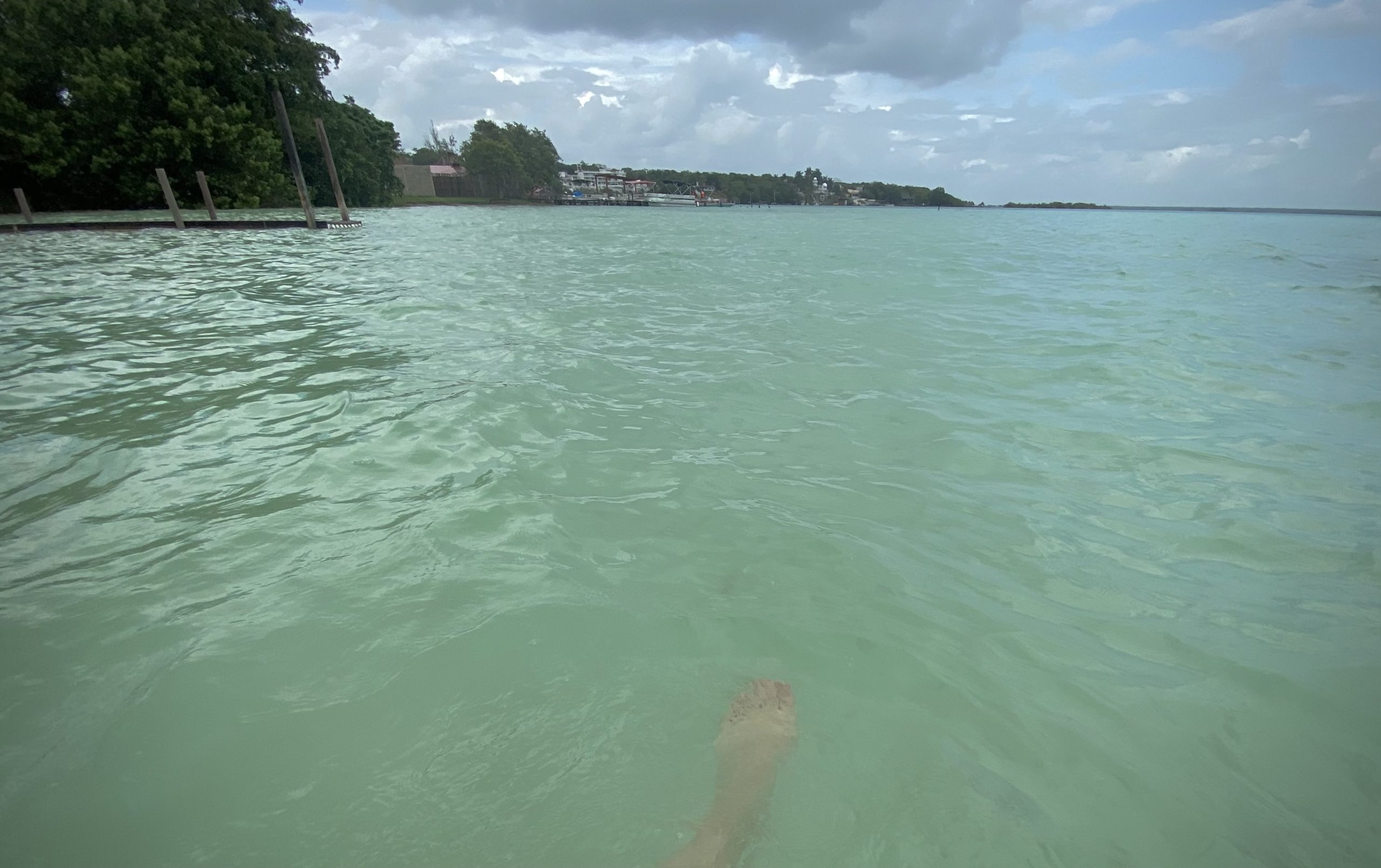
The town’s defining natural feature is the Lagoon of Seven Colors (Laguna de los Siete Colores). SECTUR describes it as a shallow, circular-shaped lagoon recognised for its varying shades of blue and frames water recreation around swimming, snorkelling, and diving.
Guidance from the Chetumal tourism authority highlights Canal de los Piratas within Bacalar’s lagoon system, linking the lagoon toward the Río Hondo and Bahía de Chetumal. Historically used as a Maya trade corridor and later navigated by colonial-era pirates, the canal is reached by water.
On land, SECTUR lists several historic and civic landmarks around Bacalar that pair easily with water sessions:
- Fuerte de San Felipe and the Museo de la Piratería: A historic fortress and piracy museum listed by SECTUR among Bacalar’s primary heritage sites.
- Plaza Principal: Bacalar’s central town square, useful as an orientation point for walks through the centre.
- Templo de San Joaquín: A historic church in town highlighted by SECTUR.
- Casa de la Cultura: A local cultural venue included in SECTUR’s guide to Bacalar.
- Cenote Azul: Noted by SECTUR as an entry point to underwater caverns.
Lagoon Activities and Respectful Habits
SECTUR frames Bacalar’s lagoon around three core water activities: swimming, snorkelling, and diving. Visitors also head out on the water to reach Canal de los Piratas, while Cenote Azul offers a distinct stop noted for its underwater caverns. Confirm local access options and licensed boat operators once you arrive in town so your plans match current local rules.
Protecting the lagoon starts with low-impact daily habits. Follow all posted local guidance and instructions from authorities or licensed operators before entering the water. Leave natural formations and shoreline areas undisturbed, avoid introducing avoidable chemical runoff into the lagoon, and carry every wrapper, bottle, and piece of rubbish back to town bins.
Keep the water schedule adaptable. Confirm access availability and operator departures locally, then swap a lagoon session with a town heritage walk if details change.
If you are building a wider value-focused itinerary across the region, compare destination trade-offs in our guide to cheap Latin American countries. Travellers weighing southern Mexico against other affordable stops globally can also review our roundup of cheap places to travel.
A Flexible Two-Day Bacalar Itinerary Example
Treat this two-day sequence as a flexible framework rather than a fixed timetable. Confirm local landmark hours, water access rules, and onward regional transport connections once you arrive in Bacalar, and reorder water blocks and town walks to match conditions on the day.
Day 1: Lagoon Orientation and Canal de los Piratas
- Morning or arrival window: Drop your bags at your accommodation, orient yourself near Plaza Principal, and walk to the shoreline to check local water access options and licensed boat availability for the day.
- Midday water session: Head out on the lagoon for swimming or snorkelling, pairing open water time with a boat visit to Canal de los Piratas.
- Late afternoon and evening: Return to town for a relaxed walk around Plaza Principal, settle into the pace of the historic centre, and confirm your plans and transport options for the next morning.
Day 2: Cenote Azul and Historic Centre Walk
- Morning water window: Visit Cenote Azul or take a second unhurried swimming or snorkelling session on the lagoon while the day is still early.
- Afternoon heritage walk: Move inland to visit Fuerte de San Felipe and the Museo de la Piratería, then continue on foot to Templo de San Joaquín and Casa de la Cultura.
- Evening or onward departure: Use the late afternoon to pack up, enjoy a final walk near Plaza Principal, or connect onward toward Chetumal and your next Quintana Roo stop.
Mexico Entry Requirements Before You Travel
Confirm current passport, visa, and transit requirements directly with official government sources before departure. Keep general passport rules separate from nationality-specific visa requirements when preparing your travel documents.
Passport Validity and General Entry Documents
According to the Consulate General of Mexico in Montreal, foreign travellers entering Mexico need a valid passport or travel document covering the entire duration of their stay. Mexico requires a passport valid for your stay. Travellers must also complete the Multiple Digital Migration Form (FMMd) where required and be ready to present supporting tourism bookings at immigration if requested.
Nationality-Specific Visa Requirements
Your passport nationality decides whether you need a visa. Under Mexican consular guidance, citizens of exempt countries and travellers holding valid visas or permanent residency from eligible jurisdictions—including Canada, the United States, Japan, the United Kingdom, or the Schengen Area—can enter for short tourism stays without applying for a Mexican visitor visa. Travellers outside those exempt categories must apply for a visitor visa through a Mexican consulate before travel.
UK-Specific and U.S. Entry Guidance
UK-specific guidance from the UK Foreign, Commonwealth & Development Office (FCDO) states that British citizens travelling to Mexico for tourism do not need a visa. A British passport must be valid for the duration of the stay, and the Mexican Embassy in the UK recommends holding at least 180 days of remaining validity to cover the maximum tourist period. Immigration officers determine the exact authorised stay on arrival, up to 180 days. British travellers entering Mexico by land must complete the Multiple Immigration Form (FMM) online.
U.S. Department of State guidance says U.S. citizens flying to Mexico need a valid passport book; a passport card is not valid for air travel. Mexican immigration officers determine the authorised stay on arrival.
Travellers planning extended stays or remote work abroad can review dedicated long-stay permits in our guide to digital nomad visa countries.
Frequently Asked Questions
Where is Bacalar in Mexico?
Bacalar is a Pueblo Mágico town in southern Quintana Roo, Mexico, situated roughly 40 kilometres north of the state capital, Chetumal, beside the Lagoon of Seven Colors.
What is the Lagoon of Seven Colors?
The Lagoon of Seven Colors (Laguna de los Siete Colores) is a shallow, circular-shaped lagoon beside Bacalar recognised for its varying shades of blue and framed by Mexico’s tourism authority for swimming, snorkelling, and diving.
How many days should you spend in Bacalar?
Two days give first-time visitors enough time for two flexible water sessions alongside Cenote Azul and town heritage stops including Fuerte de San Felipe and Plaza Principal.
What can you do in Bacalar?
Core activities include swimming, snorkelling, and diving in the lagoon, reaching Canal de los Piratas by water, visiting Cenote Azul, and exploring Fuerte de San Felipe, the Museo de la Piratería, Templo de San Joaquín, Casa de la Cultura, and Plaza Principal.
What are the entry requirements for visiting Bacalar, Mexico?
Visitors need a passport valid for their stay and any required migration form or supporting tourism bookings requested at entry. Visa requirements depend on passport nationality: UK FCDO guidance states British tourists do not need a visa for officer-approved stays of up to 180 days, U.S. Department of State guidance requires U.S. air travellers to carry a passport book, and other travellers should check visa rules through Mexican consular guidance.
Official Sources
- Mexico Secretariat of Tourism (SECTUR): Bacalar, Quintana Roo
- Chetumal Tourism Authority: Bacalar
- Consulate General of Mexico in Montreal: Documents Needed to Enter Mexico
- GOV.UK Foreign Travel Advice: Mexico Entry Requirements (UK-specific)
- U.S. Department of State: Mexico International Travel Information
Featured photo: Bacalar Lagoon, Quintana Roo, Mexico, by Sharon Hahn Darlin, CC BY 2.0, via Wikimedia Commons.