
Choose a travel backpack for women by matching the frame to your torso length, checking that a padded hip belt carries most of the load, and picking a capacity that fits your trip and airline rules. Women-specific harnesses offer narrower strap spacing and contoured padding, though torso fit and adjustability decide all-day comfort.
What a Women's Fit Label Means
Women's travel packs are shaped around common differences in torso length, shoulder width, chest contour, and hip angle. Compared with standard unisex models, women-specific packs usually feature shorter back panels, shoulder straps anchored closer together, S-curved padding that routes cleanly around the chest, and angled hip belts cut to wrap curved hips without pressing into the ribs or upper thighs.
Treat that label as a starting point. Body proportions vary widely across height, spine length, and shoulder breadth, so two travelers of the same height often need different frame sizes. Try both women-specific and adjustable unisex packs under load. Fit and adjustment range decide how a pack feels after three miles in transit.
How to Measure Your Torso and Adjust the Harness
Pack comfort begins with torso length along your spine. Standing height gives only a rough clue because leg-to-torso ratios differ widely from person to person.
Measure your torso length
Have a partner measure with a soft tape while you stand straight in a relaxed posture:
- Tilt your head forward and locate the prominent bony knob at the base of your neck (the C7 vertebra).
- Rest your hands on your hips with fingers pointing forward and thumbs pointing inward so your hands sit along the top edge of your hip bones (the iliac crest).
- Measure straight down your spine from the C7 vertebra to the midpoint level with your thumbs.
Use Osprey's size and fit guide as one manufacturer's reference for turning a torso number into a frame size. Osprey lists women's extra-small/small (WXS/S) ranges around 13.5 to 17 inches (34 to 43 cm), women's medium/large (WM/L) ranges around 16 to 19.5 inches (40.5 to 50 cm), and adjustable one-size harnesses spanning roughly 14 to 20 inches (36 to 50 cm). Every brand sets its own sizing brackets and overlap zones, so match your number to the chart for the exact pack you plan to buy. An adjustable torso harness lets you move the shoulder yoke up or down the frame to fine-tune fit when you sit between sizes.
Adjust the harness in order
Loosen every strap before putting on a loaded pack, then tighten each strap in the order laid out in REI's pack-fitting guide:
- Hip belt: Center the padded wings over your iliac crest and pull the webbing tight. A structured hip belt transfers roughly 80 percent of the pack weight onto your hips and legs. Leave a small gap between the pads on either side of the buckle so you still have room to tighten the belt over lighter clothing.
- Shoulder straps: Pull down and back until the straps trace the contour of your shoulders. They stabilize the load close to your back while carrying a light share of the weight. The strap anchor points on the back panel should sit roughly 1 to 2 inches below the top of your shoulders.
- Load lifters: Reach back and lightly snug the angled straps connecting the shoulder harness to the top of the frame so they form roughly a 30- to 45-degree angle. This pulls the upper load toward your center of gravity and prevents the pack from sagging backward.
- Sternum strap: Slide the chest strap to sit about 1 inch below your collarbones and clip it with gentle tension. It keeps the shoulder straps centered while leaving your breathing relaxed and your arms free to swing.
Test the pack under load
An empty backpack hides collar rub, shoulder pinch, and hip-belt slip. Gregory's pack fit guide recommends testing a pack loaded with 10 to 20 pounds (4.5 to 9 kg), and REI advises a similar 10- to 15-pound starting load. Fill the bag with realistic weight, walk for ten minutes, climb a flight of stairs, and look upward to confirm the top of the pack clears your head.
Choosing by Trip Type and Opening Style
Your itinerary decides how much volume, structure, and access you need. Match your primary trip type to the layout below before comparing pockets or fabrics.
| Trip type | Typical capacity | Opening style | Harness support | Best fit for |
|---|---|---|---|---|
| One-bag travel | 30–40 L | Clamshell (full-perimeter zip) | Internal frame, padded hip belt, load lifters | Multi-week trips with hand luggage only |
| Carry-on travel | 30–40 L (varies by airline) | Clamshell or suitcase-style U-zip | Stowable padded hip belt and shoulder straps | Overhead-bin flights paired with a small personal item |
| Weekend trips | 20–30 L | Panel-loading or clamshell | Padded shoulder straps, sternum strap, light waist strap | Two- to four-day city breaks and train rides |
| Work travel | 20–30 L | Panel-loading with padded laptop sleeve | Contoured shoulder straps, sternum strap, luggage pass-through | Flights with a laptop, chargers, and commute gear |
| Mixed city and hike use | 25–38 L | Top-loading with front zip or wide panel zip | Structured frame, ventilated back panel, load-bearing hip belt | Trips combining urban transit with day hikes |
Clamshell packs unzip around three sides and open flat like a suitcase for fast packing. Panel-loading packs open through a large front panel so laptops and pouches stay upright; see our guide to work backpacks for travel for daily tech carry. Top-loading packs suit compressible hiking gear and work smoothly in cities when paired with a front zip.
Capacity, Packing, and Weight Distribution
For warm or mild trips, 30 to 35 liters holds a week of versatile clothing, while 38 to 42 liters leaves space for cold-weather layers or extra footwear. Shorter torsos notice pack depth quickly: a deep 45-liter bag pulls your center of gravity backward and feels clumsy on stairs or crowded train aisles. Build your gear list first with our international travel packing list so you pick the smallest volume that zips shut cleanly.
When your itinerary includes long sightseeing days or short hikes after dropping luggage at your accommodation, keep your main pack compact and add a lightweight secondary bag. Browse our guide to travel daypacks for small packs that fold flat inside a larger bag or serve as your under-seat item.
Pack weight distribution affects comfort as much as total weight:
- Close to the spine, mid-back: Place dense gear such as a laptop, power bank, shoes, or full toiletry pouch directly against the back panel between your shoulder blades and lower back.
- Bottom and outer front: Tuck light, bulky items like a fleece, sleepwear, or down jacket into the lower compartment and front edge.
- Top and outer pockets: Store your passport, liquids pouch, rain shell, and snacks where you reach them fast, keeping left and right sides balanced.
- Compression straps: Cinch the side straps after packing so the load stays tight against the frame while you walk.
Cabin-Bag and Personal-Item Limits
According to IATA's cabin baggage guidance, there is no single universal cabin bag size or weight allowance. Airlines set their own rules by carrier, route, aircraft type, and fare class. Checked November 2026: verify your airline's current dimensions and weight limit for your exact ticket and connecting flights before you pack.
For overhead compartments, choose a pack with stowable shoulder straps and a tuck-away or removable hip belt so buckles stay protected in tight bins and during occasional gate checks. Review overhead format trade-offs in our carry-on backpack guide. For strict under-seat fares, size down to a shorter, slimmer bag that slides beneath the seat ahead without cutting into legroom; our personal-item backpack size guide breaks down under-seat planning. Check empty pack weight too, since thick fabrics and built-in frames use up tight airline weight caps before you pack a single shirt.
Pre-Purchase Try-On Checklist
Run through these checks in a store or at home before removing the tags:
- Load the pack with 10 to 20 pounds (4.5 to 9 kg) of dense gear wrapped in soft clothes.
- Confirm the hip belt sits centered on your iliac crest with webbing room left to tighten.
- Check that shoulder straps contour smoothly with no gap above your shoulders and no rubbing along your neck.
- Walk for ten minutes, climb a staircase, and look straight up to test head clearance.
- Test every zipper, water-bottle pocket, and laptop sleeve while the pack is full.
Frequently Asked Questions
Do women need a women-specific travel backpack?
Women-specific packs use shorter torso ranges, narrower strap spacing, contoured harnesses, and angled hip belts. Body proportions vary widely, so measure your torso length and try both women-specific and adjustable unisex frames under load to find the cleanest fit.
What capacity travel backpack works best for women?
A 30- to 40-liter pack balances packing room with manageable depth for carry-on and one-bag trips. For weekends, under-seat travel, or work commutes, 20 to 30 liters keeps bulk low. Build your packing list first to size your bag accurately.
How should a travel backpack sit on your hips?
Center the padded hip belt over your iliac crest, the top edge of your hip bones, and tighten it before the shoulder straps. Positioned there, the belt transfers roughly 80 percent of the pack weight onto your hips and legs.
Is a clamshell or top-loading travel backpack better?
Clamshell packs unzip around three sides and open flat like a suitcase for fast hotel and hostel packing. Top-loading packs suit compressible hiking gear. For mixed trips, choose a panel-loader or a top-loader with a front access zipper.
Will a 40-liter backpack qualify as a carry-on on every airline?
No single pack volume qualifies on every airline. Cabin size and weight limits vary by carrier, route, aircraft, and fare class, and packed depth matters as much as labeled liters.
Next Step
Take your torso measurement and target volume to our broad travel backpack comparison and shortlist packs that come in your size.
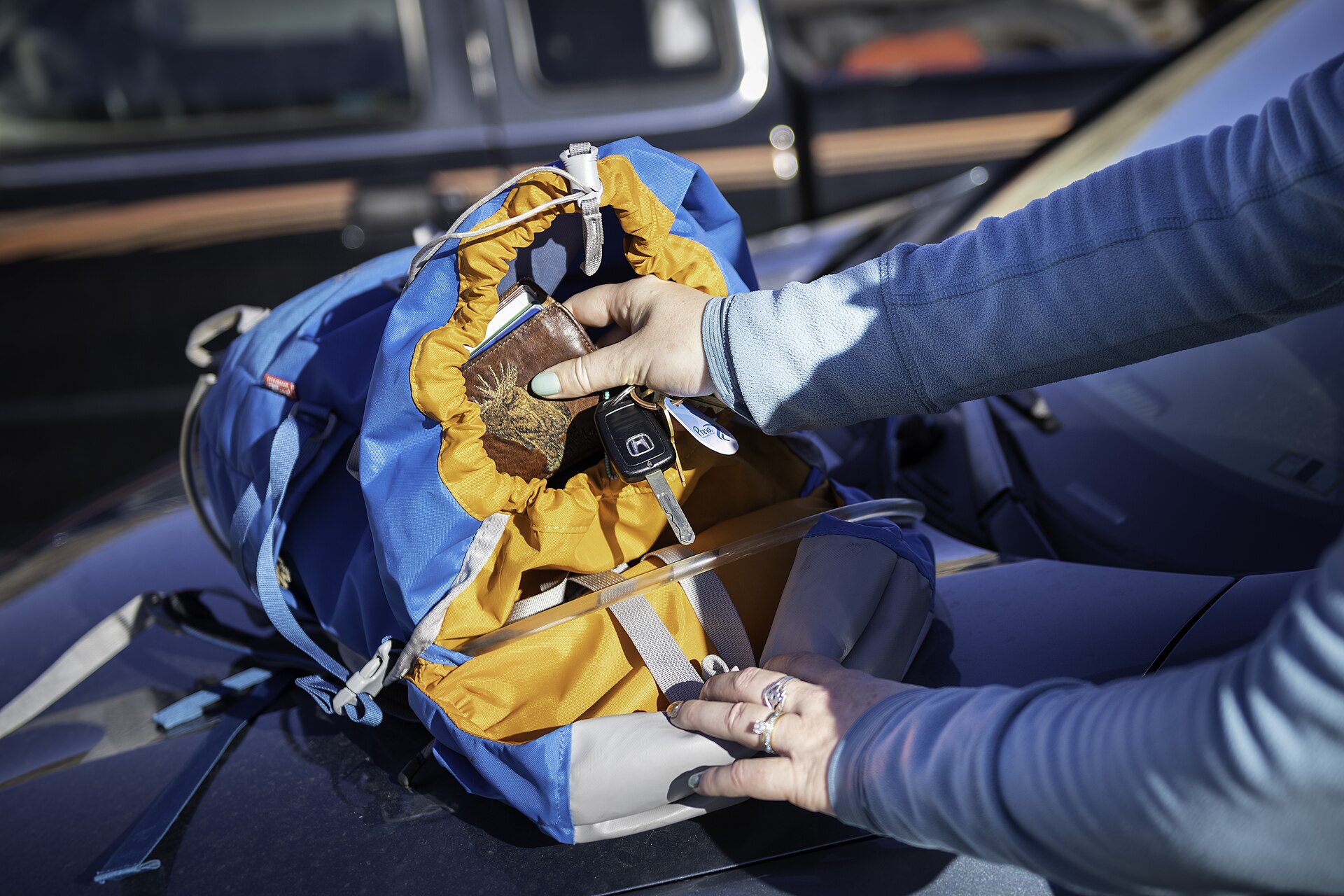
Featured photo: Woman packing backpack before a hike, by Joshua Tree National Park, via Wikimedia Commons (Public domain).