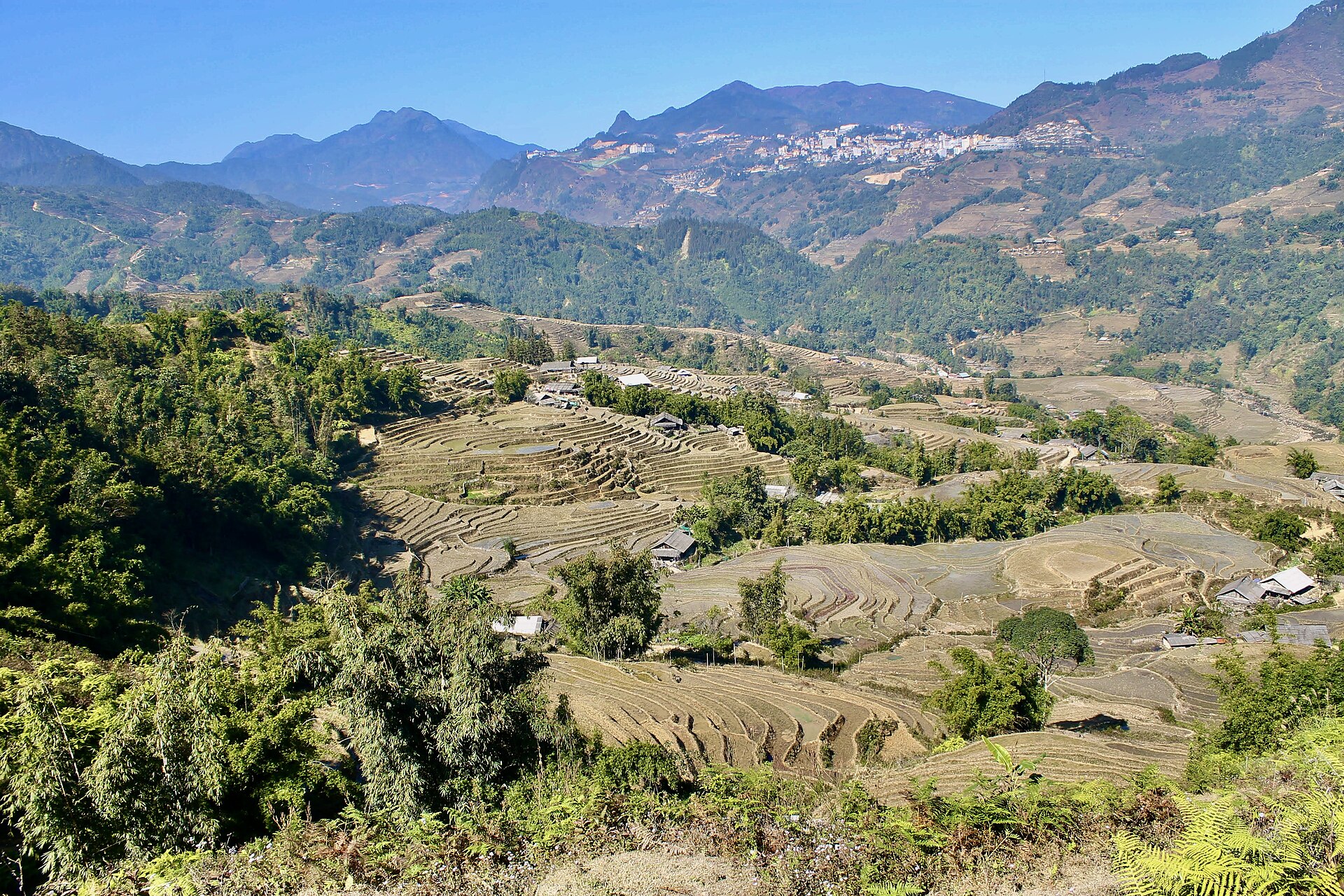
Sapa is a mountain town in Lao Cai province in northern Vietnam, located near the Chinese border and the Hoang Lien Son range. Plan two to three full days to ride the Fansipan cable car, visit Muong Hoa Valley villages, browse weekend markets, and acclimatize to cool mountain weather between March and May or September and November.
What to Do in Sapa
Sapa sits in the Hoang Lien Son mountain range, overlooking terraced valleys and steep forested ridges. While multi-day trail routes are covered in our dedicated Sapa trekking guide, a general first visit combines valley walks, high-altitude viewpoints, and town markets.
- Ride to the summit of Fansipan: At 3,143 meters (10,312 feet), Fansipan is the highest peak in Indochina, rising inside Hoang Lien National Park. Visitors reach the upper ridge via the Sun World Fansipan Legend cable car system and a final climb of 600 stone steps, or a short funicular ride, to the summit markers.
- Walk through Muong Hoa Valley: Paved roads and footpaths descend 8 to 12 km from Sapa town through terraced hillsides toward Lao Chai and Ta Van villages. You can walk downhill for views of bamboo groves, suspension bridges, and stepped rice paddies.
- Visit Cat Cat Village: Located about 2 km from the edge of Sapa town, Cat Cat sits in a steep valley with stone pathways, a waterfall, and traditional wooden houses. The return climb involves several hundred steep stone stairs.
- Explore Sapa Town and the Stone Church: The central square and the early 20th-century stone church serve as the town's main gathering point. On weekends, the surrounding streets and market halls fill with produce stalls, textiles, and local street food.
- Cross Tram Ton Pass and Silver Waterfall: Located about 15 km northwest of town along the road toward Lai Chau, Tram Ton sits at 1,900 meters and is one of the highest mountain passes in Vietnam, overlooking the Hoang Lien Son peaks when cloud cover clears.
Best Time to Visit Sapa
Mountain weather in Lao Cai province shifts rapidly, and fog can roll through the valley at any time of year. Check local forecasts right before departure, as visibility at Fansipan and the mountain passes changes hourly.
| Season | Months | Weather and Landscape Conditions | Planning Considerations |
|---|---|---|---|
| Spring | March to May | Mild daytime temperatures, blooming mountain flora, and clearer skies after winter fog. | Good visibility for Fansipan and valley viewpoints; pack layers for cool evenings. |
| Summer | June to August | Warm days with frequent heavy rain showers; hillsides turn bright green as rice grows. | Muddy footpaths and sudden downpours; schedule outdoor walks in the morning. |
| Autumn | September to November | Crisp air, drier days, and golden terraced rice fields before the harvest. | Peak visibility and comfortable walking temperatures; book transport and stays early. |
| Winter | December to February | Cold, damp conditions with frequent mist and occasional frost at higher elevations. | Bring insulated layers and rain gear; summit views are often obscured by cloud. |
Choose Your Base
For a first trip of two to three days, Sapa Town Center is the best base, it keeps you within walking distance of dining and transport hubs and makes it easy to pivot your plans when mountain fog rolls in.
- Sapa Town Center: Best for short trips, rainy weather, and easy access to restaurants, the Fansipan cable car station road, and bus drop-off points. Streets are hilly and busy during weekend peaks.
- Muong Hoa Valley (Lao Chai and Ta Van): Best for quiet mornings directly among the rice terraces. Staying in the valley puts you right on the walking paths, though you will rely on pre-arranged taxis or hotel transfers to reach town or Fansipan.
- Outskirts and Ridge Hotels: Properties along the ridges leading toward Cat Cat or Tram Ton face directly into the terraced valleys while keeping you a 5-to-10-minute taxi ride from central dining.
How to Get to Sapa
Most travelers reach Sapa from Hanoi as part of a broader Vietnam travel itinerary. Because Sapa has no airport, the journey combines road or rail transport from the capital.
- Direct sleeper bus or limousine van from Hanoi: Highway express routes connect central Hanoi and Noi Bai International Airport directly to Sapa town in 5.5 to 6 hours. This is the most direct door-to-door option.
- Overnight train to Lao Cai plus road transfer: Sleeper trains run from Hanoi Station to Lao Cai Station near the border in about 8 hours. From Lao Cai, local buses, shared vans, or private taxis cover the 35 km uphill drive to Sapa town in about 1 hour.
- Connecting from northern loops: Travelers combining mountain regions often connect between Sapa and Ha Giang by regional bus (6 to 7 hours); see our Ha Giang Loop guide if you are planning both in one trip.
Before booking international flights or overland border crossings, verify your passport validity and entry requirements through the official Vietnam e-visa portal.
Realistic 3-Day Sapa Itinerary
- Day 1: Arrival and Town Orientation. Arrive in Sapa by midday, check into your accommodation, and adjust to the elevation and cooler air. Walk around Sapa Lake, visit the central square and stone church, and browse the evening food stalls.
- Day 2: Fansipan Summit and Tram Ton Pass. Head to the Fansipan cable car station early in the morning for the clearest chance at summit views. In the afternoon, continue west along the mountain road to view Silver Waterfall and the overlook at Tram Ton Pass.
- Day 3: Muong Hoa Valley Villages. Start mid-morning with a downhill walk from Sapa toward Lao Chai and Ta Van through the terraced fields. Have lunch in the valley, explore the village paths, and take a taxi back to town in time for your afternoon or evening departure.
For broader logistics on SIM cards, currency, and intercity transport across the country, read our Vietnam travel guide and Vietnam travel tips.
Respectful and Safe Local Travel
Sapa is home to several ethnic minority communities, including Hmong, Dao, Tay, Giay, and Xa Pho residents. Keep these practical habits in mind when visiting villages and markets:
- Ask before taking photographs: Always ask permission before photographing local residents, especially children and artisans at work.
- Buy crafts directly: When purchasing embroidered textiles or silverwork, buy directly from the makers or community-run cooperatives.
- Stay on established paths: Rice terraces are working agricultural land with fragile mud dikes; walk only on marked trails and stone paths to avoid damaging crops and irrigation channels.
- Prepare for mountain conditions: Check our Vietnam travel safety guide before heading out, carry cash in Vietnamese dong for small village cafes and taxis, and pack waterproof footwear with solid grip for wet stone steps.
Pre-Departure Checklist
- Verify visa rules and entry documents on the Vietnam e-visa portal.
- Confirm bus or train departure times and Sapa drop-off points 24 hours before leaving Hanoi.
- Pack warm layers, a waterproof jacket, and closed-toe walking shoes with good traction, even during spring and autumn.
- Withdraw small-denomination Vietnamese dong notes in Hanoi or Sapa town before heading into Muong Hoa Valley.
- Download offline maps for Lao Cai province and save your accommodation's address and local phone number.
Frequently Asked Questions
How many days do you need in Sapa?
Two to three full days is the right amount of time for a first visit to Sapa. That gives you one morning for the Fansipan cable car, a full day to walk through Muong Hoa Valley villages, and buffer time in case fog covers the mountains on your first day.
Can you visit Sapa without doing a multi-day trek?
Yes. You can reach the summit of Fansipan via cable car, walk short paved or stone sections of Muong Hoa Valley and Cat Cat Village at your own pace, and use local taxis to return uphill to Sapa town.
Is Sapa worth visiting in winter or the rainy season?
The rainy season, from June to August, brings bright green terraces but wetter paths. Winter, from December to February, is cooler and mistier, so clear mountain views are less reliable at Fansipan and across the valleys.
How do you get from Hanoi to Sapa?
You can take a direct highway bus or limousine van from Hanoi to Sapa town (5.5 to 6 hours), or ride an overnight sleeper train from Hanoi to Lao Cai Station (8 hours) and transfer uphill by bus or taxi (1 hour).
Do I need a visa to visit Sapa, Vietnam?
Entry requirements depend on your nationality and length of stay. Check current visa exemptions or apply online directly through the official Vietnam Immigration Department e-visa portal before you travel.
Next step: Ready to map out your trail days? Continue with our Sapa trekking guide.
Editorial review and source note (2026-11-26): Destination facts and regional context checked against Vietnam Tourism (Sapa), Vietnam Tourism (Northern Vietnam), the Vietnam National Administration of Tourism, and the Vietnam e-visa portal.
Featured photo: Rice terraces in Sapa, Vietnam, CC0, via Wikimedia Commons.